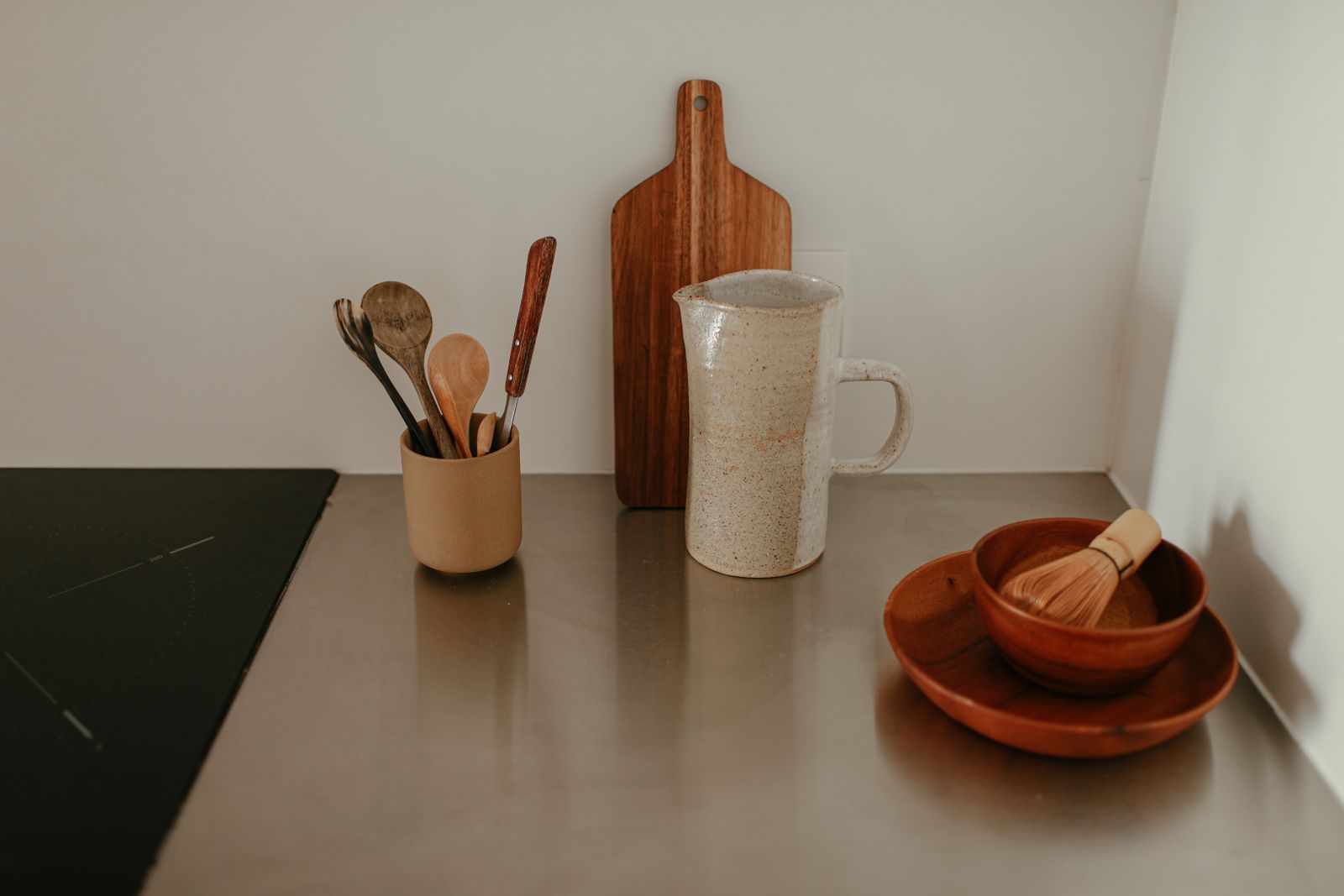
Choosing the Best Crock for Teak Utensils: Ceramic, Stainless Steel, or Wood?
The best utensil crock for wooden teak tools is a weighted, wide-mouth vessel that holds 13.58-inch handles upright with air around the shafts, sitting outside the sink splash zone. Ceramic is the default when the crock must not tip. Stainless steel wins when wipe-down speed matters. Wood looks warm beside teak but only if the interior stays dry. Material is second to this rule: never park dripping teak in a closed jar. Hand-wash, dry completely, then crock.
Quick Answer: What Is the Best Utensil Crock Material for Wooden Tools?
For most kitchens, a heavy ceramic crock with a wide mouth is the best utensil crock material for wooden tools. It does not rattle, does not tip when a ladle is pulled, and does not sweat the way a thin metal cup can against damp handles. Stainless steel is the runner-up for a wipe-clean island. A wood crock is a styling choice, not a moisture strategy.
If the teak set is still wet, no material saves it. High water resistance and a clear lacquer coating still want a full dry before storage. The crock is furniture for dry tools.
Crock Material Decision Guide: Which Fits Your Kitchen Scenario?
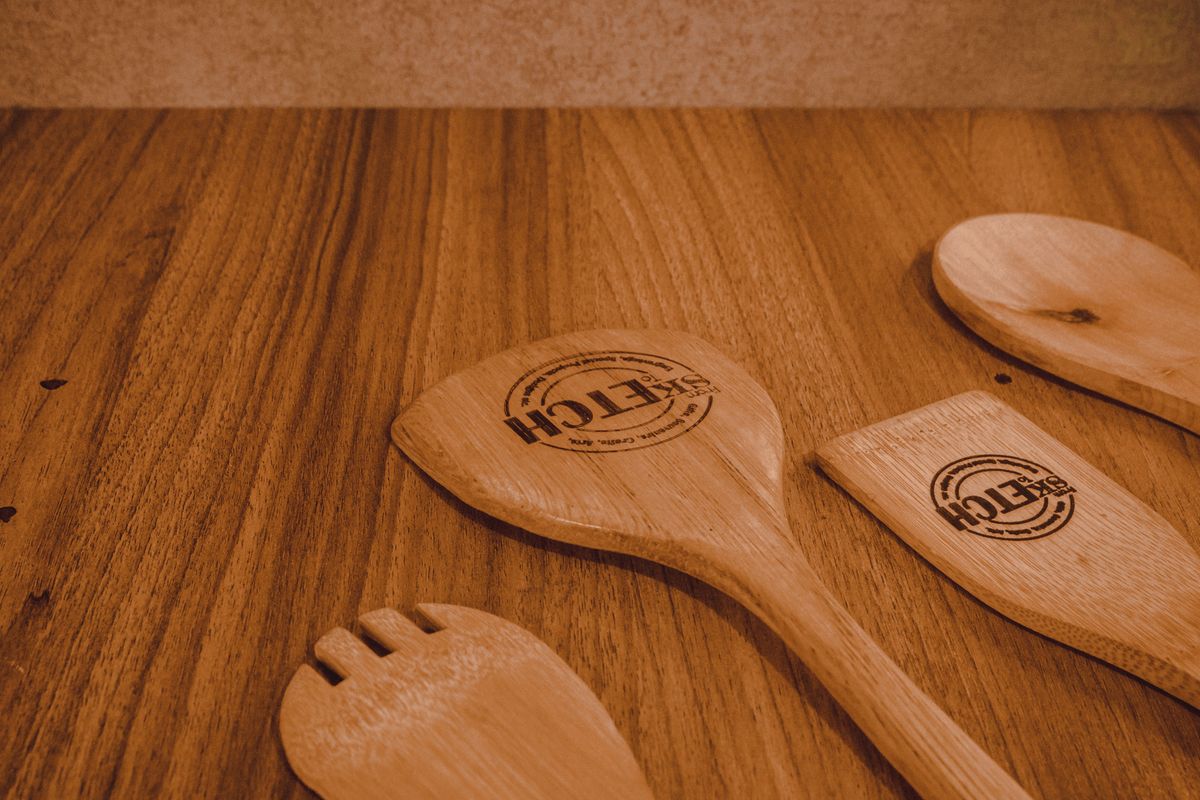
Photo by RENDAN CATIPAY on Pexels
Open-plan island with kids pulling tools: ceramic, because mass resists a yank on a 13.58-inch pasta server. Tiny rental with a shallow drawer: stainless, because it is light to move to the sink for a wipe. Farmhouse shelf already full of wood boards: a wood crock can match, if it is sealed inside and never used as a drying rack.
Next to a kettle that steams all morning: none of the three belong there. Move the crock. Steam plus lacquered teak is a dulling routine, not a display.
Nine pieces need width. A skinny vase packs salad forks against slotted turners until edges bruise. Choose a mouth that lets handles stand without a crush.
Side-by-Side Comparison: Ceramic vs. Stainless Steel vs. Wood Crocks
| Need | Ceramic | Stainless steel | Wood | | --- | --- | --- | --- | | Tip resistance | Best when thick and heavy | Fair unless weighted base | Fair; can skate on stone | | Wipe-down | Good | Best | Needs a dry cloth only | | Look beside teak | Neutral | Modern contrast | Warm match | | Damp-handle risk | Interior can stay wet | Can sweat; dry it | Worst if unsealed inside | | Best use | Daily 9-piece crock | Island that gets wiped | Dry display, not a dryer |
Interactive Crock Selection Flowchart: Find Your Ideal Storage Match
Start here. Are the teak utensils fully dry? If no, hang them from the handle holes or stand them in a dish rack until they are. A crock is not a drying rack.
If yes, is the counter next to a sink or steam plume? If yes, move the spot first, then pick material. If the crock gets bumped, choose ceramic. If the crock must be emptied and wiped daily, choose stainless. If the room is already a wood story and stays dry, a wood crock can sit as display.
If nine pieces will live together, pick the wider mouth even if it looks less precious. A beautiful skinny jar that bruises lacquered edges is the wrong match.
Material Deep-Dive: Benefits and Drawbacks for Teak Utensil Preservation
Ceramic is glazed, so the interior does not drink drips. The drawback is weight on a small shelf and the chance of a chip if it is knocked off stone. Stainless is light and sanitary. The drawback is a thin wall that can hold condensation against teak if tools go in cool and wet. Wood rhymes with teak. The drawback is a porous interior unless it is well sealed; trapped moisture is how handles mildew behind a pretty facade.
Teak itself is hard (about 1,000–1,150 lbf Janka), lightweight, and finished with clear lacquer. Preservation is mostly dryness and space, not a magic crock species. Do not oil the crock interior as a workaround for wet utensils. Dry the utensils.
Top Recommendation: The Gold Standard Crock Spec for 13.5-Inch Teak Tools
The listed set is 13.58 inches long and 4.13 inches in the packaged width. A gold-standard crock for those tools is taller than a mug, heavy enough that a ladle pull does not walk it across the counter, and wide enough for nine handles without a wedge. The rim should let a salad spoon and a slotted turner stand without cantilevering out onto the backsplash.
There is no single inch-mark that fits every kitchen. The test is visual: handles upright, heads not stacked, air around shafts, crock unmoved when the pasta server comes out. If the tools splay like a bouquet, the vessel is too short or too narrow.
Place it outside splash and steam. Hang overflow pieces from handle holes rather than forcing eleven tools into a nine-tool jar.
Next Steps to Setup Your Countertop Teak Display
Clear a dry patch of counter that is not the sink corner. Set the empty crock. Dry the 9-piece set completely. Load cooking tools you grab first toward the front: spatula, turner, ladle. Park salad servers slightly back if they are table tools. Leave the skimmer and slotted turner where air can reach the slots.
If a piece still feels cool-damp, hang it instead. Setup fails the first time someone “just stands them up wet.” That habit, not the ceramic, is what dulls a glossy finish.
Featured Pairing: The 9-Piece Teak Utensil Set for Countertop Display
A 9-piece teak utensil set — salad spoon, salad fork, serving spoon, skimmer, spatula, turner, ladle, pasta server, and slotted turner — is the load a crock should be sized for. Smooth grip, lightweight teak, and handle holes mean the same set can hang to dry and then stand as the countertop display. The sliding gift box is for giving and unboxing, not for long-term storage of used tools.
See the 9-piece teak utensil set when the crock is ready and the drawer of mismatched plastic is the thing being replaced. Real wood will show shade differences; that is the display, not a matching-dye project.
Key Takeaways: Essential Rules for Teak Utensil Crock Storage
- [ ] Dry completely before any crock, any material.
- [ ] Choose ceramic when tip resistance matters most.
- [ ] Choose stainless when the island is wiped daily.
- [ ] Use a wood crock only as dry display.
- [ ] Size for 13.58-inch tools and nine handles, not a spoon mug.
- [ ] Keep the crock out of sink splash and kettle steam.
Crock Dimension & Weight Specifications Matrix
| Measure | What to look for | Failure sign | | --- | --- | --- | | Height vs. 13.58 in tools | Handles stand; heads not on the counter | Bouquet splay, tools walking out | | Mouth width | Nine shafts with air gaps | Wedge, bruised lacquer | | Base weight | Crock stays when a ladle is pulled | Sliding on stone | | Interior | Smooth, wipeable, fully dry | Musty smell, dark handle marks | | Placement | Away from splash and steam | Dull finish, spots on wood |
Common Crock Storage Mistakes That Damage Teak Utensils
The usual mistakes are wet storage, overcrowding, steam placement, and using the crock as a compost of sauce-smeared tools. Lacquer dulls. Grain raises. Handles pick up odor. A dishwasher is a separate mistake; so is soaking the set in the crock “to loosen dinner.”
Another mistake is a spinning lazy-susan crock that slams handles into a backsplash. Teak is hard, not unbreakable at a thin slot or a handle hole. Leave clearance.
Do not store knives in the same jar. Edges cut wood and hands.
Frequently Asked Questions About Utensil Crocks for Wooden Tools
Can teak utensils be stored in a crock while they are still damp?
No. Hang them from the handle holes or stand them in a rack until they are fully dry. A crock traps moisture against lacquered wood.
Is a wood crock better because the utensils are wood?
Not for preservation. Matching grain is styling. Dry ceramic or stainless is kinder if the kitchen is humid.
How many utensils should live in one crock?
As many as can stand with air around the handles. For a 9-piece teak set, that is often the whole set in a wide crock, or six in the crock and three on hooks.
Does a weighted crock matter for lightweight teak?
Yes. Lightweight tools still lever a tall handle. The crock should stay put when the pasta server comes out.
Where should the crock sit relative to the stove?
Close enough to grab, far enough that steam and splatter are not a daily bath. If the finish dulls on the stove-side face, move the crock.
Explore Related Countertop Styling & Teak Care Guides
Crock choice sits next to styling, cleaning, and the 9-piece set that actually fills the jar.
- how to style a wooden utensil crock
- how to clean and care for teak wooden utensils
- product spotlight on the 9-piece teak utensil set
- how to integrate teak utensils into modern table settings
What to do next
Dry the teak set, then test the current jar: if handles splay, the crock walks, or the interior smells, replace it with a heavier wide-mouth ceramic crock and move it off the steam line. Hang any piece that is still damp.
Cover photo by Cup of Couple on Pexels.