
How to Care for Teak Wooden Utensils: Cleaning & Seasoning Guide
Follow the 30-2-1 rule to extend the lifespan of teak kitchen utensils to over 20 years: clean within 30 seconds of post-cooking use, re-season with food-grade mineral oil every 2 months (or after 30 hand washes), and never submerge wood in water for more than 1 minute. Automatic dishwashers destroy natural silica and strip protective clear lacquer coatings within just 3 cycles.
Core Maintenance Rules at a Glance
- 100% Handwash Only: High heat and harsh detergents in dishwashers cause immediate warping and fiber splitting.
- 30-Second Post-Cooking Rinse: Wipe off acidic sauces like tomato or citrus within 30 seconds to prevent deep grain discoloration.
- Zero-Rancidity Oils: Only use USP food-grade mineral oil or beeswax wood balms; culinary oils (olive, vegetable, canola) turn rancid within 7 days.
- 360-Degree Air Circulation: Hang tools by their handle holes or store vertically in a crock so moisture evaporates completely within 4 hours.
- 320-Grit Grain Smoothing: Sand raised wood fibers gently along the grain with 320-to-400-grit sandpaper if water washing leaves a rough texture.
Daily 6-Step Teak Handwashing Protocol

- Scrape off excess food residue immediately after cooking (within 30 seconds).
- Rinse with warm water (under 110°F; avoid boiling water, which strips natural lacquer).
- Apply 2 drops of mild, phosphate-free liquid dish soap to a soft sponge.
- Gently scrub along the grain of the wood—never scrub across grain or use steel wool.
- Rinse thoroughly and hand-dry immediately with a clean cotton towel.
- Store vertically in a utensil crock or hang by handle holes to allow 360-degree air circulation.
Downloadable Teak Utensil Care Sheet
- NEVER run teak utensils through an automatic dishwasher.
- NEVER soak wooden spoons or spatulas in a sink full of soapy water.
- DO rinse within 30 seconds after contact with turmeric, tomato, or garlic.
- DO apply USP food-grade mineral oil every 30 to 60 days.
- DO dry vertically using the pre-drilled handle hanging holes.
- DO buff out rough fibers using 320-grit sandpaper followed by wood balm.
Pro Tip: Testing Oil Saturation with the Water Drop Method
Unsure if your teak spatula needs re-oiling? Place 1 single drop of water on the dry center of the tool. If the water beads up into a tight droplet for more than 60 seconds, the protective wax and natural oils are fully intact. If the water flattens out and absorbs into the wood grain within 15 seconds, the wood fibers are thirsty and require a thorough coat of USP mineral oil within 24 hours.
Side-by-Side Troubleshooting Matrix for Stains, Odors, and Rough Grain
| Symptom / Issue | Root Cause | 5-Minute Home Remedy | Prevention Strategy |
| --- | --- | --- | --- |
| Curry / Turmeric Discoloration | Fat-soluble pigments penetrating dry outer fibers | Scrub with coarse sea salt and half a fresh lemon for 2 minutes; rinse with warm water | Pre-oil utensils prior to cooking high-pigment dishes |
| Pungent Garlic or Onion Odor | Volatile sulfur compounds trapped in grain micro-cracks | Apply a paste of 2 tbsp baking soda + 1 tbsp water; sit for 5 mins, then wash | Handwash within 30 seconds after stirring aromatic sauces |
| Rough or Raised Wood Grain | Water absorption swelling surface fibers after washing | Lightly sand along grain with 320-grit sandpaper when bone dry, wipe, and re-oil | Never submerge in water; towel dry immediately after washing |
| Sticky, Tack-like Surface Film | Application of rancid cooking oils (olive, vegetable, canola) | Wipe down with a cloth dampened with 50/50 diluted white vinegar, scrub, and coat with mineral oil | Only use non-oxidizing USP mineral oil or food-grade beeswax |
Diagnose and fix common issues instantly using safe, natural kitchen ingredients:
Recommended Food-Safe Conditioning & Cooking Gear
To maintain your wooden kitchen tools and elevate your culinary workspace, we recommend pairing proper care products with high-durability teak tools:
Custom Seasoning & Oiling Schedule
- Daily (After Every Cooking Session) — Handwash with warm water and mild soap within 30 seconds. Towel dry and hang by handle hole.
- Every 14 Days (Heavy Cooking: 5-7x/week) — Inspect wood sheen. If color looks matte or pale brown, apply 1 tsp of food-grade mineral oil per utensil.
- Every 30 to 60 Days (Moderate Cooking: 1-4x/week) — Perform the Water Drop Test. Apply a thick layer of mineral oil or beeswax balm; allow to cure overnight (8-12 hours).
- Bi-Annually (Every 6 Months) — Deep audit of all 9 pieces. Perform light 320-grit touch-up sanding on any rough handles and re-apply full wax coating.
5 Deadly Mistakes That Ruin Teak Utensils
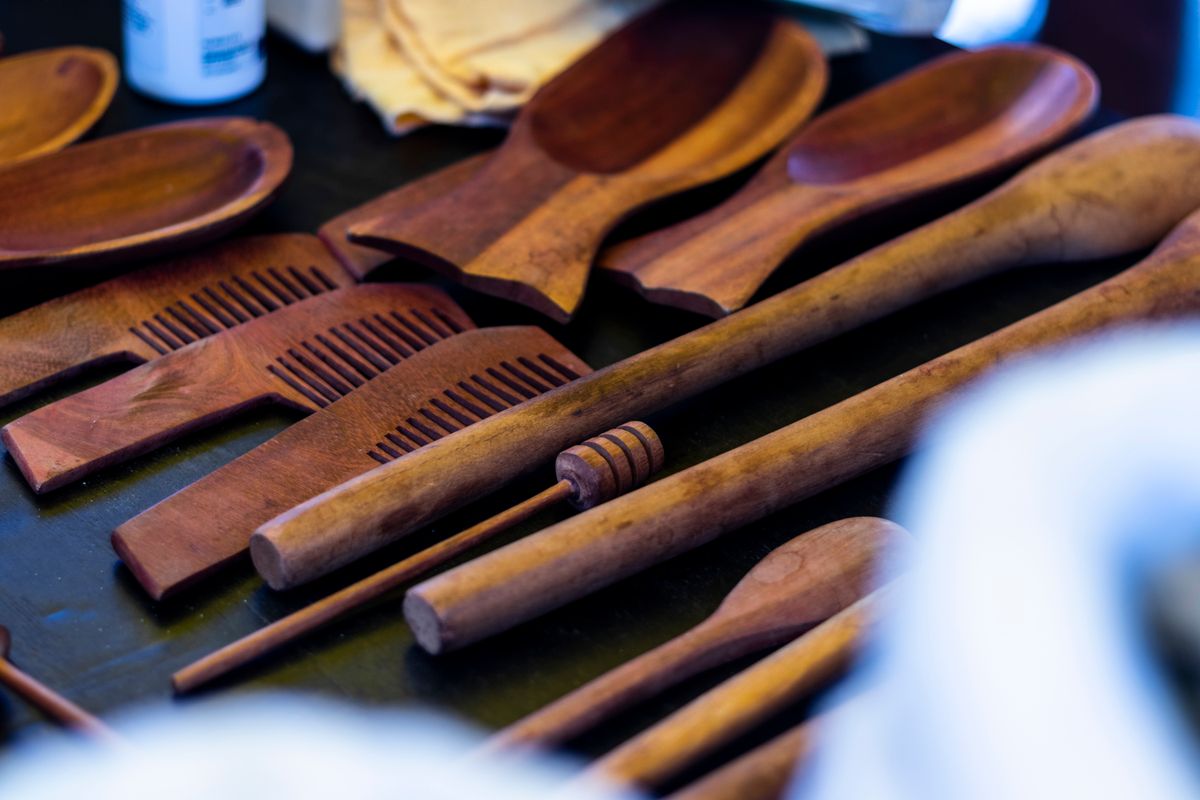
Photo by Evandro Paula Alves on Pexels
Avoid these critical mistakes to ensure your teak tools last for decades:
The Life Cycle of Teak Wood Maintenance
- Day 1 (Unboxing) — Utensils feature a high-gloss protective lacquer coating and rich golden-brown grain hues straight out of the sliding gift box.
- Months 1 - 6 — Factory lacquer gradually softens into a smooth, natural matte-satin patina. Monthly oiling maintains water resistance.
- Years 1 - 5 — Wood deepens into a warm amber hue. Natural silica content hardens the outer surface against knife nicks and skillet scrapes.
- Year 10+ — With proper monthly conditioning, your 9-piece set remains fully functional, non-scratching, and heritage-worthy for a lifetime.
Frequently Asked Questions About Teak Utensil Care
Get fast answers to top questions about keeping your wooden cooking tools in peak condition:
Immediate Post-Care Actions
Your decision: Inspect your teak utensil collection today using the 1-drop water saturation test.
Do this next: Apply a thin layer of food-grade mineral oil to dry utensils using a lint-free microfiber cloth and let absorb overnight for 8 to 12 hours.
- Read next: Drying and Storage Best Practices: Keeping Your Teak Utensil Set Mold-Free
- Read next: Teak Utensil Care FAQ: Solutions for Water Spots, Color Shifts, and Longevity
Upgrade your kitchen arsenal with our complete 9-Piece Teak Kitchen Utensil Set featuring built-in hanging storage holes and our craftsman's promise.
Take action right now to protect your kitchen tools and keep your cooking effortless:
Explore Related Teak Kitchen Care Guides
Link to cluster articles on storage, drying, and cookware usage.
Cover photo by Ron Lach on Pexels.