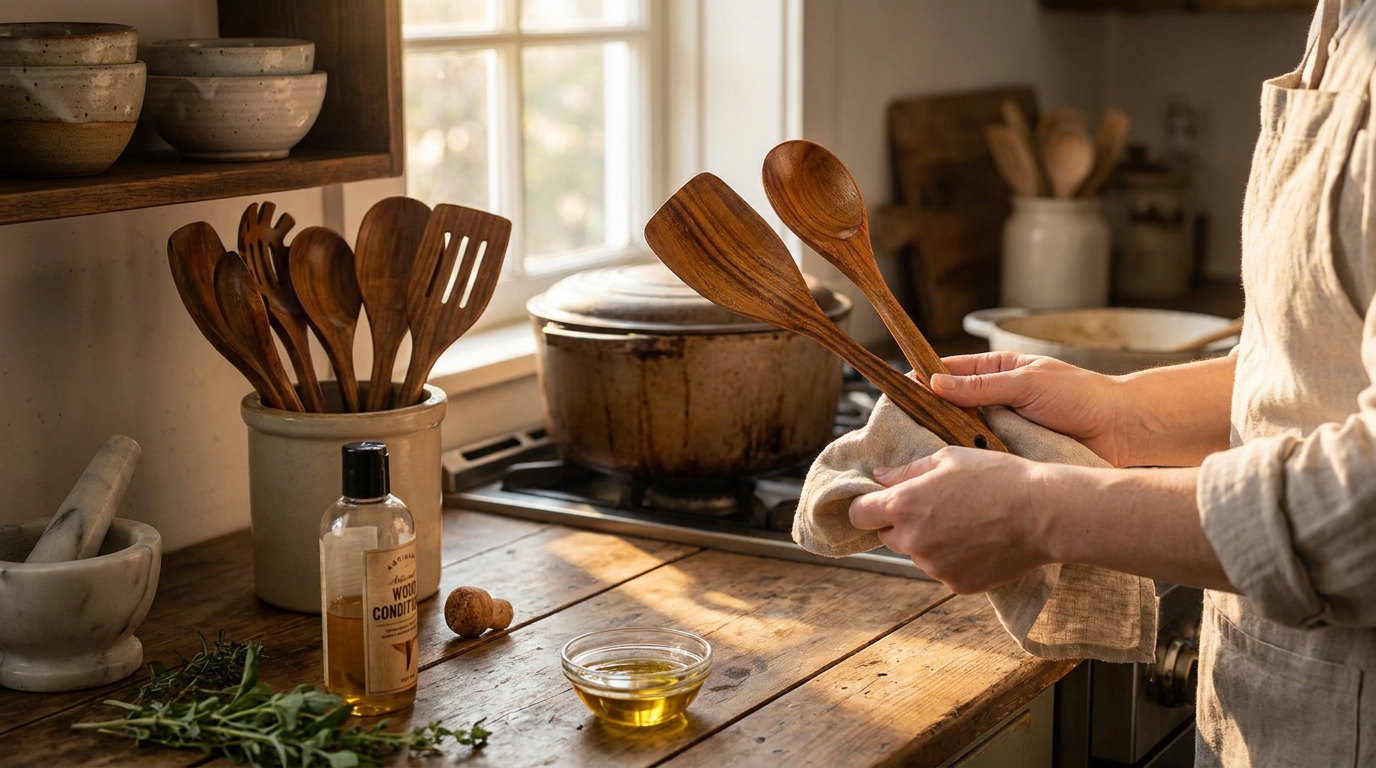
Maintaining Teak Utensils for Long-Term Kitchen Durability
 Sam VasquezBuying Guide Lead
July 23, 2026. This guide details the specific cleaning and preservation protocols required to maximize the lifespan of hardwood kitchen tools. It is written for home cooks who prioritize high-quality, handcrafted teak wood spoons and spatulas over disposable plastic alternatives.
The Realities of Hardwood Degradation in the Kitchen
Wooden kitchenware is often misunderstood as being high-maintenance, but the truth is that most damage occurs through simple neglect or incorrect cleaning habits. The primary enemy of any wood, including durable teak, is moisture fluctuation. When wood is saturated and then dried rapidly, the fibers expand and contract, eventually leading to warping or structural cracking. According to Zulay Kitchen, you should wash your utensils with mild soap and warm water and then dry them completely, as oiling wet wood can trap moisture and lead to mold growth. I have seen many home cooks leave their spoons resting in a pot of simmering soup or soaking in a sink full of water for hours. This is a mistake. The porous nature of wood means it acts like a sponge; excessive water absorption weakens the grain and can cause the wood to feel fuzzy or rough over time.
If you are comparing teak to other common materials, consider bamboo or standard maple. Bamboo is technically a grass and tends to splinter more easily than teak. Maple is a fine domestic hardwood, but it lacks the natural oils found in teak, making it more prone to drying out if you miss a maintenance cycle. Between these two, I’d go with teak every time because its natural silica and oil content provide a built-in defense mechanism that other woods simply don't have. However, even the best teak kitchen utensil set will fail if it is subjected to the high heat and aggressive detergents of a dishwasher. The heat cycle in a dishwasher is particularly brutal, stripping away natural oils and potentially causing the wood to split in a single wash. If you're on a budget and don't want to spend time hand-washing, you might be tempted by cheap plastic, but you'll lose the heat resistance and aesthetic value that teak provides. Skip this if you aren't willing to spend two minutes at the sink after dinner.
Why Teak Utensils Require a Specific Approach
Teak is unique because of its high density and natural oil content, which is why it has been a preferred material for maritime applications for centuries. When you use handcrafted teak wood spoons, you are working with a material that is naturally resistant to rot and pests. However, that doesn't mean it is invincible. The surface of the wood can still become dehydrated, leading to a dull, gray appearance. This is where proper seasoning comes into play. You need to understand how to oil teak wood utensils to maintain that deep golden hue and smooth texture. Without this step, the wood becomes susceptible to picking up stains from pungent ingredients like turmeric or tomato sauce.
In my experience, the tactile feedback of a teak spatula is superior to silicone, but it requires you to be mindful of the tools you use for cleaning. Earlywood Designs suggests that you should always use the scratchy side of your sponge when washing to help remove any food residue that might get stuck in the grain. This might seem counterintuitive if you are used to delicate non-stick pans, but for teak, a bit of friction is necessary to keep the surface clean. Beyond cleaning, you should consider the source of your tools. Supporting sustainable wooden kitchenware brands ensures that the teak you are using is harvested responsibly, which often correlates with better seasoning and finishing processes at the factory level. When you buy a teak spoon for cooking as a housewarming gift, you aren't just giving a tool; you're giving a piece of equipment that can last a decade if the recipient knows not to let it soak. I’ve found that a quick rinse and immediate towel drying is the single most effective way to prevent the wood from raising its grain. If the wood does start to feel rough, a light sanding with high-grit sandpaper followed by a fresh coat of oil will usually restore it to its original state.
A Decision Framework for Utensil Longevity
Choosing how to maintain your kitchen tools depends on how often you cook and the environment of your kitchen. If you live in a very dry climate, your teak will need more frequent oiling than if you live somewhere humid. Here's what I'd actually buy for my own kitchen: a dedicated food-grade mineral oil or a beeswax blend. As noted by Woodastic, you should wash the utensil with warm soapy water, rinse thoroughly, and dry it with a clean towel, letting it air dry for a few hours before applying any conditioners. This patience is what separates a tool that lasts one year from one that lasts twenty.
When evaluating your current maintenance routine, use this checklist to ensure you aren't accidentally shortening the life of your teak:
- Never submerge teak utensils in standing water for more than a few seconds.
- Hand-wash only using mild dish soap; avoid the dishwasher at all costs.
- Use a clean towel to remove surface moisture immediately after rinsing.
- Apply a food-safe oil whenever the wood begins to look pale or feels dry to the touch.
- Avoid using vegetable-based oils like olive or coconut oil for long-term storage, as they can go rancid over time.
- Store utensils in a well-ventilated area rather than a cramped, damp drawer.
Properly maintained teak is one of the most sustainable and durable choices for a modern kitchen. By avoiding the common pitfalls of soaking and machine washing, you protect the integrity of the wood grain and ensure a safe, non-toxic cooking surface for every meal.
Sources