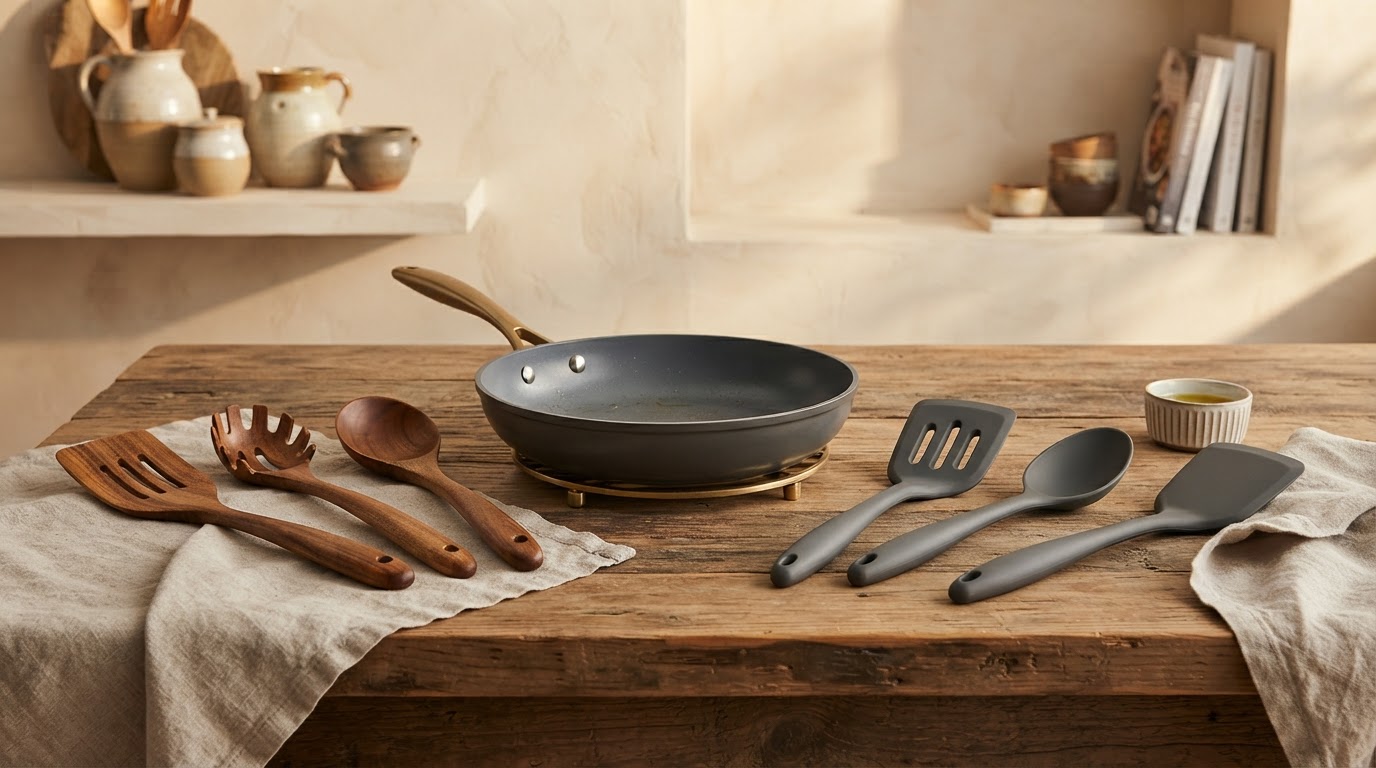
Teak Wood vs Silicone Utensils for Non-Stick Cookware
Teak Wood vs Silicone Utensils for Non-Stick Cookware
When protecting scratch-sensitive skillets, cooks usually choose between silicone and hardwood. While both prevent surface scratches, key differences in performance, ergonomics, and durability set them apart.
For a full analysis on pan safety, explore the main guide.
Material Performance and Rigidity
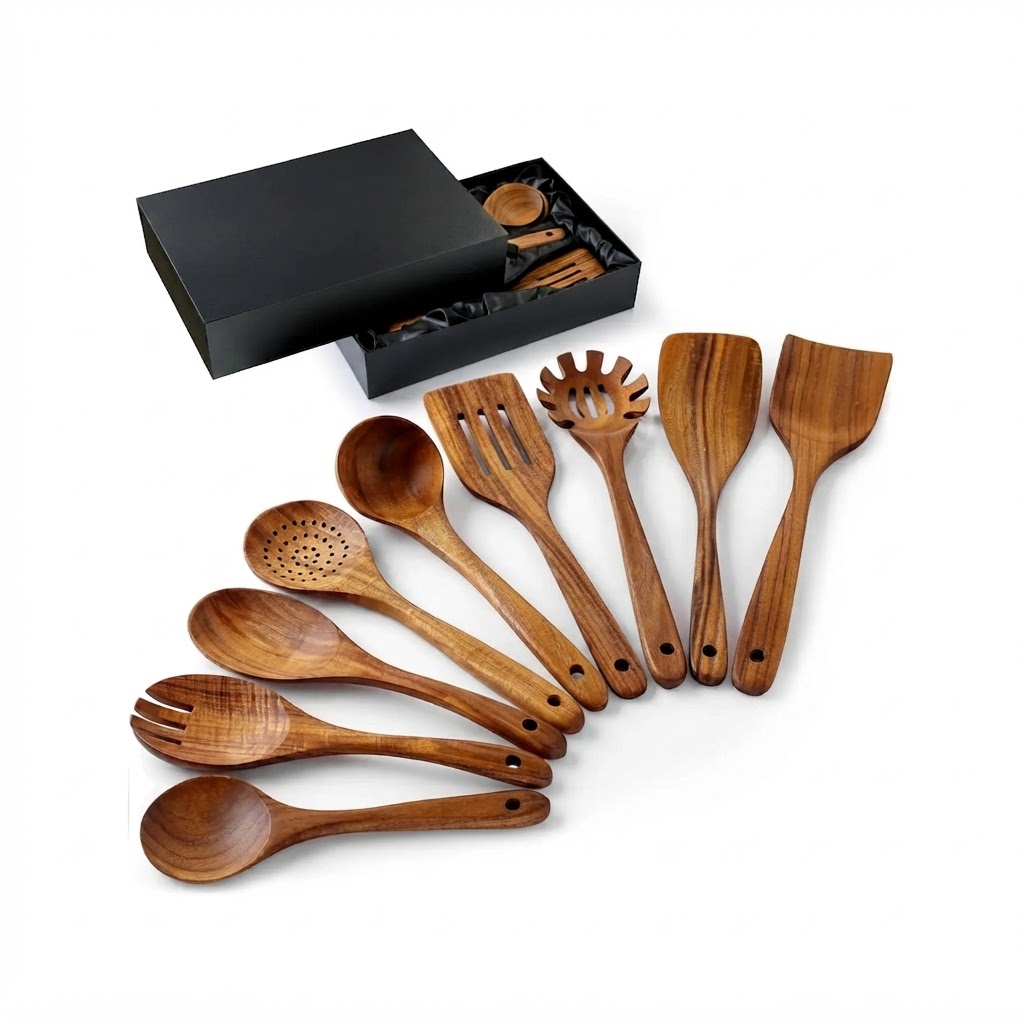
Silicone tools are flexible and safe for delicate pan surfaces. Silicone spatulas generally withstand hot surfaces up to MAX_SAFE_SILICONE_TEMP. However, silicone can bend excessively when lifting heavy meats, stirring thick stews, or scraping caramelized fond from pan bottoms.
Teak wood utensils combine soft surface contact with complete structural rigidity. A solid teak spatula or turner does not bend under weight, providing better leverage when flipping burgers or lifting heavy roasts.
Heat Resistance and Cooking Safety
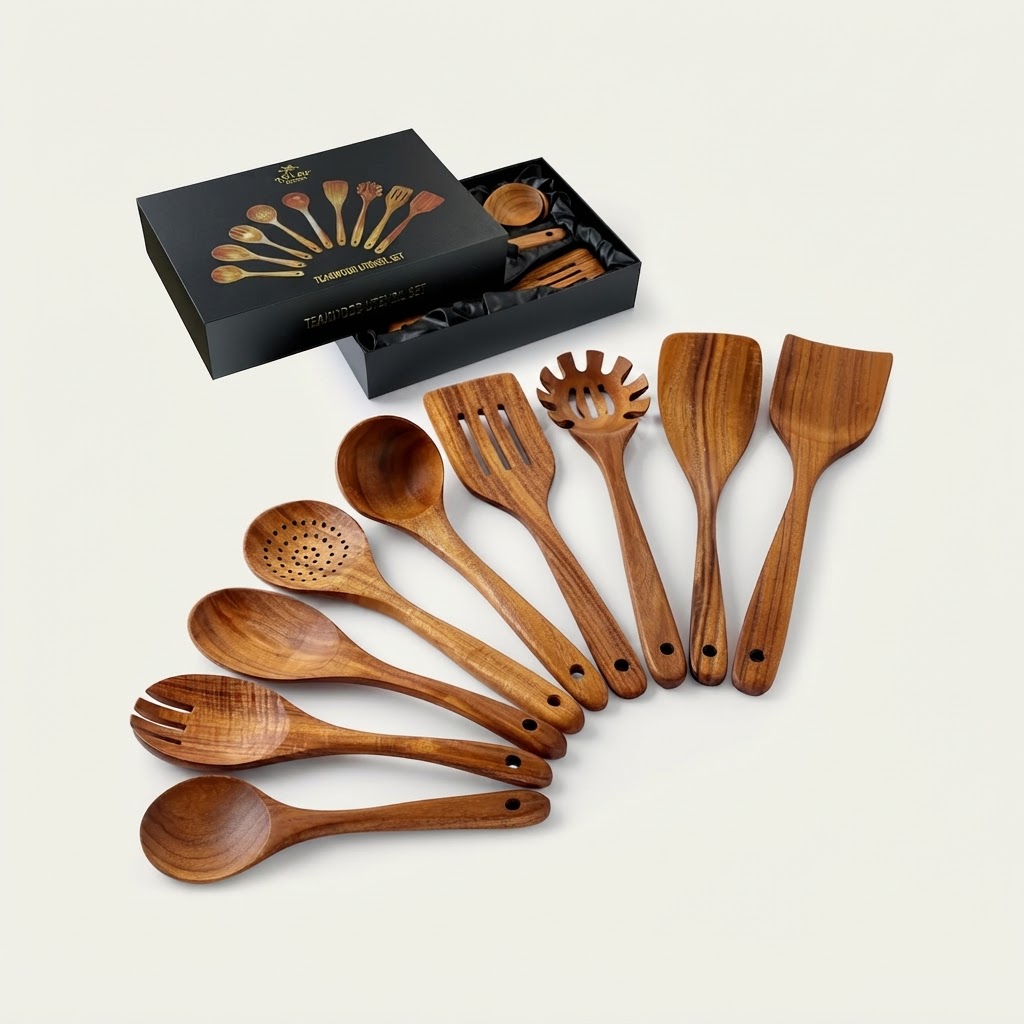
Silicone handles heat well, but cheap silicone tools may degrade or retain strong odors over time. Real teak wood naturally resists heat transfer, meaning handles stay cool to the touch even during prolonged stove cooking.
Furthermore, high-grade teak with a clear lacquer coating offers superior liquid resistance without absorbing food odors or colors.
Aesthetics and Kitchen Ergonomics
While silicone offers a modern look, teak wood brings organic warmth and elegance to your kitchen counter. Variations in grain shades mean every tool is unique. Packaged in a premium sliding gift box, teak sets also make superior gifts for housewarmings or holidays.
Read the full guide: Are Wooden Utensils Safe for Nonstick Pans? The Ultimate Kitchen Guide