Are Wooden Utensils Safe for Nonstick Pans? The Ultimate Kitchen Guide
Are Wooden Utensils Safe for Nonstick Pans? The Ultimate Kitchen Guide
Maintaining the delicate surface of modern non-stick cookware requires choosing tools that prevent micro-scratches. Non-stick coatings like Teflon or ceramic degrade quickly when exposed to abrasive surfaces, rendering pans ineffective and potentially unsafe over time. Cooks frequently ask: are wooden utensils safe for nonstick pans? The short answer is an absolute yes. Wooden tools, especially those carved from dense hardwoods like teak, offer the perfect balance of gentle surface contact, structural strength, and natural heat resistance.
Why Cookware Surface Protection Matters
Non-stick frying pans and Dutch ovens rely on ultra-smooth coatings to release food cleanly with minimal oil. However, standard stainless steel spatulas or hard nylon forks can easily gouge these coatings. Once a non-stick surface is scratched, food begins to stick, cleaning becomes difficult, and the protective coating may peel off. Using smooth, non-abrasive tools ensures your cookware retains its release capabilities for years.
How Wooden Utensils Protect Non-Stick Coatings
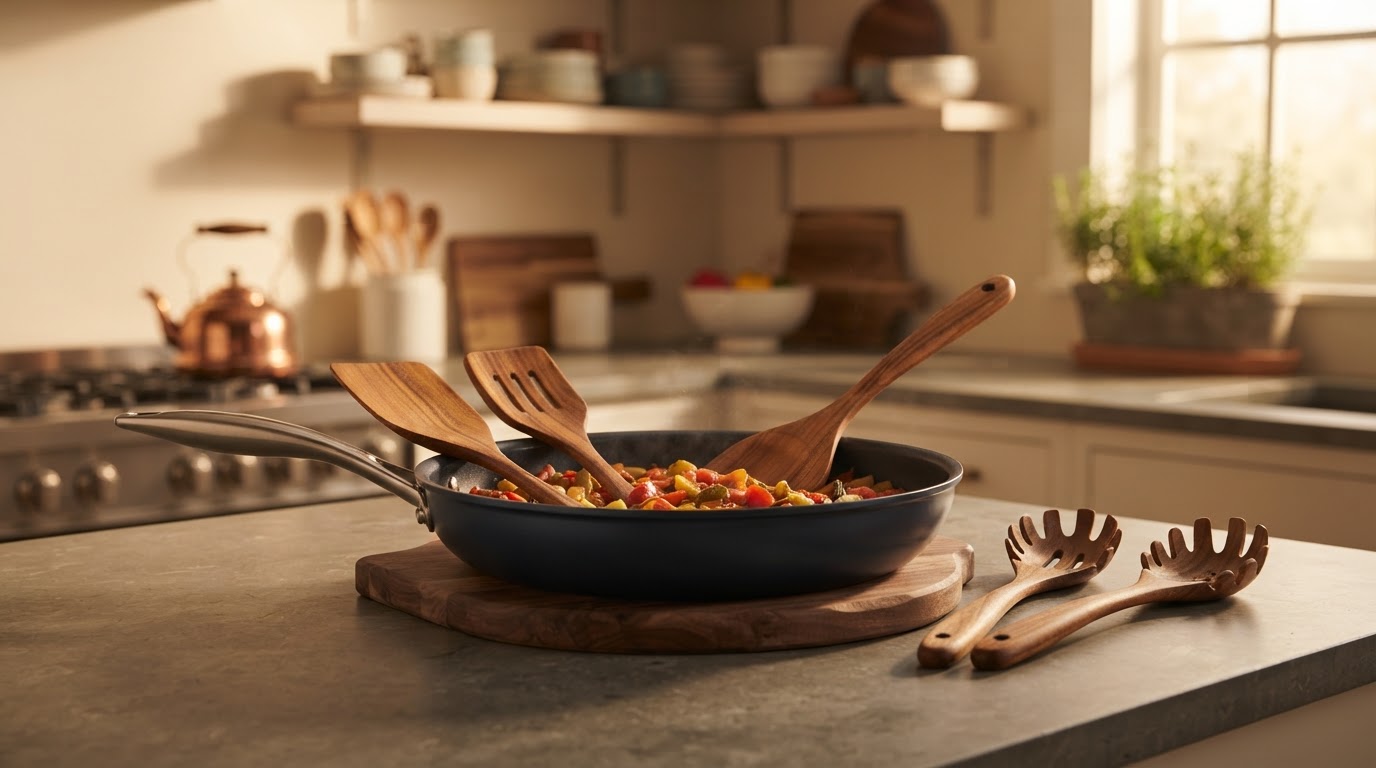
Wooden tools are naturally softer than metal alloys, making them inherently safe for delicate surfaces. When pressed firmly against a delicate skillet during sautéing or stirring, a high-quality wooden spatula flexes ever so slightly on a microscopic scale, absorbing friction rather than gouging the pan. High-density teak wood offers exceptional durability while remaining smooth to the touch and easy to grip, giving home chefs maximum control without risking damage.
Unlike lower-grade plastics or metal, premium teak cookware will never scratch surface coatings, even when scraping up browned bits during deglazing. The natural grain and finish mean you can cook at high stove temperatures without worrying about melting toxic polymers into your dinner.
Comparing Teak Wood to Other Cooking Materials
To understand why teak is an ideal natural choice, consider how it compares to common alternative materials:
- Metal Utensils: High strength, but guaranteed to scratch and destroy non-stick coatings.
- Plastic/Nylon: Safe for non-stick, but prone to melting at temperatures above estimated [max safe silicone temp], potentially leaching chemicals.
- Silicone: Soft and scratch-safe, with high thermal tolerances up to MAX_SAFE_SILICONE_TEMP, but lacks the structural rigidity needed for heavy stirring or flipping solid proteins.
- Teak Wood: Non-scratch, rigid, light, naturally moisture resistant, highly durable, and completely free of melting risks.
Essential Tools in a Complete Wooden Utensil Set
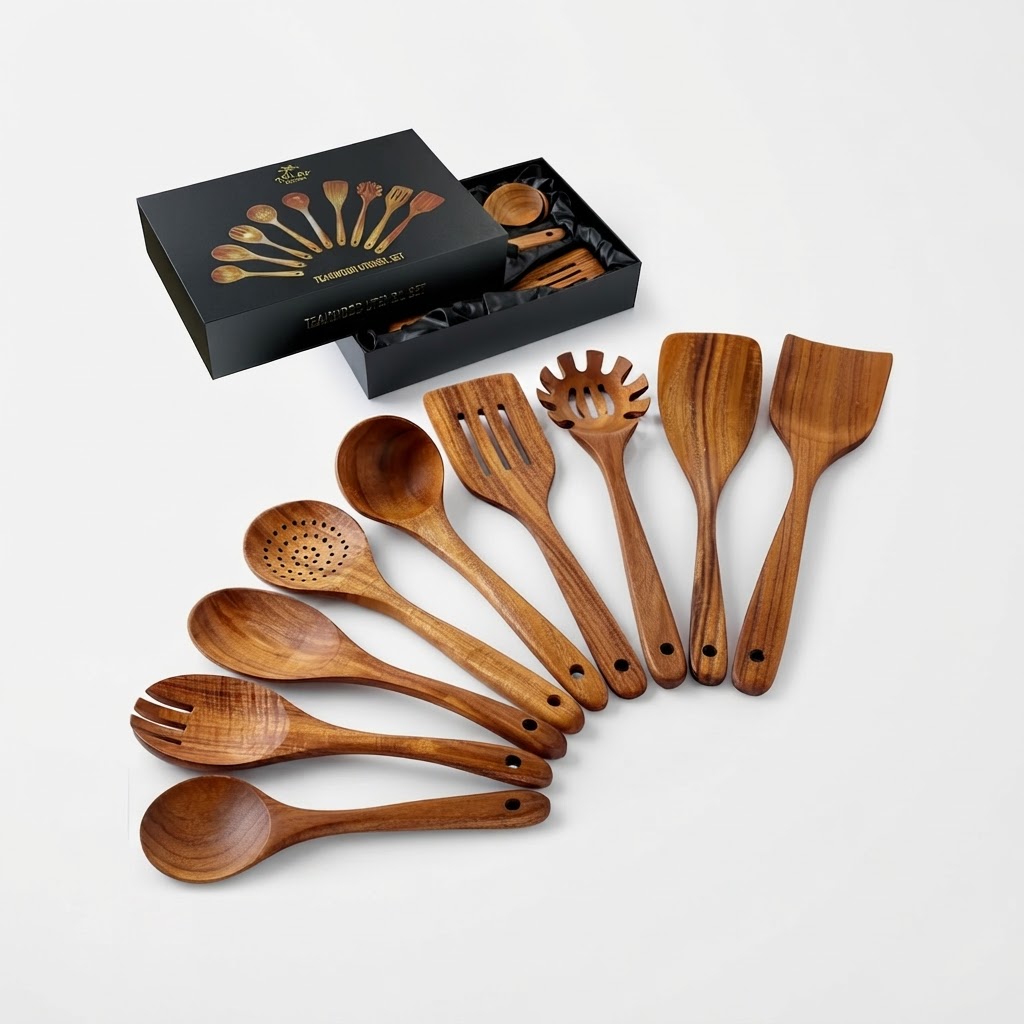
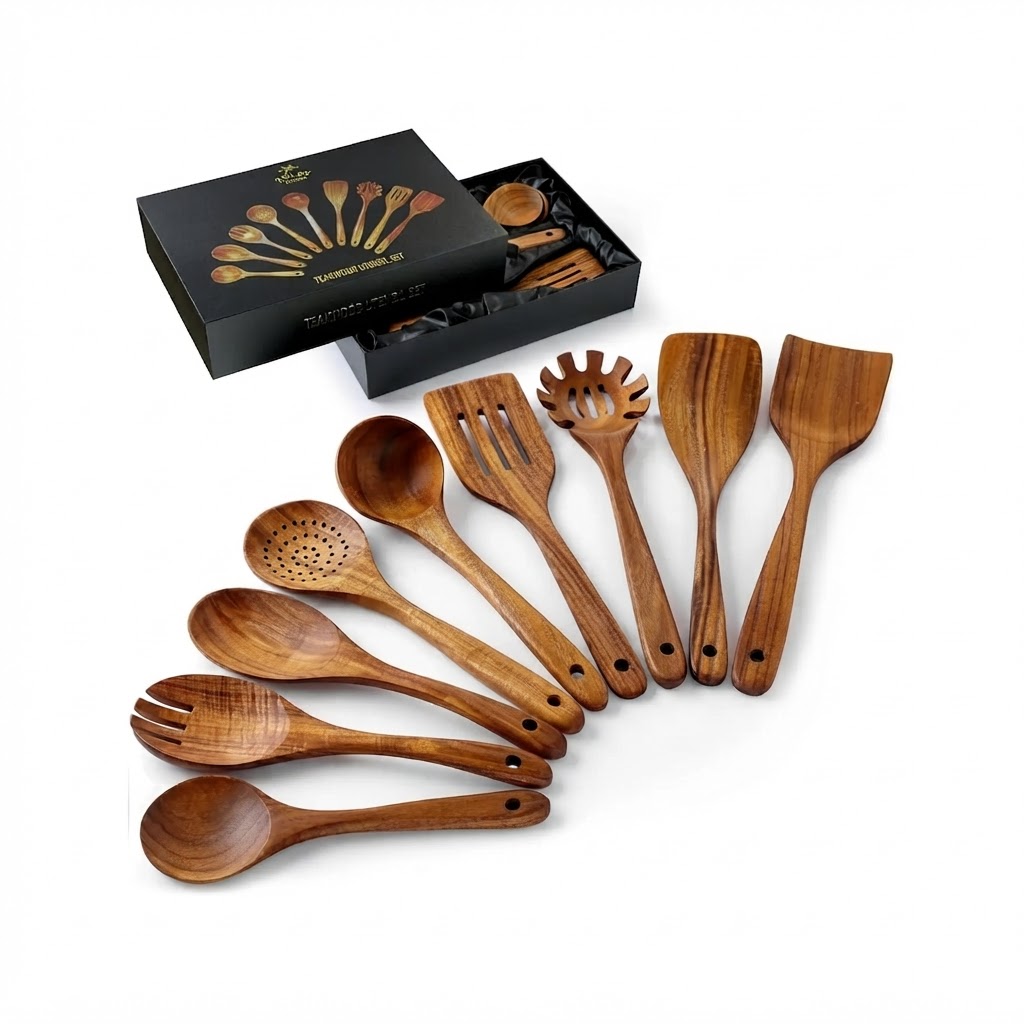
To cover every task from prep to serving without switching to pan-damaging tools, a versatile kitchen requires a complete set. The ideal 9-piece kitchen utensil set includes specialized tools tailored for every technique:
Having every tool crafted from consistent, non-abrasive wood guarantees safety across all your pots and pans.
Care and Maintenance for Wooden Kitchen Tools
Preserving your wooden tools is straightforward. While dishwasher detergents and high heat can dry out timber, hand washing requires minimal effort:
- Rinse with mild soap and warm water immediately after use.
- Dry completely before storing. Integrated handle holes allow convenient hanging storage to promote airflow.
- Avoid prolonged soaking in water.
Related in this cluster
- Why Wooden Utensils Won't Scratch Non-Stick Pans
- How to Clean and Care for Teak Wooden Utensils
- Teak Wood vs Silicone Utensils for Non-Stick Cookware
- 9 Essential Wooden Tools Every Non-Stick Kitchen Needs
- Why Zulay Teak Wooden Utensils Are the Ultimate Non-Stick Choice
- Wooden Cookware Safety FAQ: Non-Stick Pans & Care