
Teak Wood vs Silicone Utensils for Nonstick Pans
Teak Wood vs Silicone Utensils for Nonstick Pans
When stocking a modern kitchen with nonstick-safe cookware tools, two primary materials lead the market: teak wood and high-grade silicone. Both options protect pan coatings from scratches, but they differ significantly in tactile feedback, durability, and structural strength.
Material Properties Overview
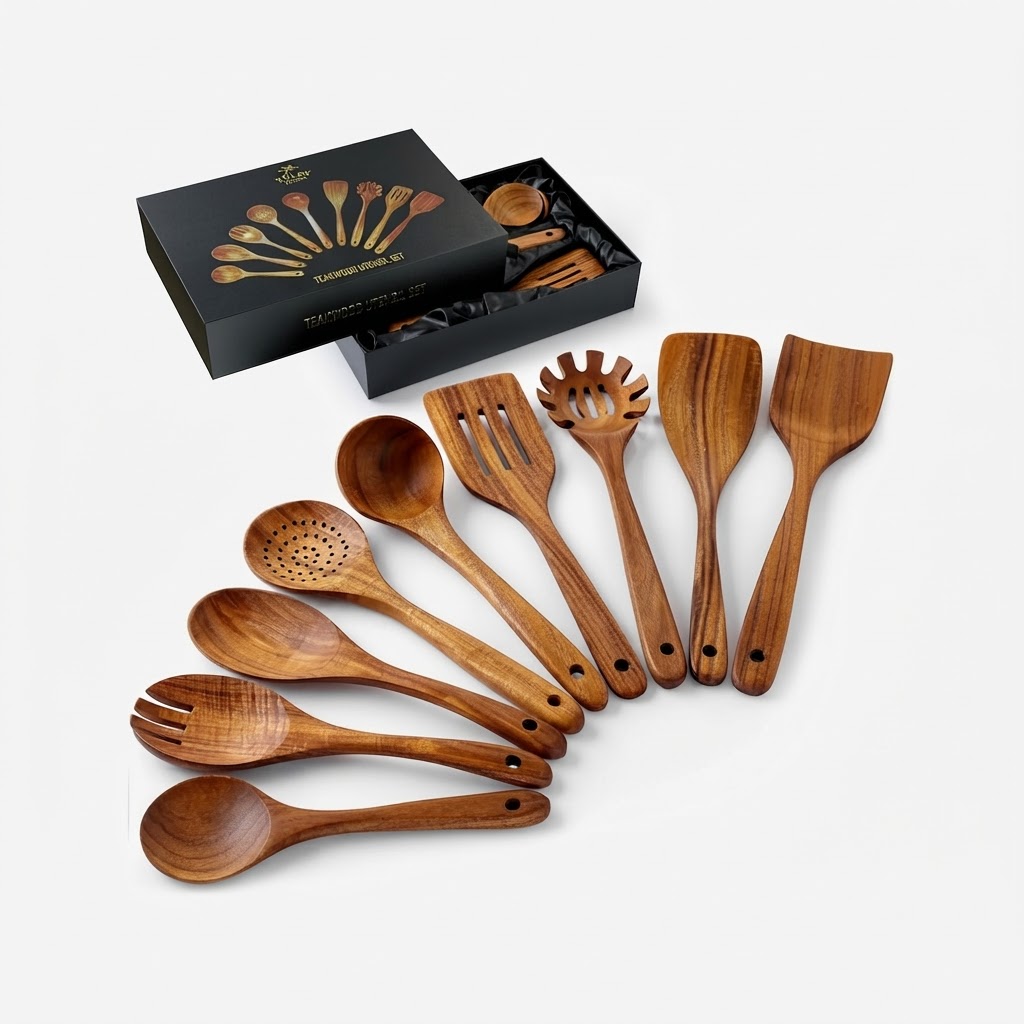
To evaluate both materials, consider their core physical attributes:
- Teak Wood: Boasts a Teak Janka Rating of 1,000-1,150 lbf, making it exceptionally sturdy. It features natural water resistance, a clear lacquer coating for a glossy finish, and smooth, lightweight handling.
- Silicone: Offers extreme flexibility with heat resistance rated around MAX_SAFE_SILICONE_TEMP, but can bend excessively under weight.
Performance Under High Cooking Pressure
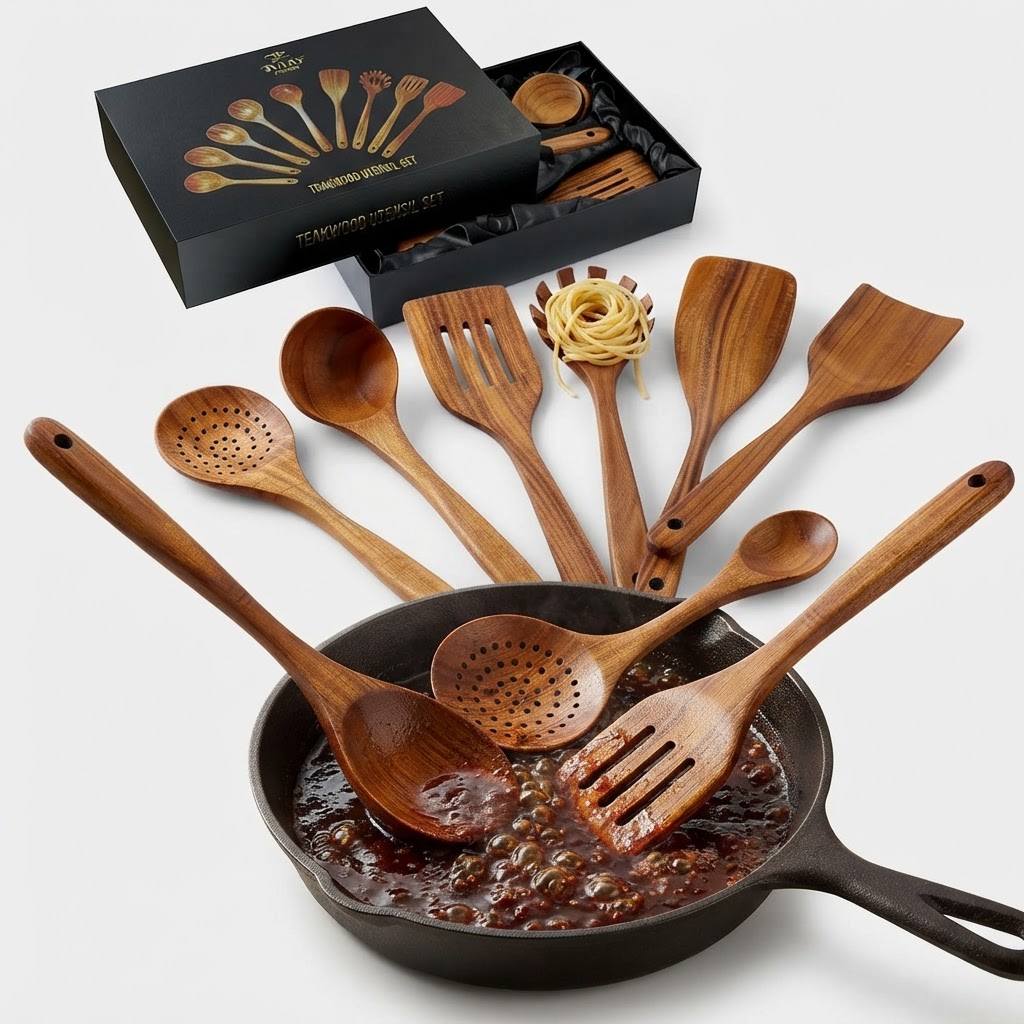
Silicone excels at scraping liquid batters from mixing bowls, but its floppy nature struggles when flipping thick steaks, deglazing pan bottoms, or stirring heavy pasta sauce.
Teak utensils provide firm structural leverage. A solid teak spatula or turner slides under dense foods effortlessly without bending, allowing precise control while maintaining complete nonstick surface safety.
Durability and Kitchen Ergonomics
Silicone utensils can absorb strong food odors or stain when exposed to tomato sauces and turmeric. Over time, silicone handles with internal metal cores can split or retain trapped moisture.
In contrast, high-quality Teak Utensils are crafted from genuine wood with organic grain patterns. They are easy to grip, smooth to touch, and feature convenient holes in the handles for wall hanging. Backed by our craftsman's promise, teak brings timeless beauty and long-lasting utility to nonstick kitchens.
Read the full guide: The Complete Guide to Nonstick Cookware Safety: Are Wooden Spoons Safe for Nonstick Pans?