Can Teak Utensils Go in the Dishwasher? Daily Care FAQ
Teak utensils should not go in the dishwasher. Daily care is a hand rinse with soap and water, then a complete dry. The 9-piece set is finished with a clear lacquer coating and described as highly water resistant, which is not the same as dishwasher-safe. A dishwasher’s heat, standing water, and detergent are how glossy teak turns dull, fuzzy, or warped. Hang pieces from the handle holes until they are dry, then crock.
What the product actually says about cleaning
The published care path is simple: rinse with soap and water, and let the utensils dry completely. Storage uses the holes in the handles. There is no dishwasher-safe claim in that description. Treat the absence as a no.
High water resistance helps a salad fork survive a wet salad and a ladle survive soup. It does not mean a 180-degree-style machine cycle is a good idea. This FAQ will not invent a certification the box does not print.
A sliding gift box and our craftsman's promise also do not translate into machine washing. Our craftsman's promise covers product issues, not a sanitize cycle.
Why dishwashers are hard on teak

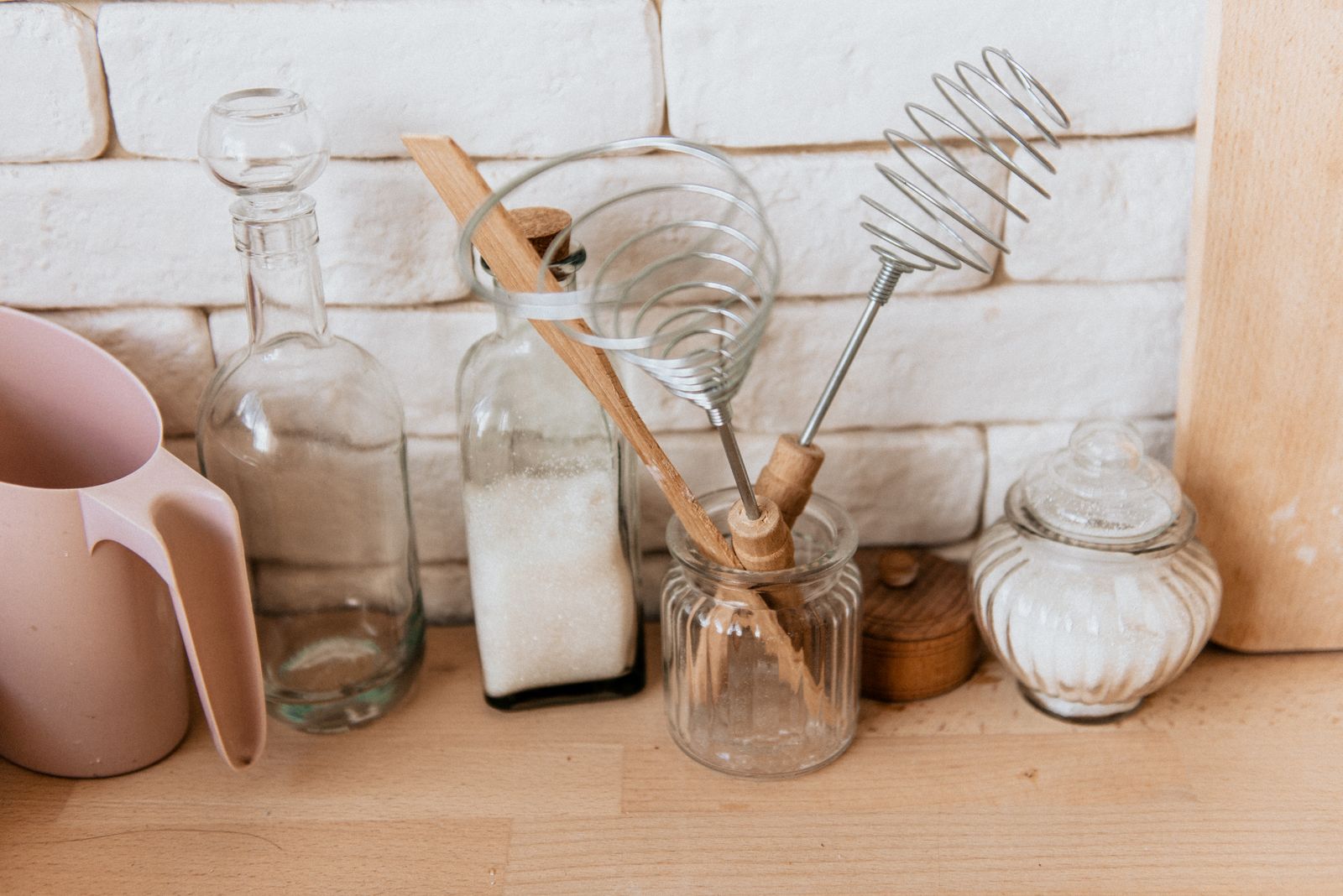
Photo by Georgie Devlin on Pexels
A dishwasher soaks, heats, blasts detergent, and then holds tools in a humid box. Wood swells and shrinks. Lacquer dulls. Grain raises. A pasta server pinned against the rack can dry into a curve. Slots in a turner trap dirty water against the same face every night.
Teak’s Janka hardness of about 1,000–1,150 lbf means the wood is durable in the hand. Hardness is not dishwasher armor. Lightweight, smooth grips become rough when fibers stand up after repeated machine cycles.
Other woods fail faster. Teak fails slower and still fails the same way. “It survived once” is not a care plan.
The daily hand-wash that actually fits weeknights
Keep a brush or a cloth at the sink. Wash the spatula, turner, skimmer, and slotted turner as the pan soaks. Wash the salad pair, serving spoon, ladle, and pasta server as plates stack. That is minutes, not a second job.
Do not leave teak standing in the skillet “until the dishwasher is run.” That soak is the other failure mode. Rinse now. Dry on a rack or on hooks. Completely dry includes the ladle bowl and the slots.
If food has dried on, a short soak measured in minutes — not overnight — can loosen it, then the same soap-and-water rinse. High water resistance helps that short wash. It does not invite a bath.
Drying is the second half of dishwasher avoidance
People put wood in the dishwasher because they do not want to towel nine tools. Hanging solves that. Handle holes are the drying rack. Air reaches both faces, which is also how warp is prevented.
A crock is for dry display, not for steaming handles. If the interior of the jar is wet, the dishwasher was not the only problem.
Stay away from kettle steam if the set is displayed. Machine washing plus steam display is how a glossy finish lasts a month instead of a long daily life.
Dishwasher versus hand-wash for teak utensils
| Step | Hand-wash path | Dishwasher path | | --- | --- | --- | | Water | Brief soap-and-water rinse | Long spray and soak | | Heat | Kitchen air dry | Machine heat | | Finish | Lacquer can stay glossy | Dulling and raised grain | | Shape | Even dry on a hook | Pinned warp risk | | Product claim | Matches rinse-and-dry care | Not described as safe |
What to do if a piece already rode along in a load
Take it out. Let it dry fully, hanging, not in a closed drawer. Feel for raised grain and for a curve. If it is only tired-looking, resume hand-washing and keep it. If it is fuzzy, a careful dry sanding along the grain may help; if it is banana-shaped, retire it from coated-pan scraping.
Do not run a second cycle to “finish drying it.” That is more heat. Do not coat it in a mystery finish to hide dishwasher damage before the next dinner. Clean, dry, and reassess.
The rest of the 9-piece set can cover dinner while one tool recovers on a hook.
Daily teak care checklist (no dishwasher)
- [ ] Rinse with soap and water after cooking.
- [ ] No overnight soak, no dishwasher rack.
- [ ] Dry completely, including slots and bowls.
- [ ] Hang from handle holes.
- [ ] Crock only when dry.
- [ ] Keep the display off steam and splash.
Frequently asked questions
Are teak wood utensils dishwasher safe?
Treat them as not dishwasher-safe. The listed care is soap-and-water rinse and a complete dry. There is no dishwasher-safe claim to lean on.
What about a top-rack, no-heat cycle?
It is still long water plus detergent in a closed box. Hand-wash. A gentler cycle is not a certification.
Can teak be left to air-dry on the counter?
Yes, with air on both sides. Hanging is better than a wet pile. Do not stack damp handles in a crock.
Does high water resistance mean they can soak?
No. It means they tolerate normal cooking moisture better than thirsty woods. Short wash, full dry.
Will one dishwasher cycle ruin teak utensils?
Questions about coverage are a conversation with our team. Care-wise, machine washing is still the wrong daily path even if a single accident happened.
How should a gifted set be cleaned the first time?
Hand-wash, dry completely, then hang or display. Do not “sanitize” a new sliding-box set in the dishwasher before a holiday meal.
Related reading
Hand-wash details, maintenance, and general teak FAQs belong next to this dishwasher answer.
- how to clean and care for teak wooden utensils
- how to clean and maintain teak utensils
- frequently asked questions about teak cooking utensils
- how to care for teak wood utensils for longevity
What to do next
Take any teak out of the dishwasher rack tonight. Wash the 9-piece set by hand, hang it from the handle holes, and wait until every slot and bowl is dry before the crock. That is daily care, and it is the whole dishwasher FAQ.
Cover photo by Dmitry Zvolskiy on Pexels.