Teak vs. Silicone Utensils: Which Is Best for Your Non-Stick Cookware?
Should you choose natural teak hardwood or flexible silicone to protect your non-stick cookware without sacrificing cooking control?
Natural teak hardwood is the clear winner for everyday stovetop cooking. Teak provides exceptional heat resistance, high structural rigidity for flipping and deglazing, zero chemical off-gassing, and 100% scratch-free safety for Teflon and ceramic coatings. While silicone works well for flexible bowl scraping in baking, its floppy blades, tendency to absorb rancid grease, and rim-melting failure modes make teak the ultimate kitchen workhorse.
Side-by-Side Comparison: Teak Hardwood vs. Food-Grade Silicone
| Cooking Scenario / Metric | Teak Hardwood Utensils | Food-Grade Silicone Utensils | Non-Stick Pan Impact & Winner | | --- | --- | --- | --- | | High-Heat Pan Contact & Searing (>400°F) | Does not melt or warp. Natural teak handles high pan heat without losing structural shape. | Can soften or tear over pan edges; lower-grade fillers melt or off-gas harsh plastic fumes. | Winner: Teak. Zero risk of chemical melting onto pan surfaces. | | Deglazing & Fond Scraping | Rigid edge applies uniform pressure to lift browned bits cleanly without gouging delicate coatings. | Bends and flexes excessively under pressure, sliding over stuck food instead of lifting it. | Winner: Teak. Superior mechanical leverage saves pan coatings from hard gouging. | | Heavy Lifting (Burgers, Steaks, Dense Stews) | Solid organic hardwood body provides total leverage with zero blade deflection. | Flexible head sags under heavy food weight, causing hot grease splatter and dropped ingredients. | Winner: Teak. Firm control prevents accidental pan rim drops. | | Grease, Stain & Odor Absorption | High natural oil content and lacquer seal prevent fat penetration, garlic odors, and turmeric staining. | Porous silicone matrix absorbs aromatic oils, tomato paste, and dishwashing soap fragrances over time. | Winner: Teak. Leaves no lingering chemical or soapy taste in delicate dishes. | | Primary Failure Modes | Splitting or drying only if repeatedly washed in automatic dishwashers or left submerged in water. | Melting against skillet rims, head separation from handles, edge tearing, and soapy oil buildup. | Winner: Teak. Extremely durable when handwashed. | | Cookware Aesthetics & Serving Appeal | Elegantly grained natural wood transitions seamlessly from stovetop to dinner table presentation. | Utilitarian rubberized look that degrades in visual quality as edges nick and discolor. | Winner: Teak. Timeless visual elegance for direct tabletop serving. |
Compare how teak hardwood and food-grade silicone handle real-world cooking challenges, heat stress, and non-stick pan protection.
Material Deep-Dive: Failure Modes, Strengths, and Vulnerabilities
Pros
- Teak: High natural silica and organic oils render it naturally water-resistant and rot-proof.
- Teak: Smooth, non-abrasive surface guarantees zero scratches on non-stick, ceramic, or enamel coatings.
- Teak: Rigid handle-to-blade construction offers maximum leverage for heavy flipping and pan deglazing.
- Teak: 100% natural, non-toxic hardwood free from BPA, phthalates, and synthetic polymer fillers.
- Silicone: Highly flexible head contours easily to round glass mixing bowls for cold batter scraping.
- Silicone Failure Mode: Contact with hot skillet rims above 400°F causes edge melting, warping, and permanent notch tears.
- Silicone Failure Mode: Traps fat molecules and dishwasher scents, imparting a soapy taste to butter and eggs.
- Silicone Failure Mode: Flimsy blades flex under dense foods like burgers, causing hot grease splatters.
- Teak Failure Mode: Can dry out or crack if subjected to high-heat dishwasher drying cycles instead of handwashing.
Chef's Insight: Leveraging Rigidity for Non-Stick Pan Protection
Many home cooks mistakenly believe softer tools protect non-stick pans better. In reality, soft silicone forces you to apply extra downward wrist pressure when scraping pan bottoms. This uneven pressure causes cooks to tilt the tool, digging the hard inner handle core or corners into the delicate non-stick coating.
A broad, rigid teak spatula or turner does the mechanical work for you. Because teak will not bend under load, its smooth, perfectly flat hardwood edge slides evenly across Teflon or ceramic surfaces, lifting delicate omelets and caramelized fond effortlessly without applying sharp point-pressure.
The Verdict: Why Natural Teak Is the Superior Everyday Choice
If your goal is to protect your non-stick pans while enjoying effortlessly sturdy cooking tools, natural teak hardwood is the ultimate material. Unlike silicone tools that flop under heavy ingredients, tear at the edges, and absorb soapy dishwasher odors, teak provides uncompromising rigidity, timeless beauty, and lifetime durability.
Transform your kitchen with our elegantly designed 9-Piece Teak Utensil Set. Crafted from high-quality teak wood with a glossy water-resistant lacquer coating, this comprehensive set includes a salad spoon, salad fork, serving spoon, skimmer, spatula, turner, ladle, pasta server, and slotted turner. Perfect for non-stick cookware, safe up to high cooking temperatures, and packaged in a stunning sliding gift box backed by our craftsman's promise.
Key Takeaways for Non-Stick Cookware Safety
- Teak wood is completely scratch-safe for non-stick cookware while offering superior rigidity over silicone.
- Silicone tools suffer from high-heat rim melting, edge tearing, and soapy odor retention.
- Teak contains high natural oil content, making it highly water-resistant and durable.
- Rigid teak turners give home chefs maximum leverage for flipping heavy meats and deglazing sauces cleanly.
- Handwashing teak utensils with mild soap preserves their clear protective finish for a lifetime of cooking.
Decision Matrix: Which Material Matches Your Cooking Style?
Teak is ideal for home cooks who want rigid leverage, natural organic warmth, and total scratch protection on non-stick pans. Silicone is best kept as a secondary tool for cold bowl scraping.
Best choice for
- 9-Piece Teak Utensil Set — Offers sturdy leverage for burgers, steaks, and stir-fries without melting or scratching non-stick coatings.
- Teak Spatula / Flat Turner — Applies smooth, flat contact pressure to lift browned bits cleanly from delicate Teflon or ceramic bottoms.
- Flexible Silicone Spatula — Bends smoothly along curved glass or ceramic bowl walls to scrape light liquid batters.
- You insist on putting all kitchen tools into an automatic high-heat dishwasher cycle.
- You leave utensils resting continuously against an open gas flame burner edge.
- Bamboo Utensils — Budget-friendly option, but significantly drier, more porous, and prone to splintering compared to oil-rich teak.
- High-Temp Nylon — Rigid alternative, but carries serious risks of melting onto non-stick pans and releasing synthetic fumes.
Featured Solution: The Complete 9-Piece Teak Kitchen Utensil Set
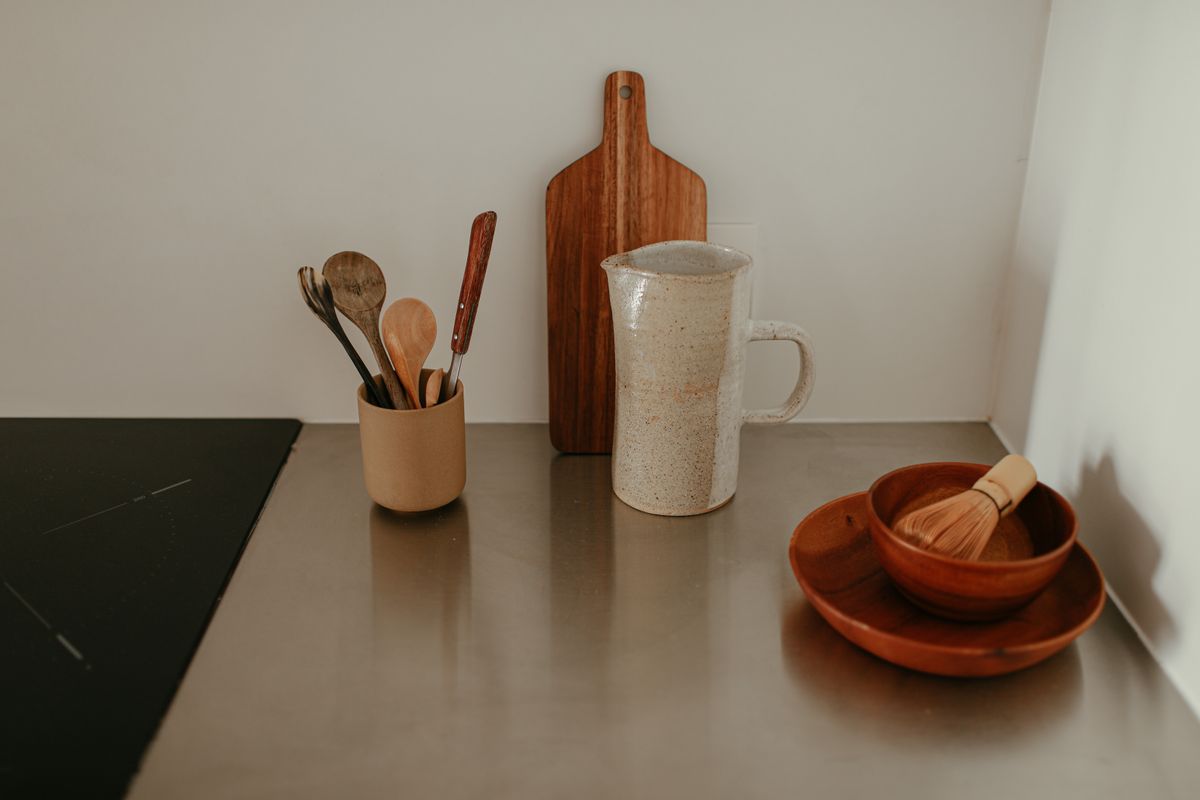
Photo by Cup of Couple on Pexels
Upgrade your culinary setup with a complete, beautifully coordinated collection built specifically to safeguard non-stick cookware.
Real-Kitchen Cooking Scenarios: Testing Teak vs. Silicone
Searing High-Heat Burgers in a Ceramic Non-Stick Skillet — Use a Teak Slotted Turner. The rigid wooden blade slides under heavy meat patties effortlessly without scratching delicate ceramic. Silicone blades flop back under weight, dropping patties and splattering hot grease.
Simmering Rich Tomato Sauce or Garlic Herb Butter — Use a Teak Wooden Ladle or Serving Spoon. Teak's natural density prevents tomato staining and garlic smell retention. Silicone heads trap essential oils and synthetic scents, transferring soapy flavors back into butter dishes.
Scraping Wet Cake Batter or Light Mayonnaise — Use a Flexible Silicone Spatula inside room-temperature mixing bowls. Silicone's edge elasticity conforms smoothly to curved glass contours.
Lifting Boiling Pasta and Skimming Broth — Use the Teak Pasta Server and Skimmer. Teak handles stay cool to the touch even when submerged in hot water, unlike metal-cored synthetic tools.
How do teak and silicone perform when heat, heavy ingredients, and sticky sauces are on the line?
To appreciate why teak wood outperforms silicone in everyday non-stick cooking, it helps to look at material science. Teak (Tectona grandis) is world-renowned for its exceptionally high natural silica content and dense organic oils. These natural resins create a tight, closed-grain cellular structure that naturally repels moisture, prevents swelling, and resists bacterial absorption.
When sculpted into fine kitchen tools and finished with a food-safe clear lacquer, teak provides a velvety-smooth finish that is softer than non-stick pan coatings (such as PTFE or ceramic fluoropolymers) but firmer than any synthetic polymer. This means a teak spatula will never gouge or flake off your pan's non-stick layer, yet it retains 100% of its structural integrity even under heavy pressure.
By contrast, food-grade silicone is an elastomer derived from synthetic polymers. While heat-resistant to moderate temperatures, silicone relies on flexible chemical bonds. Under direct stove contact or high pan heat, silicone edges gradually degrade, form micro-nicks, and lose structural stiffness. Furthermore, silicone's hydrophobic surface chemical structure actively attracts lipophilic fat molecules from oils and dish soaps, leading to that sticky, oily residue or perfume odor that standard dishwashing cannot remove.
Investing in a solid teak utensil set ensures your tools remain hygienic, rigid, and completely odorless over decades of heavy family cooking.
Frequently Asked Questions
Common questions about teak utensils, heat safety, and non-stick pan maintenance.
Your Next Steps for a Scratch-Free Kitchen
Your decision: If you want complete non-stick pan protection combined with rigid scraping leverage, natural organic beauty, and lifetime durability, teak hardwood is the undisputed choice.
Do this next: Upgrade your culinary tools today with the complete 9-Piece Teak Utensil Set to replace scratched plastic and weak silicone tools.
Related resource: Discover premium non-stick safe kitchenware and care guidelines at teakutensils.com.
https://teakutensils.com (9-Piece Teak Kitchen Utensil Set with Premium Gift Box)
Take action today to safeguard your non-stick cookware investment while upgrading your kitchen style.
Recommended Guides for Kitchen Tool Mastery
Connect readers to cluster and pillar content.
Cover photo by Sarah Chai on Pexels.