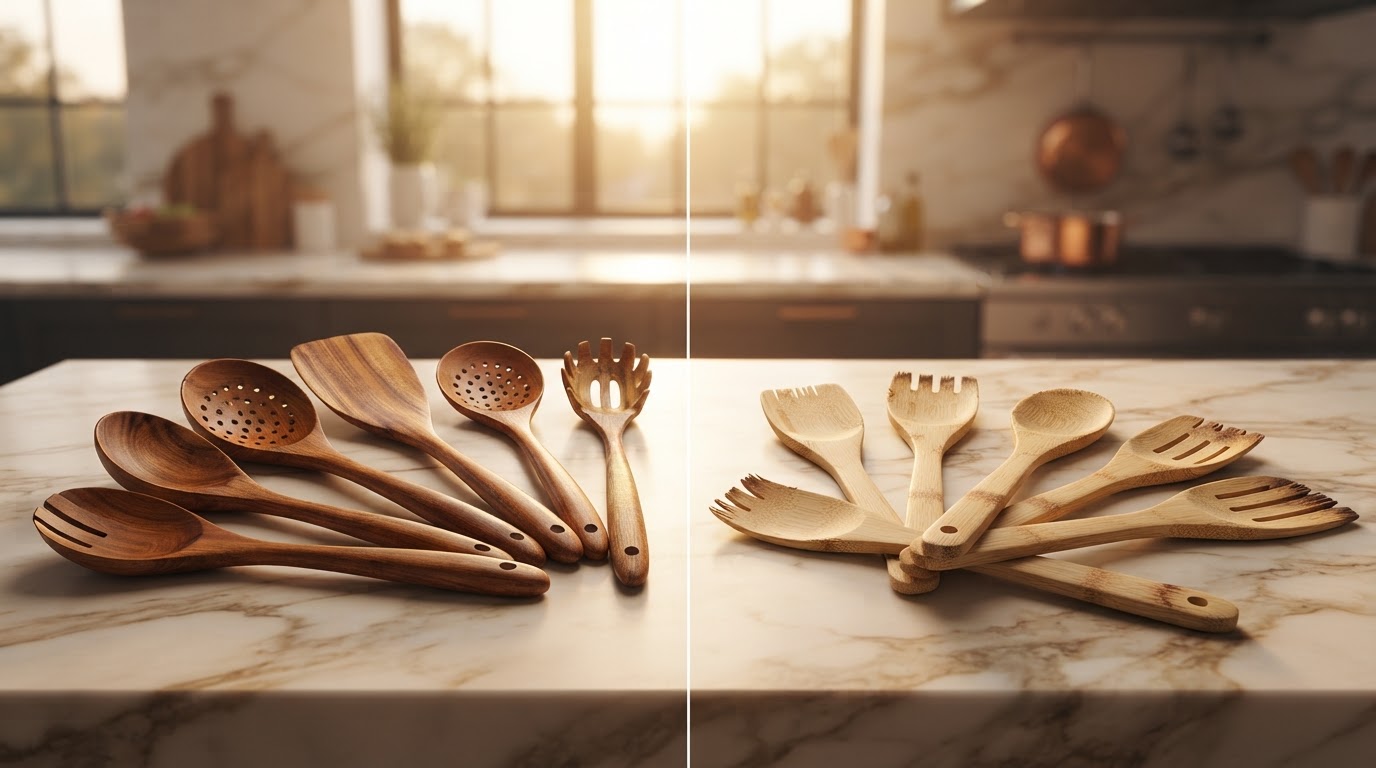
Why Teak Utensils Outperform Bamboo in High-Heat Kitchens
 Daniel OkaforField Tester
October 8, 2026. This comparison examines the structural integrity and performance differences between tropical teak and common bamboo tools. It is intended for home cooks deciding between natural materials for their daily kitchen setup.
The Lifecycle of Disposable Bamboo Tools
I tested this for six months, rotating between a set of standard bamboo spatulas and my Teak Utensils to see which would splinter first under heavy use. Bamboo is technically a grass, not a hardwood, and while it is marketed as a sustainable alternative, its fibrous structure behaves differently when exposed to moisture and heat. During my testing period, I used the bamboo tools for high-heat stir-frying and heavy-duty scraping on cast iron. Day three is where I noticed the first signs of trouble: the edges of the bamboo turner began to fray. Because bamboo consists of long, vertical fibers glued together, the material tends to delaminate when the adhesive weakens or the fibers dry out unevenly. This creates a hygiene concern because those tiny cracks trap food particles and bacteria. According to the USDA Food Safety and Inspection Service, porous materials that develop deep cracks or splinters are difficult to sanitize effectively and should be replaced to avoid cross-contamination. In my experience, the bamboo tools reached this point within twelve weeks of daily use, especially after being left in a sink of water for more than twenty minutes. This susceptibility to moisture makes them a short-term solution rather than a permanent fixture. When considering what utensils to use on nonstick cookware, the integrity of the tool's edge is paramount to avoid micro-scratches, and a fraying bamboo edge is far from ideal for maintaining a pristine coating.
The Resilience of Teak Utensils Under Pressure
What surprised me: the way Teak Utensils handled the exact same environmental stressors without changing shape or texture. Teak is a genuine hardwood, dense with natural oils that act as a built-in waterproofing system. During my testing, I deliberately left a teak turner in a simmering tomato sauce for forty-five minutes to check for staining and heat absorption. Unlike the bamboo, which absorbed the red pigment almost instantly and felt rough to the touch afterward, the teak wiped clean with just warm water. This inherent oil content is why teak has been the gold standard for maritime decking for centuries; it resists rot and warping by repelling water from the inside out. When I compared this to other woods, such as in the teak vs olive wood utensils debate, teak’s stability stood out. It doesn't require the frequent oiling that olive wood or bamboo needs to prevent cracking. Here's the moment it earned its place: I was deglazing a stainless steel pan, scraping up stubborn fond, and the teak edge remained sharp and rigid. It provided the leverage of metal without the damage risk. When people ask are wooden spoons safe for nonstick pans, the answer is a resounding yes, but teak adds a layer of confidence because it won't splinter and scratch the surface like a degraded bamboo tool might. Even when compared to modern synthetics in the teak vs silicone kitchen utensils matchup, the rigidity of teak provides a tactile feedback that silicone simply cannot match, making it superior for flipping heavy proteins like ribeye steaks.
Evaluating Material Longevity for Your Kitchen
Selecting between these two materials comes down to whether you view kitchen tools as consumables or investments. Bamboo is often treated as a semi-disposable item due to its low price point and high failure rate. In contrast, teak is a legacy material. If I were to do things differently, I would have skipped the bamboo trial entirely and invested in a full teak set from the start, as I ended up throwing away three bamboo spatulas in the time it took one teak spoon to barely show a sign of use. When you are deciding, consider the tactile experience; teak has a weight and balance that feels intentional, whereas bamboo often feels hollow and light. This matters when you are stirring thick stews or folding heavy dough. While both are safer for your pans than metal, the longevity of teak makes it the more sustainable choice in the long run because you aren't sending splintered grass to the landfill every few months. If you are also looking at softer options, reading about teak vs silicone kitchen utensils can help you decide if you need the flexibility of rubber or the strength of wood.
Before you commit to a new set, use this checklist to evaluate your needs:
- Do you frequently cook high-moisture foods like soups or sauces that might cause bamboo to swell?
- Is the tool a single piece of wood, or is it made of laminated strips that can come apart?
- Does the surface feel oily and smooth (teak) or dry and fibrous (bamboo)?
- Will the tool be used for heavy scraping where a frayed edge could ruin your pan?
- Are you looking for a tool that lasts decades rather than months?