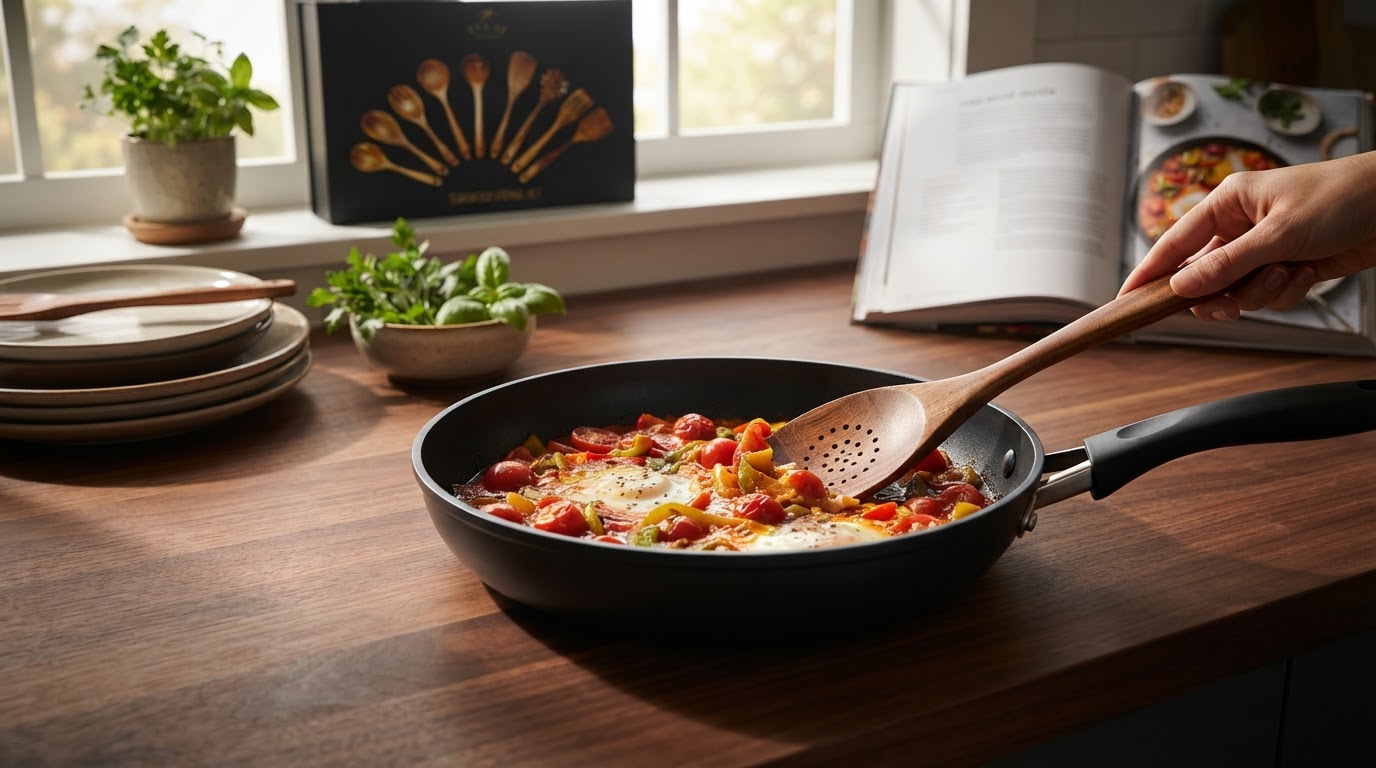
Why Wooden Utensils Won't Scratch Non-Stick Pans
Why Wooden Utensils Won't Scratch Non-Stick Pans
Non-stick pans feature delicate surface layers engineered to stop food from sticking. However, these coatings are vulnerable to mechanical friction. Understanding why wooden utensils dont scratch pans comes down to material hardness and surface friction.
The Hardness Scale of Kitchenware Materials
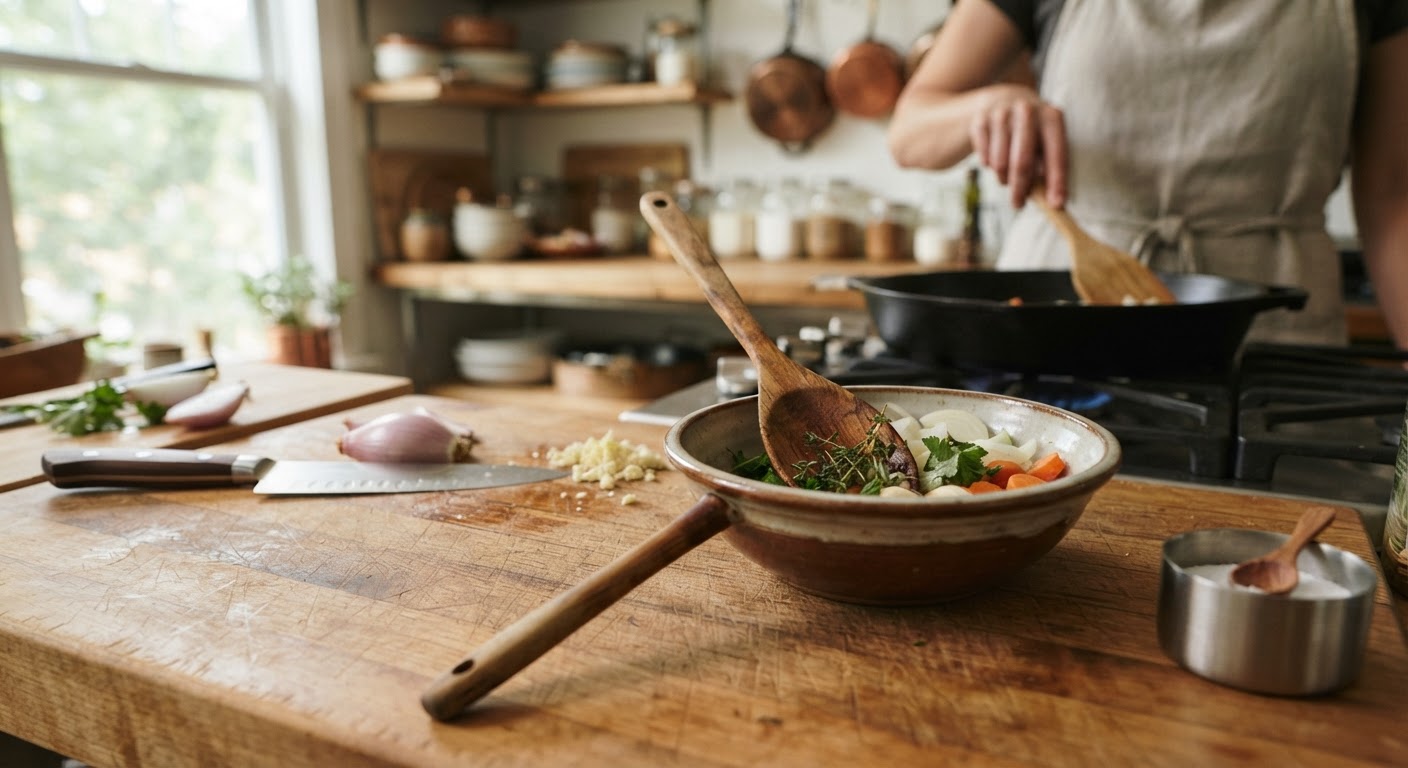
Every material possesses a specific hardness rating. Stainless steel and aluminum utensils are significantly harder than Teflon or ceramic non-stick coatings. When hard metal strikes a softer pan lining, it gouges the surface, causing microscopic flaking and permanent damage.
Wood, on the other hand, exhibits a lower structural hardness than non-stick polymer and ceramic matrix coatings. As detailed in the main guide, wooden tools absorb friction rather than digging into the pot's lining.
How Teak Wood Protects Non-Stick Coatings
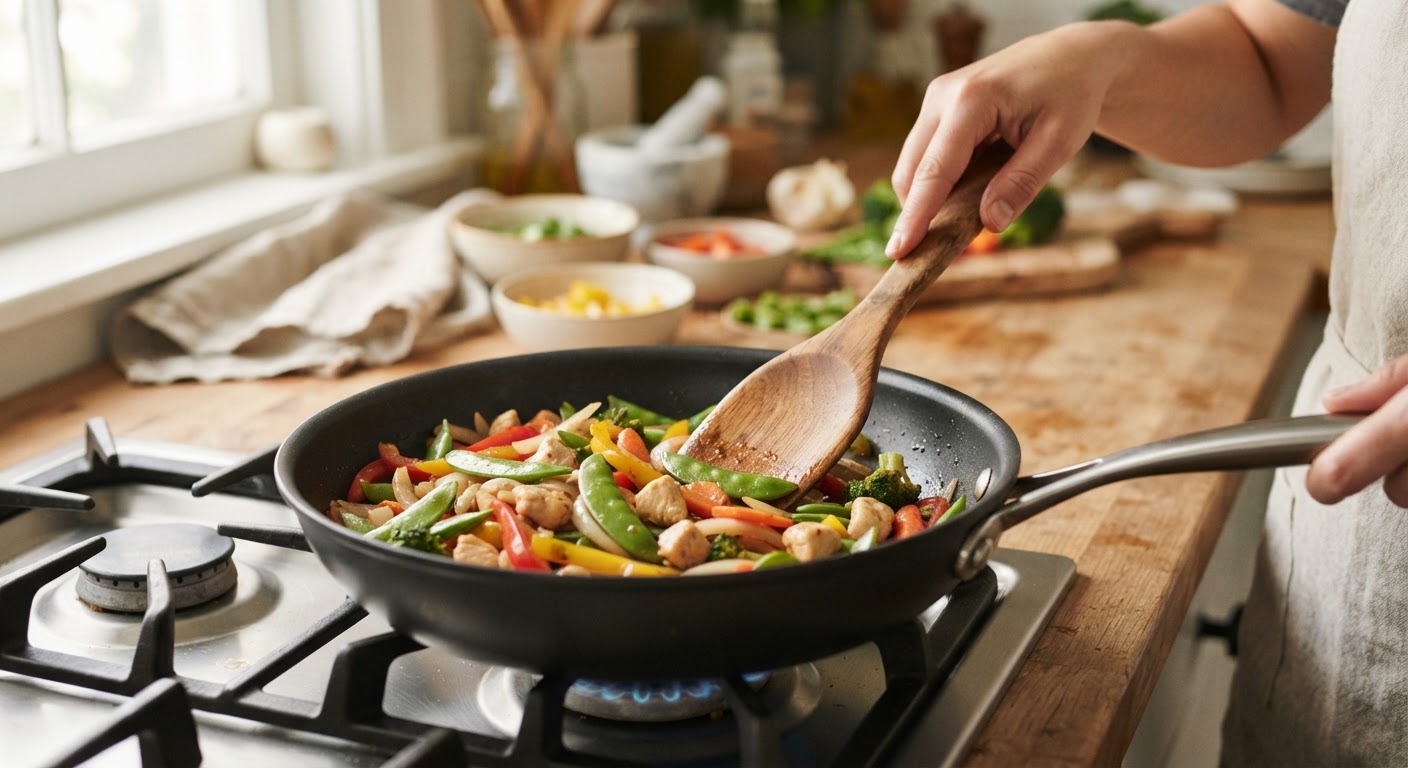
Not all wood is created equal. Softwoods can splinter, leaving rough edges that might eventually drag across cookware. Hardwoods like teak offer dense grain structures that are sanded down smooth to the touch.
- No Sharp Metal Edges: Carved wooden edges press flat against skillet bottoms.
- Flexibility Under Pressure: Wood flexes gently under firm downward pressure.
- Protective Clear Lacquer: Premium sets feature a clear lacquer coating, creating an ultra-smooth barrier between the wood fibers and your pan.
Choosing the Right Wood for Longevity
A 9-piece set made of high-quality teak wood provides durable tools that stay lightweight and smooth over years of cooking. Because teak naturally resists moisture absorption, it maintains its smooth finish without warping or roughness, ensuring your non-stick pans remain safe permanently.
Read the full guide: Are Wooden Utensils Safe for Nonstick Pans? The Ultimate Kitchen Guide