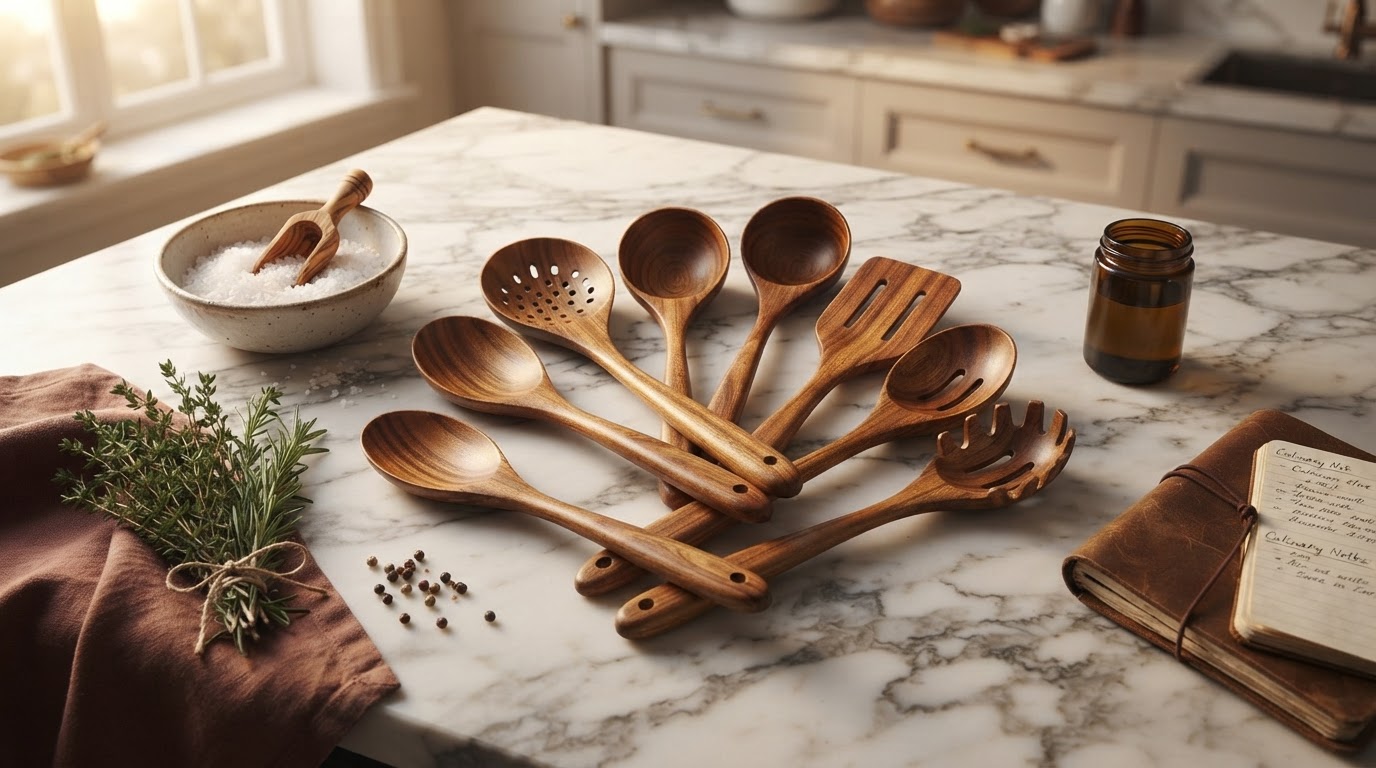
A 5-Point Quality Audit for Teak Utensils Kitchenware
 Maya ChenContributing Editor
October 5, 2026 — Recent shifts in culinary procurement indicate a move away from silicone-based tools toward high-density hardwoods, specifically those offered by Teak Utensils. The conventional wisdom says that all wooden tools are prone to cracking and bacterial absorption, yet this fails to account for the specific material properties of Tectona grandis.
While many home chefs prioritize aesthetic appeal, the functional durability of a tool is dictated by its Janka hardness rating and natural oil content. According to data from the Wood Database, teak possesses a Janka hardness of approximately 1,070 lbf, which provides a significant buffer against mechanical wear compared to softer woods like bamboo or pine. This density is the primary reason the material remains the standard for maritime applications and high-end culinary tools alike.
The 5-Point Material Audit
To determine if a tool qualifies as a functional essential, it must pass a rigorous material audit focused on long-term utility rather than initial shelf appeal. First, the silica content must be high enough to provide natural water resistance; teak is unique in its high silica concentration, which acts as a built-in sealant. Second, the grain orientation must be consistent to prevent warping under thermal stress. Third, the weight-to-balance ratio must allow for prolonged use without ergonomic strain. Fourth, the surface finish must be free of synthetic lacquers that can flake into food at high temperatures. Fifth, the tool must demonstrate chemical inertia when exposed to acidic ingredients like citrus or vinegar. Run the math: a standard 9 piece teak wooden utensil set offers a lower cost-per-use over a five-year horizon than cheaper nylon alternatives that require biannual replacement due to melting or staining. When selecting the best teak wood kitchen utensil set, the focus should remain on these structural metrics rather than decorative elements. Here's the part nobody talks about: most consumers over-buy tools they will never use, whereas a focused set provides the specific mechanical advantages needed for high-heat searing and deglazing without damaging non-stick surfaces.
Expert tip: Maintain the integrity of your tools by applying a food-grade mineral oil every 30 days to replenish the natural resins that are stripped during high-temperature washing.
Understanding these metrics is vital when selecting high-performance Teak Utensils for daily kitchen tasks. For those transitioning to this material, evaluating a 3-axis framework for the 9 piece Teak Utensils set provides a clearer picture of utility distribution. If you are considering these tools as a gift, there are specific logistical benefits to choosing a Teak Utensils set with a gift box to ensure product protection during transit. Furthermore, identifying the best wooden utensil gift set for housewarming requires looking past the packaging to the actual wood grade included. I’ll change my mind when a synthetic polymer can match the 1,000+ lbf Janka rating while remaining biodegradable.