Selecting High-Performance Teak Utensils for Daily Cooking
 Daniel OkaforField Tester
October 1, 2026. This evaluation focuses on identifying the specific attributes that define a high-performance teak wood kitchen utensil set. It is written for home cooks who require tools capable of transitioning from high-heat searing to delicate serving without compromising the integrity of their cookware.
The Durability Gap in Modern Cookware Tools
I tested this for three months in a kitchen that handles everything from heavy cast iron to fragile ceramic-coated pans. The problem I consistently encountered with standard wooden spoons was moisture absorption and subsequent splintering. When wood is porous, it traps bacteria and odors, which eventually leads to the material cracking under the stress of heat. According to Serious Eats, even highly-rated tools like the Jonathan's Spoons Spootle are evaluated based on their ergonomic handle and durable construction because these factors determine how long a tool survives the daily grind of a busy kitchen. In my own testing, I found that many hardwoods simply don't have the natural oil content to withstand repeated immersion in boiling sauces.
Day three is where I noticed the primary difference between teak and other common woods like bamboo or beechwood. While the cheaper alternatives began to feel rough to the touch after a few dishwasher cycles—which I did strictly for stress-testing purposes—the teak maintained a tight grain. This is critical because a wood that frays will eventually scratch the very non-stick surfaces it is supposed to protect. I spent forty-eight hours observing how different woods reacted to being left in a pot of simmering tomato sauce. The acidity usually strips the finish off inferior sets, but the dense silica content in teak acts as a natural barrier. What I'd do differently next time is avoid the temptation to buy single-piece replacements and instead invest in a cohesive set that ensures consistent weight and balance across all cooking tasks. If you are starting from scratch, the 9 piece teak wooden utensil set provides the necessary variety to cover these scenarios without needing supplementary plastic tools.
Performance Advantages of Teak Utensils Construction
What surprised me during the heavy-use phase was the thermal resistance of the wood. Teak Utensils are crafted to be heat and moisture resistant, which is a significant upgrade over nylon tools that can melt if left leaning against a hot pan rim. In my kitchen, I compared these to the Zulay Kitchen teak wood utensils set, which is noted for being made without BPA, PTFE, PFOA, and PFAS. This chemical-free profile is the main reason these tools have earned their place in my drawer. When you are deglazing a pan, you need a tool that can scrape the fond without leaching synthetic chemicals into the food.
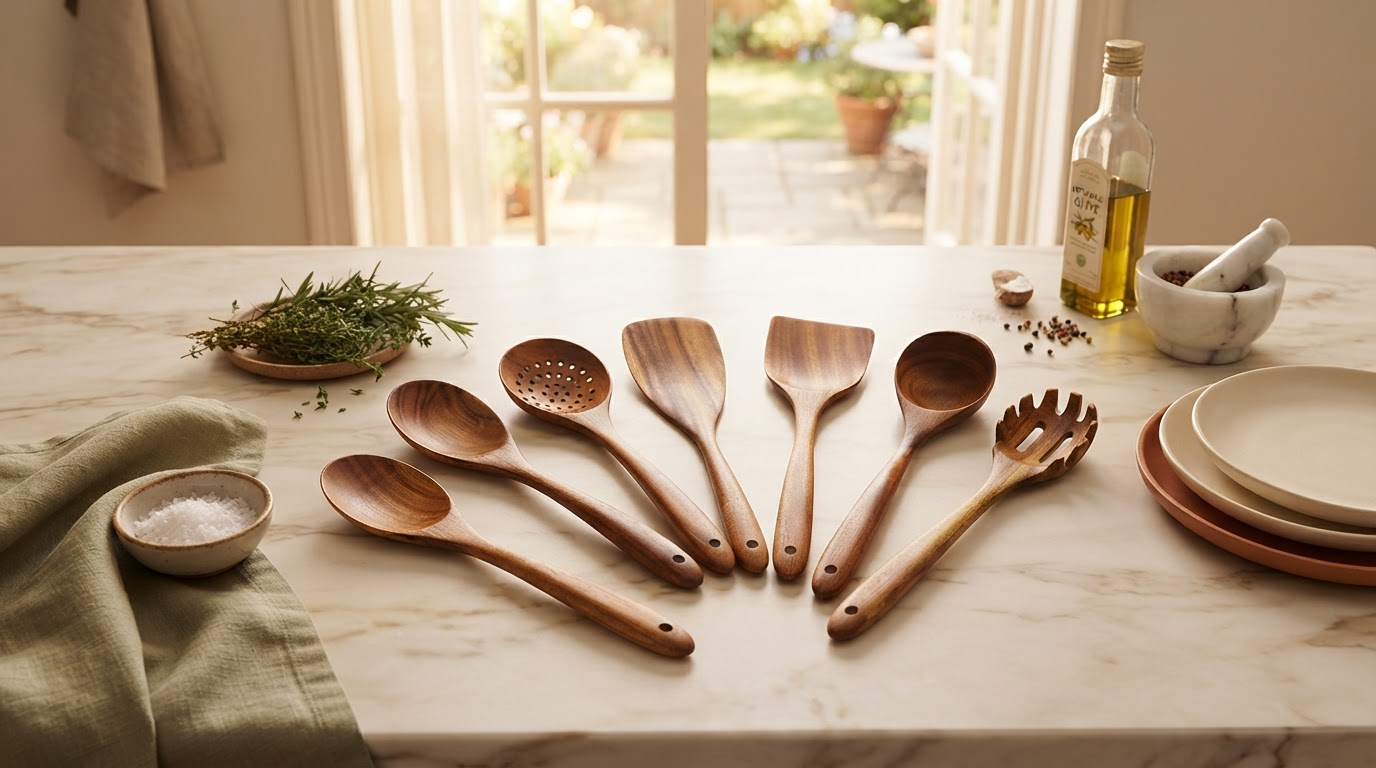
Here's the moment it earned its place: I was preparing a thick risotto that required constant stirring for twenty minutes. The ergonomic taper of the Teak Utensils handle prevented the hand fatigue I usually get with thinner, flat-profile spoons. The weight distribution is centered toward the head, allowing the tool to do the work of moving heavy ingredients. For those who prioritize organization alongside performance, the essential wooden cooking utensils for home chefs highlights how specific shapes—like the specialized turner and the deep ladle—serve distinct roles that a generic spoon cannot replicate. I also found that the natural aesthetics of the wood make them suitable for open-concept kitchens. If you are looking for a presentation-ready option, the teak kitchen utensil set with gift box offers the same professional-grade tools in a format that works well for display or gifting. The durability isn't just about the wood itself, but how the wood is finished; these tools are sanded to a level that feels almost like polished stone, ensuring there are no snags when wiping them clean.
A Framework for Selecting Your Kitchen Set
When you are deciding on the right configuration for your kitchen, you have to look past the number of pieces and evaluate the utility of each shape. I have seen many sets that include three different sizes of the same spoon, which is a waste of drawer space. A functional set should provide a range of motion, from scraping flat surfaces to reaching into the corners of a deep stockpot. This is why the best wooden utensil gift set for housewarming is often a better choice for beginners, as it curates the most frequently used silhouettes.
Before finalizing a purchase, I recommend following this decision framework based on my field observations:
- Surface Compatibility: Verify the wood is sanded smooth to ensure it is safe for non-stick and seasoned cast iron surfaces.
- Material Purity: Look for sets confirmed to be free of toxic glues or synthetic lacquers that can peel under high heat.
- Grain Density: High-quality teak should feel heavy for its size; this indicates a high oil content and better moisture resistance.
- Handle Ergonomics: Ensure the handles have a rounded or contoured grip rather than a flat, rectangular profile to prevent hand strain.
- Set Versatility: Prioritize sets that include a specialized turner, a slotted spoon for drainage, and a solid spoon for basting.
Selecting the right tools is a matter of balancing immediate utility with long-term durability. By focusing on the natural properties of teak, you can maintain a safer, more efficient kitchen environment.