Should I Choose Teak Utensils or Bamboo for My Kitchen?
 Daniel OkaforField Tester
July 23, 2026 — Teak Utensils provide significantly higher heat resistance and structural longevity compared to bamboo, though they require a higher initial investment.
Home cooks often find themselves choosing between these two materials when moving away from plastic or silicone. The decision usually hinges on whether one prioritizes the lower upfront cost of grass-based fibers or the long-term performance of organic hardwoods.
Does teak or bamboo last longer in high-heat cooking?
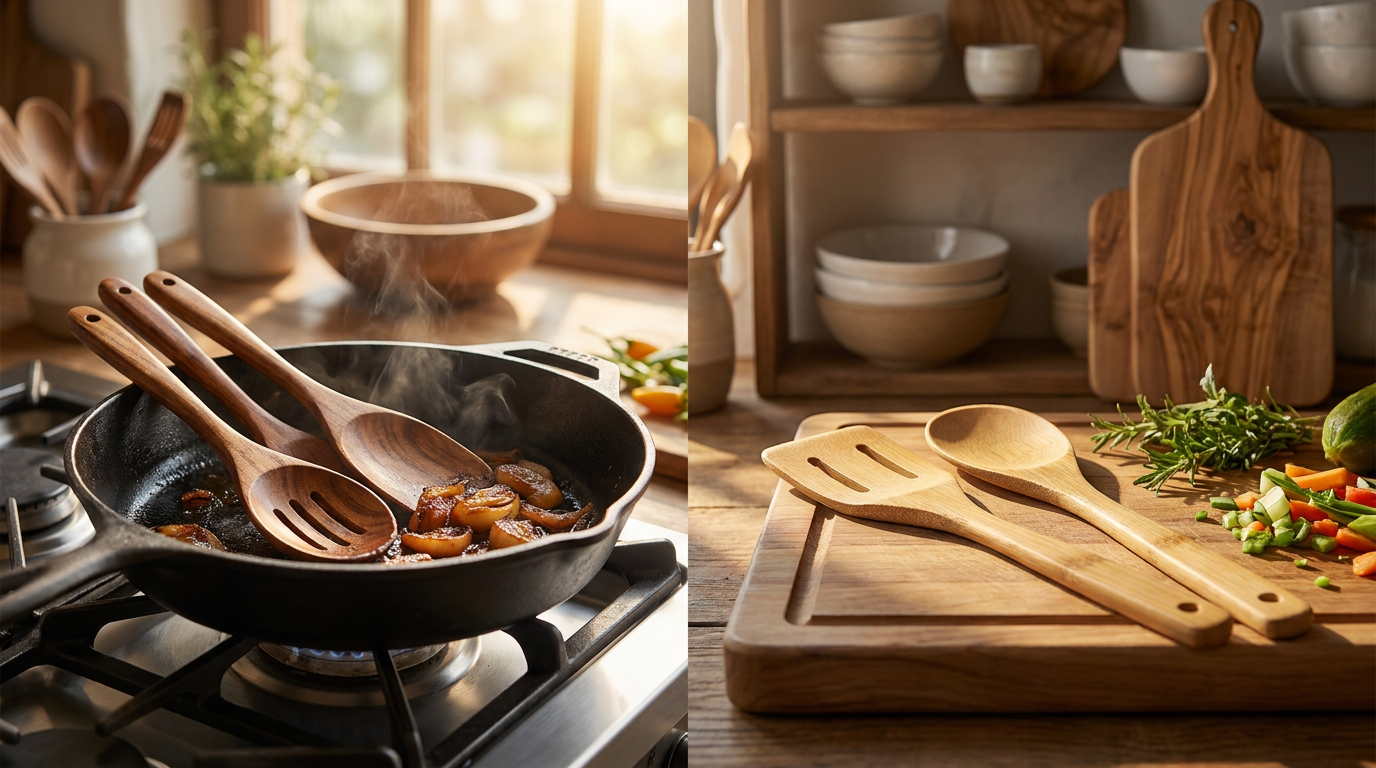
Teak Utensils consistently outlast bamboo in high-heat environments because teak is a dense hardwood that resists warping and cracking. I tested this for several weeks in my own kitchen, specifically during heavy searing and boiling stages. Day three is where I noticed the first signs of wear on the bamboo spatula—the edges began to feel slightly fuzzy or 'furry' from moisture absorption, whereas the teak remained smooth. According to research from Anzhu Craft, teak handles high heat exceptionally well, maintaining its shape without warping, while bamboo may weaken or splinter with prolonged exposure to high temperatures. What surprised me: the teak didn't just survive the heat; it resisted the staining that often plagues lighter bamboo tools when working with turmeric or tomato sauces. If I were doing this over, I would have skipped the bamboo for anything involving a cast-iron skillet, as the bamboo fibers felt brittle after just a few high-heat sessions. For those focused on safety, you might also consider how [teak utensils outperform non-toxic cooking tool trends](/blog/non-toxic-wooden-cooking-tools) by providing a naturally chemical-free surface that doesn't degrade.
Is bamboo more sustainable than teak for kitchen tools?
Bamboo is technically more renewable due to its rapid growth cycle, but teak offers a different kind of sustainability through its extreme durability and reduced replacement frequency. While bamboo is one of the fastest-growing plants on the planet, as noted by Faay, its tendency to crack in the dishwasher or under intense heat means you might replace a bamboo set three times in the lifespan of a single teak set. Here's the moment it earned its place: I accidentally left a teak spoon soaking in a pot of water overnight. With bamboo, that usually results in a split handle by morning, but the high natural oil content of the teak acted as a built-in sealant. This water resistance is a hallmark of the species. When [selecting teak utensils for high-heat kitchen performance](/blog/selecting-teak-utensils-for-high-heat-performance), the density of the wood becomes a clear advantage over the layered, glued construction of most bamboo tools. Furthermore, because teak is so gentle on surfaces, it is often the preferred choice when determining if [wooden utensils are safe for nonstick pans](/blog/wooden-spatulas-for-nonstick-pans).
Quick answers
Q: Can bamboo utensils be used for boiling liquids? A: Bamboo can handle moderate heat but is prone to cracking when submerged in boiling liquids for extended periods; teak is preferred for boiling and broiling because of its superior moisture resistance.
Q: What is the price difference between teak and bamboo sets? A: Bamboo utensils typically cost between $3 and $15, while premium teak utensils are a larger investment due to the slow growth and density of the hardwood.
Q: Do teak utensils require more maintenance than bamboo? A: Both require occasional oiling to prevent drying, but teak's natural silica and oil content make it more resilient to neglect than bamboo, which can splinter quickly if not conditioned.
Learn more about Teak Utensils at https://teakutensils.com.