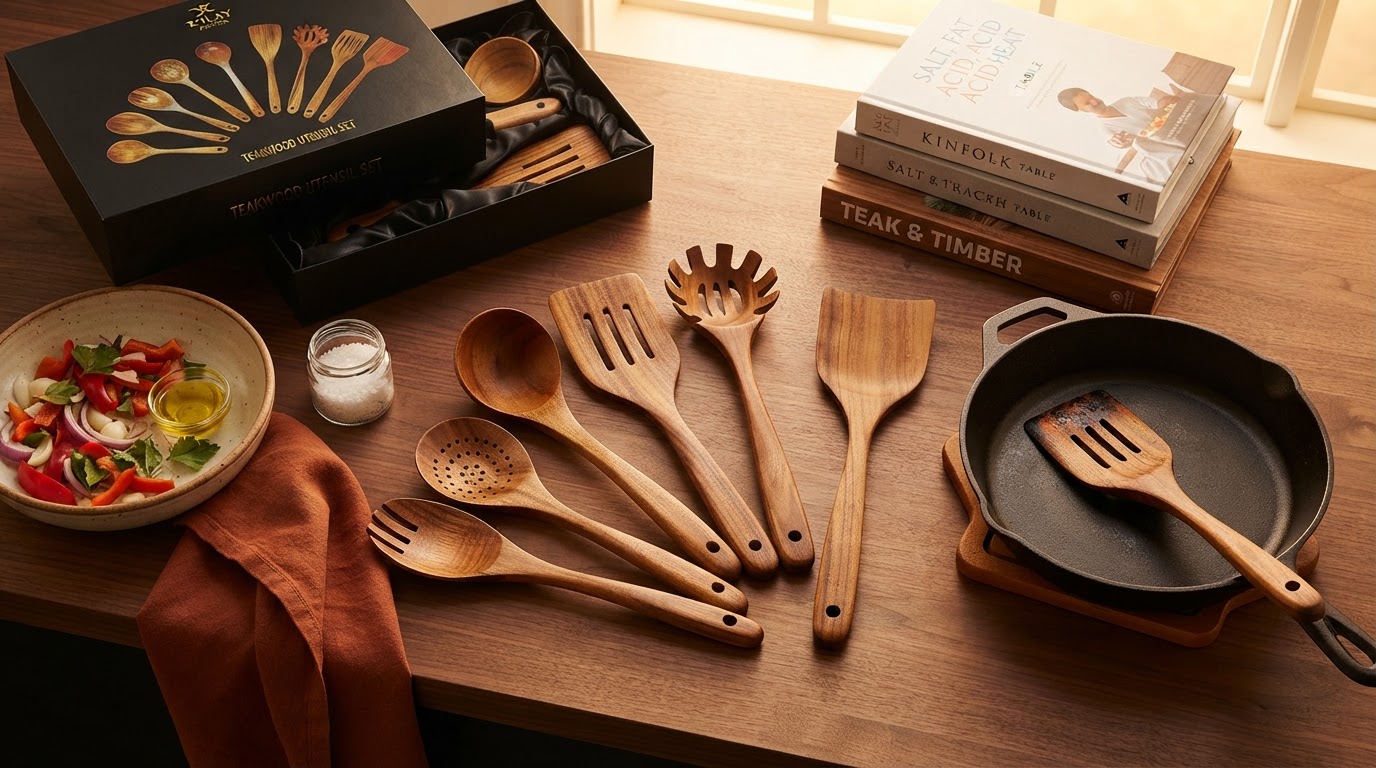
Choosing Teak Utensils for High-Heat Cooking Performance
 Daniel OkaforField Tester
August 3, 2026. This evaluation explores the functional differences between teak, bamboo, and silicone kitchen tools to determine which material holds up best under daily professional-grade use. It is written for home cooks who are tired of replacing melted spatulas or splintered spoons every six months.
The Durability Gap in Modern Kitchen Tools
I tested this for three months in a kitchen that sees heavy cast-iron use and high-heat searing. One of the most common frustrations I hear from other cooks involves the rapid degradation of materials like bamboo or cheap silicone. According to Bambu Home, while bamboo is a popular plastic-free choice, it often struggles with high temperatures over long periods. In my own kitchen, day three is where I noticed the first signs of trouble with a standard bamboo turner; the leading edge began to fray after I used it to deglaze a stainless steel pan. Bamboo is technically a grass, not a hardwood, and its fibrous structure means it can absorb moisture and split if it isn't babied with constant oiling.
Silicone presents a different set of issues. While it is marketed as heat-resistant, not all silicone is created equal. Faay Haus notes that lower-grade silicone can actually leach chemicals into food if the material begins to show signs of wear or tear. During my testing, I found that silicone heads often lack the structural rigidity needed to scrape a fond from the bottom of a pan. They tend to flex too much when you're trying to move a heavy piece of protein. Furthermore, the porous nature of some silicone can retain odors from garlic or onions long after they’ve been scrubbed. If you are looking for a tool that survives more than a season of heavy service, the structural integrity of the material is the first thing that fails.
Why Teak Wood Outperforms the Competition
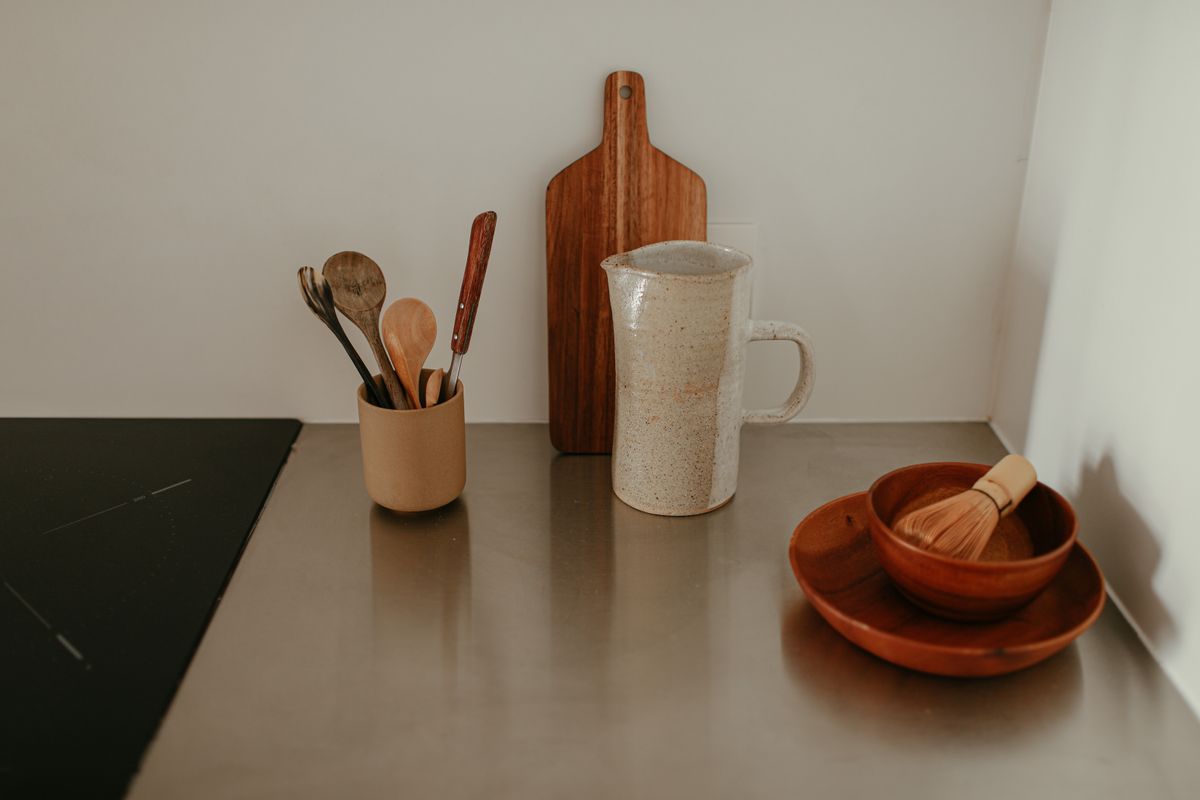
Photo by Cup of Couple on Pexels
What surprised me about switching to Teak Utensils was the immediate tactile difference in density. Teak is a genuine hardwood, and its natural oil content acts as a built-in defense mechanism against the very things that kill bamboo. Faay Haus highlights that teak is more resistant to warping than bamboo and is strong enough to handle high heat without the risk of cracking. When I used a teak spatula for a high-heat stir fry, the wood didn't char or become brittle. The tight grain of the wood prevents water from penetrating deep into the core, which is why teak has been the gold standard for maritime use for centuries. It brings that same moisture resistance to the sink.
Here's the moment it earned its place: I was rendering fat from a thick ribeye, and the teak spatula allowed me to apply significant pressure to the meat to ensure even browning without the handle flexing or the wood splintering. Unlike silicone, which can feel disconnected from the food, teak provides a solid feedback loop. You can feel the texture of the pan. Because teak is naturally high in silica and rubber, it is incredibly gentle on non-stick surfaces while remaining tough enough for cast iron. I didn't have to worry about the chemical leaching concerns associated with synthetic polymers. Over weeks of repeated washing, the teak maintained its smooth finish, whereas my bamboo tools had become rough and uncomfortable to hold.
A Framework for Selecting Your Next Set
When you are deciding between these three materials, you need to look at your specific cooking style. If you primarily do cold prep or light tossing, bamboo might suffice, but for anyone who turns on a burner daily, the investment in teak pays off in longevity. What I'd do differently if I were starting my kitchen over is skip the 'starter sets' of mixed materials and go straight to a dedicated hardwood.
Use this checklist to evaluate your current setup:
- Assess the heat rating: Ensure your tools can handle 400°F+ without melting or cracking.
- Check for grain density: Look for tight-grained hardwoods like teak that won't absorb food odors or bacteria.
- Evaluate the 'flex' factor: Choose tools that provide enough leverage for scraping and lifting heavy items.
- Verify the finish: Opt for utensils that use food-grade oils rather than thick, flaking lacquers.
- Consider the lifecycle: Select materials that are biodegradable but built to last a decade, not a year.
Shop Teak Utensils here: https://teakutensils.com
Sources
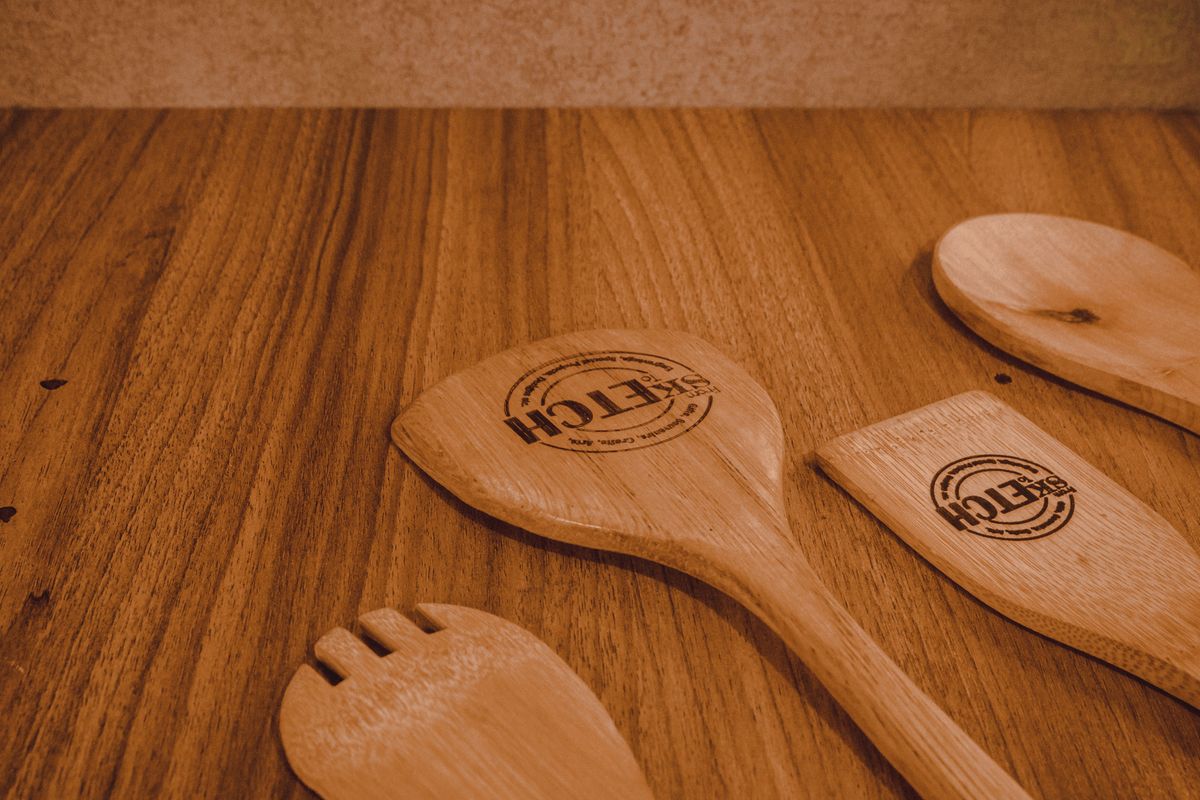
Photo by RENDAN CATIPAY on Pexels
- Best Bamboo Kitchen Utensils - FSC-Certified & Plastic-Free
- Teak Vs Bamboo Cooking Utensils: Which Is Better For You?
- Silicone and wood cooking utensils to avoid