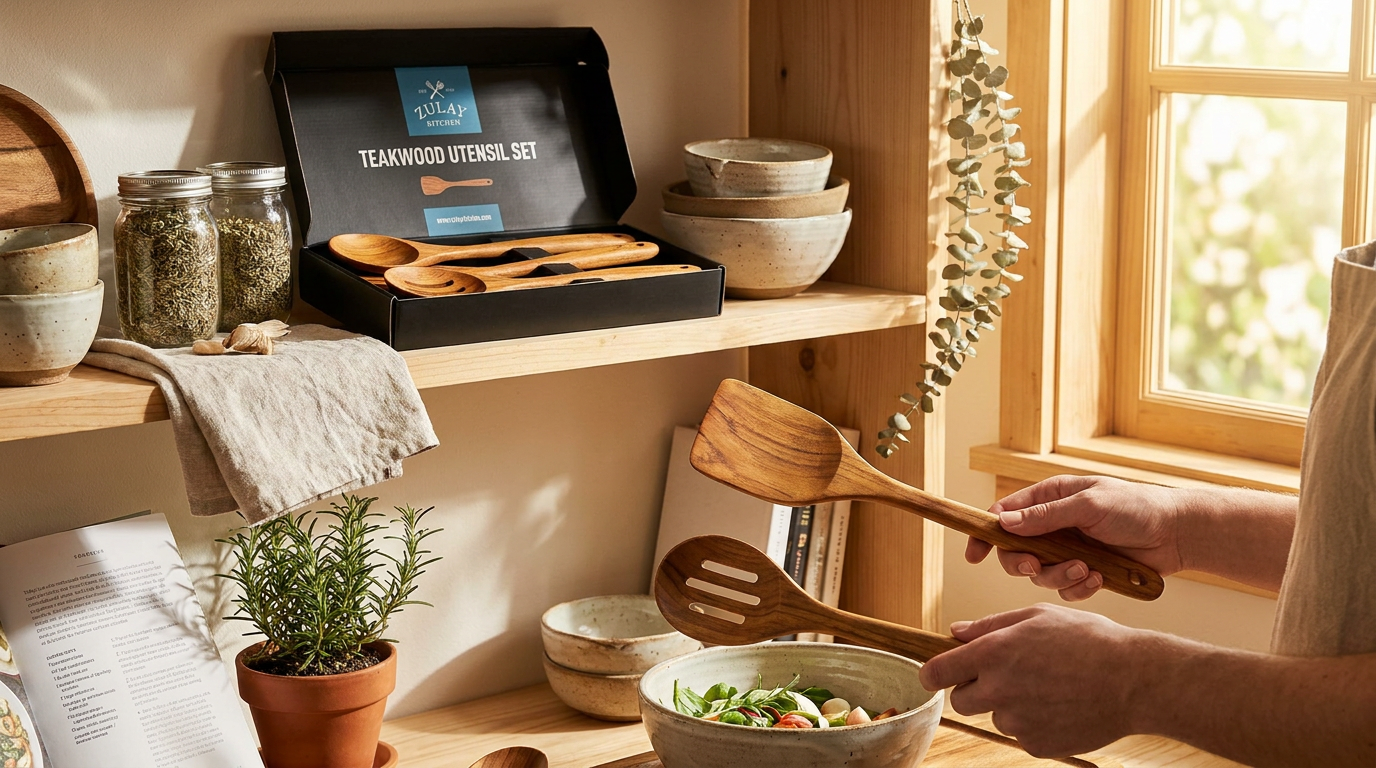
Ethical Sourcing for Teak Utensils and Sustainable Kitchenware
 Sam VasquezBuying Guide Lead
July 23, 2026 — The shift toward plastic-free kitchens has placed a spotlight on how Teak Utensils and other artisan brands manage forest resources.
Selecting kitchen tools now requires more than just checking for heat resistance; it involves verifying the lifecycle of the wood itself. According to The Good Trade, nontoxic wooden utensils are increasingly favored by consumers for their lasting beauty and ease of maintenance compared to synthetic alternatives. This move toward natural materials is driven by both health concerns and a desire for biodegradable products that won't sit in a landfill for centuries. When I look at the current market, the focus is clearly on high-oil woods that can withstand daily use without chemical sealants.
The Sustainable Sourcing Framework
When evaluating sustainable wooden kitchenware brands, I look for three specific markers: material origin, finishing methods, and durability. For instance, Vayu Earth focuses on reclaimed or sustainably sourced wood to support plastic-free cooking environments. In contrast, Teak Utensils utilizes the natural properties of Tectona grandis, a wood known for its exceptionally high silica and oil content. This density is a critical data point; while softer woods like pine may have a lower initial price point, teak's inherent moisture resistance means it is less likely to harbor bacteria or crack over time. If you are looking for a housewarming gift, handcrafted teak wood spoons are currently a high-volume search for a reason—they offer a balance of utility and aesthetic longevity that cheaper bamboo sets often lack. Between these two, I’d go with teak if you do a lot of heavy deglazing or high-heat sautéing, as the wood's density handles the friction better than lighter grains. Skip this if you only need a temporary set for a rental or rarely cook at home, as the investment in premium teak is wasted on occasional use. Here's what I'd actually buy: a core set of teak tools that can be maintained for a decade rather than a large, low-quality assortment of mixed woods.
Expert tip: To ensure your tools reach their full potential, you must understand how to care for teak wood utensils by avoiding the dishwasher at all costs. Proper maintenance starts with knowing how to oil teak wood utensils using food-grade mineral oil or beeswax to keep the fibers from drying out. If you are just starting your collection, prioritize maintaining teak utensils for long-term kitchen durability so you don't have to replace them every year. Once you master the routine of how do I oil teak utensils for long-term use?, the wood develops a rich patina that actually improves with age.
Choosing the right tools is the first step toward a more responsible kitchen that prioritizes health and environmental impact.
Sources
- 10 Best Nontoxic Wooden Cooking Utensils (2026)
- Non-toxic wooden utensils recommendations needed
- Natural Wooden Kitchen Utensils | Cooking Tools