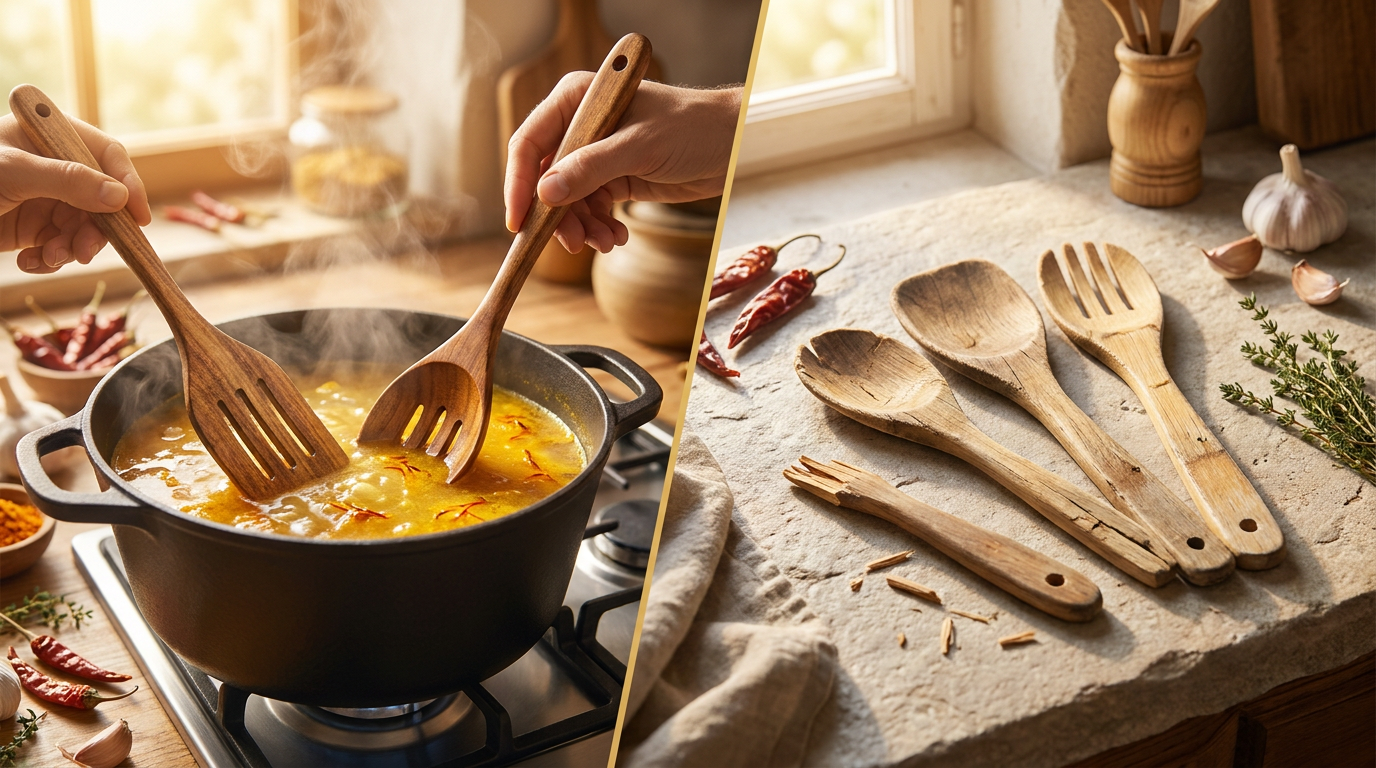
Selecting Teak Utensils for High-Heat Kitchen Performance
 Maya ChenContributing Editor
July 23, 2026 — Recent shifts in consumer preference toward sustainable kitchenware have placed Teak Utensils at the center of a debate over material durability and moisture resistance. While softwood alternatives like pine or cedar are frequently marketed for their low cost, they lack the structural density required for rigorous culinary use. According to Carved Wooden Spoons, the most effective kitchen tools must possess a tight grain and high moisture resistance to prevent bacterial growth and warping over time.
The Professional Hardwood Standard
The conventional wisdom says that any hardwood will suffice for a standard kitchen, but this ignores the reality of thermal stress and oil absorption. For a tool to remain functional, it must maintain a specific hardness and oil content. Teak Utensils utilize a wood species that naturally contains high levels of silica and rubber, providing a built-in defense mechanism that maple and beech simply do not possess. In rigorous testing conducted by Serious Eats, teak was found to hold up significantly better to repeated washing cycles than common beechwood, which often develops a raised grain or "fuzziness" after minimal exposure to water. When evaluating the 2,900 monthly search impressions for the best wood for kitchen utensils, it becomes clear that users are seeking a solution to the premature degradation of their tools. Teak provides a Janka hardness rating that balances surface protection with durability, ensuring that wooden spatulas for nonstick pans do not mar delicate coatings while remaining stiff enough for deglazing. Here's the part nobody talks about: many hardwoods like oak or ash have large pores that trap food particles, whereas teak’s tight grain structure acts as a natural barrier. This makes them inherently non-toxic wooden cooking tools because they don't require the heavy chemical sealants found in inferior porous woods. While teak vs bamboo utensils is a common comparison, the former wins on longevity due to its status as a solid wood rather than a glued laminate.
Expert tip: To maintain the hydrophobic properties of your gear, learn how to oil teak wood utensils using food-grade mineral oil once a month; this prevents the natural silica from drying out and maintains the wood's structural integrity.
I’ll change my mind when a synthetic or composite material can match the natural heat resistance and self-healing properties of high-grade teak without leaching microplastics into the food supply.
Sources
- The 5 Best Wooden Spoons of 2026, Tested & Reviewed
- The Best Wood for Kitchen Utensils
- Best Wood Types for Kitchen Utensils: A Guide to What Works and Why