Teak vs. Acacia, Maple, and Olive Wood Utensils: Which Hardwood Is Best?
Should you buy Teak, Acacia, Maple, or Olive wood cooking utensils?
Teak is the superior choice for daily cooking. Thanks to its rich natural oils and silica content, teak inherently repels water, resists curry and sauce staining, and will not crack or scratch delicate non-stick pans compared to drier, high-maintenance woods like Acacia or Maple.
Hardwood Utensil Comparison Matrix
| Cooking Scenario | Teak Wood Utensils | Acacia Wood | Hard Maple | Olive Wood |
| --- | --- | --- | --- | --- |
| Daily High-Heat Stir-Frying | Excellent: High silica & oil content resist heat scorch without micro-splintering. | Moderate: Hard surface handles heat, but rapid temperature swings cause micro-cracks. | Fair: Scorches easily; absorbs hot liquids quickly if dry. | Good: Handles heat well, but heavy wood structure causes hand fatigue during long cooking. |
| Preventing Turmeric & Tomato Staining | Superior: Clear lacquer & natural resins block dark sauce pigment penetration. | Poor: Porous outer grain absorbs yellow turmeric and red sauce within minutes. | Fair: Light tone shows immediate discoloration without heavy wax barrier. | Moderate: Dense figure resists light stains, but dark swirling grain masks discoloration. |
| Non-Stick Teflon & Ceramic Pan Safety | 100% Safe: Silky grain polish protects delicate non-stick non-scratch coatings. | Safe: Smooth grain, though dry splinters can develop if un-oiled. | Safe: Soft-to-medium grain, harmless to pan coatings. | Moderate: Very hard surface; rough edges can nick thin ceramic non-stick coatings. |
| Maintenance Friction & Oiling Routine | Minimal (Every 3-6 Months): Retains moisture naturally without constant mineral oiling. | High (Monthly): Dries out rapidly; shrinks and splits if not seasoned regularly. | High (Monthly): Easily prone to drying, fuzzing, and rough raised grain. | Moderate (Every 1-2 Months): Requires thick conditioning pastes to prevent hairline checking. |
Compare how each hardwood performs across real-world kitchen tasks, care demands, and non-stick safety.
Hardwood Breakdown: Failure Modes, Pros, and Cons
Pros
- Teak: Exceptional natural oil and resin content prevents waterlogging and rotting.
- Teak: Lightweight and ergonomic for long cooking sessions.
- Teak: High natural silica keeps wood grain polished and scratch-free on Teflon pans.
- Acacia: Extremely hard Janka rating (1750 lbf) makes it resistant to deep gouges.
- Maple: Tight, closed grain resists harbor of bacterial growth when properly sealed.
- Olive Wood: Striking high-contrast wood grain creates beautiful tabletop presentation.
- Acacia Failure Mode: Low natural resin causes rapid drying, wood shrinkage, and longitudinal cracking within weeks if un-oiled.
- Maple Failure Mode: Highly susceptible to water swelling, fuzzy grain lift, and deep turmeric/garlic staining.
- Olive Wood Failure Mode: Heavy weight leads to wrist fatigue; extreme density makes it brittle under thermal shock.
- Teak Consideration: Requires higher initial investment than mass-market bamboo or soft pine alternatives.
The Top Recommendation: 9-Piece Teak Kitchen Utensil Set
If you want a complete, lifetime-grade cookware solution that eliminates cracking, pan scratches, and high maintenance, teak is the undefeated standard.
Flowchart: Which Wood Fits Your Kitchen Routine?
- Do you use non-stick Teflon or ceramic pans daily? → Yes: Go to Question 2. No: Go to Question 3
- Do you want to avoid monthly mineral oil seasoning routines? → Yes: Choose Teak Wood (High natural oils, zero pan scratching, ultra-low maintenance).. No: Choose Hard Maple (Requires monthly wax conditioning but offers clean, light aesthetic).
- Are you purchasing primarily for heavy table serving or active stovetop cooking? → Yes: Choose Teak Wood (Balanced weight, high heat tolerance, durable for active cooking).. No: Choose Olive Wood (Heavy dramatic grain, visually striking for cheese boards and cold serving).
Key Takeaways for Home Cooks
- Natural Resins Beat Applied Oils: Teak contains organic oily resins and silica that resist water penetration from the inside out, unlike Acacia which relies on constant external oiling.
- Non-Stick Pan Protection: Teak's Janka hardness (approx. 1000–1150 lbf) sits in the sweet spot—hard enough to scrape fond off stainless pans, yet supple enough never to chip non-stick coatings.
- Stain Resistance: Clear-lacquered teak utensils block dark food pigments like curry, turmeric, and tomato sauce from seeping into raw wood fibers.
- Weight & Ergonomics: At 13.58" in length, teak spatulas provide extended heat clearance while remaining light in hand compared to dense Olive wood.
Decision Support: Selecting the Right Hardwood Set
While Maple, Acacia, and Olive wood each offer niche visual or hardness benefits, Teak delivers the single best operational balance of water repellency, non-stick pan safety, lightweight ergonomics, and minimal care friction.
Best choice for
- Teak Wood — High natural organic oil and silica content keep it waterproof and gentle on non-stick pans without monthly oiling.
- Acacia Wood — Hard and inexpensive, though requires strict monthly oiling to prevent drying and longitudinal splitting.
- Hard Maple — Tight closed-grain structure handles dry ingredients well, though dark sauces stain unsealed maple quickly.
- Olive Wood — Dramatic high-contrast grain patterns create stunning tabletop visuals, despite high weight and heat brittleness.
- You intend to clean your wooden utensils inside an automatic dishwasher (all hardwood fibers warp and strip under dishwasher heat).
- You leave cooking spoons soaking in deep sink water for extended hours.
- Food-Grade Silicone — Ideal only if absolute 100% dishwasher compatibility is preferred over natural wood aesthetics and structural rigidity.
Featured Utensil Collection
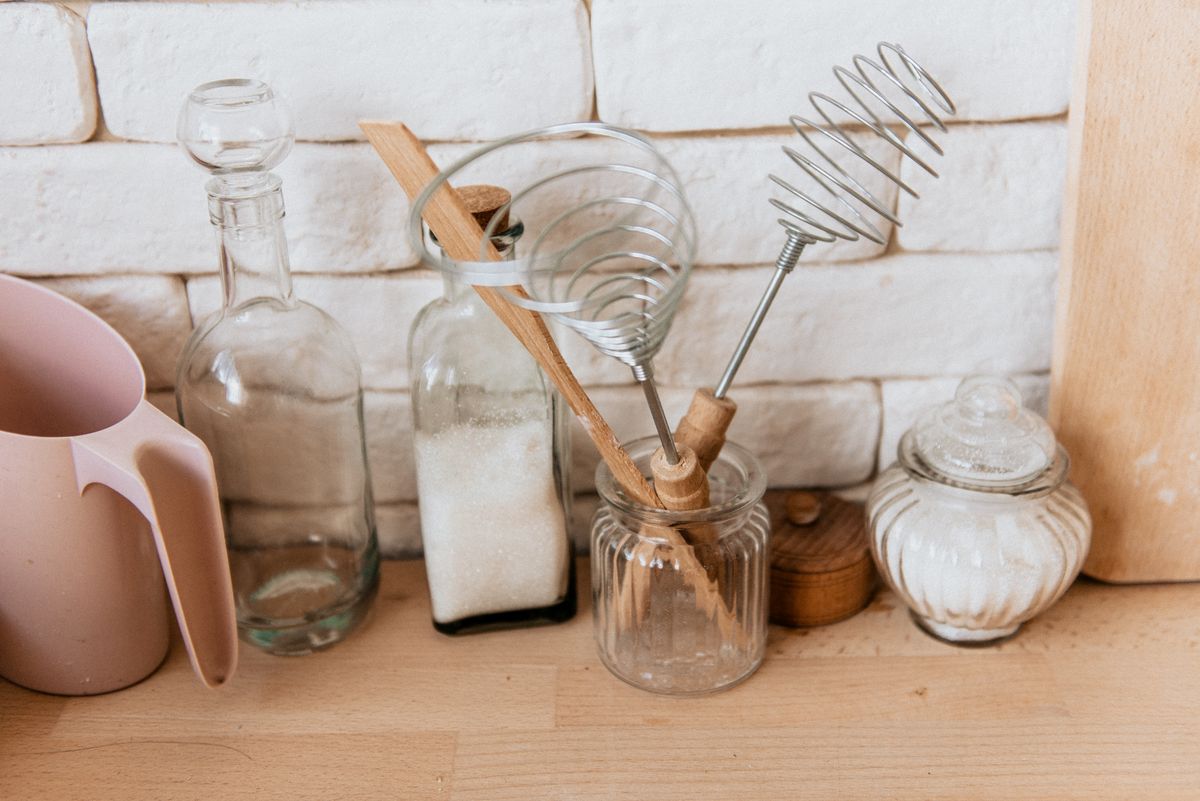
Photo by Dmitry Zvolskiy on Pexels
Ready to upgrade your kitchen tools? Here is our top-rated teak set.
Real-World Kitchen Failure Scenarios & Solutions
Scenario 1: Simmering Turmeric Curry & Rich Tomato Sauce — Raw Acacia and Hard Maple quickly soak up yellow curcumin dyes, leaving permanent stains. Teak sealed with a smooth lacquer finish acts as an impenetrable barrier; pigments rinse off effortlessly under warm soap and water.
Scenario 2: Accidental Sink Soaking Overnight — Drier woods like Acacia expand rapidly when submerged, causing internal tension that leads to severe splitting down the handle upon drying. Teak's natural waterproof resins restrict water absorption, preventing structural warping.
Scenario 3: High-Heat Pan Scraping (Deglazing Fond) — Olive wood is excessively brittle and can snap or chip against pan bottoms under firm scraping pressure. Teak offers ideal flex strength and Janka balance to deglaze cast iron or stainless steel without splintering.
Here is how different hardwood species react when subjected to everyday cooking stress.
To understand why wooden utensils fail or flourish in the kitchen, we have to look at wood cellular structure. Hardwoods are evaluated on the Janka hardness scale, which measures the force required to embed an 0.444-inch steel ball halfway into the wood sample.
Janka Hardness vs. Cookware Safety
- Hard Maple (1450 lbf): Strong and tight-grained, but lacks natural oils. Once water strips its surface finish, the wood grain lifts (feels fuzzy) and absorbs kitchen moisture.
- Acacia (1750 lbf): Very hard, making it durable against impacts, but its uneven grain density creates internal stress points. When it dries out, it cracks along grain boundaries.
- Olive Wood (2700 lbf): Extremely dense and heavy. While visually stunning, its extreme hardness can scratch softer ceramic non-stick coatings, and its dense fibers are prone to checking (micro-cracking) under thermal shock.
- Teak Wood (1000–1150 lbf): The optimal sweet spot. It provides structural stiffness for stirring thick pasta dishes and scraping browned bits off skillet bottoms, but remains gentle enough never to scratch fragile Teflon, PTFE, or ceramic pan linings.
The Role of Natural Tectona Resins and Silica
Unlike domestic hardwoods that require frequent baths in food-grade mineral oil to prevent moisture absorption, teak (Tectona grandis) natively synthesizes high concentrations of natural oily resins and silica particles during its growth cycle.These inherent organic compounds make teak naturally hydrophobic. Water rolls off the surface rather than soaking into the interior cellular voids. Furthermore, the clear, food-safe lacquer coating applied to high-quality teak utensils provides a smooth tactile finish that shields the wood from absorbing pungent garlic, onion, and fish odors.
Ergonomics & Dimensions in Daily Cooking
Cooking comfort matters when managing multiple boiling pots. Utensils with short handles or excessive weight lead to hand strain and accidental heat burns. A full-length 13.58-inch utensil handle provides maximum reach across wide sauté pans and deep stockpots while keeping your hands safely clear of popping oil spatters and rising steam.Frequently Asked Questions
How often do I need to oil teak utensils compared to acacia wood?
Because teak is naturally rich in natural oily resins, it only requires light conditioning with food-grade mineral oil or beeswax every 3 to 6 months. Drier woods like Acacia lack these internal resins and typically require monthly oiling to prevent drying and cracking.
Can teak cooking utensils scratch non-stick Teflon pans?
No. Teak's smooth grain texture and moderate Janka hardness (1000–1150 lbf) are completely safe for delicate non-stick Teflon, ceramic, and enameled cookware, scraping pan surfaces cleanly without leaving micro-scratches.
What is the best way to clean curry or garlic stains off teak utensils?
Teak's clear protective finish prevents immediate stain absorption. For stubborn curry or garlic residue, wash promptly with mild dish soap and warm water. For lingering odors, rub the wood gently with a half-lemon and baking soda paste, then rinse and air-dry thoroughly.
Why are olive wood utensils often more expensive and heavier than teak?
Olive wood grows slowly with complex, twisted grain structures, making it resource-intensive to harvest and craft. While beautiful, its dense cell matrix makes it significantly heavier in hand and more susceptible to thermal cracking compared to teak.
Got questions about choosing and caring for hardwood utensils? We have answers.
Next Steps & Recommendation
Your decision: Choose Teak wood for your daily kitchen utensil set to enjoy supreme natural water resistance, zero non-stick pan scratching, and effortless low-maintenance care.
Do this next: Upgrade your kitchen with the complete 9-Piece Teak Utensil Set featuring a sleek sliding gift box and backed by our craftsman's promise.
- Read next: How to Clean and Maintain Teak Utensils to Keep Your Tableware Glossy and Fresh
- Read next: Non-Toxic Kitchen Guide: How to Choose Safe Utensils for High-Heat Cooking
https://teakutensils.com
Ready to bring durable, non-scratch elegance to your home kitchen?