Teak Utensils vs Silicone: Choosing a Kitchen Standard
 Jordan HaleStaff Writer
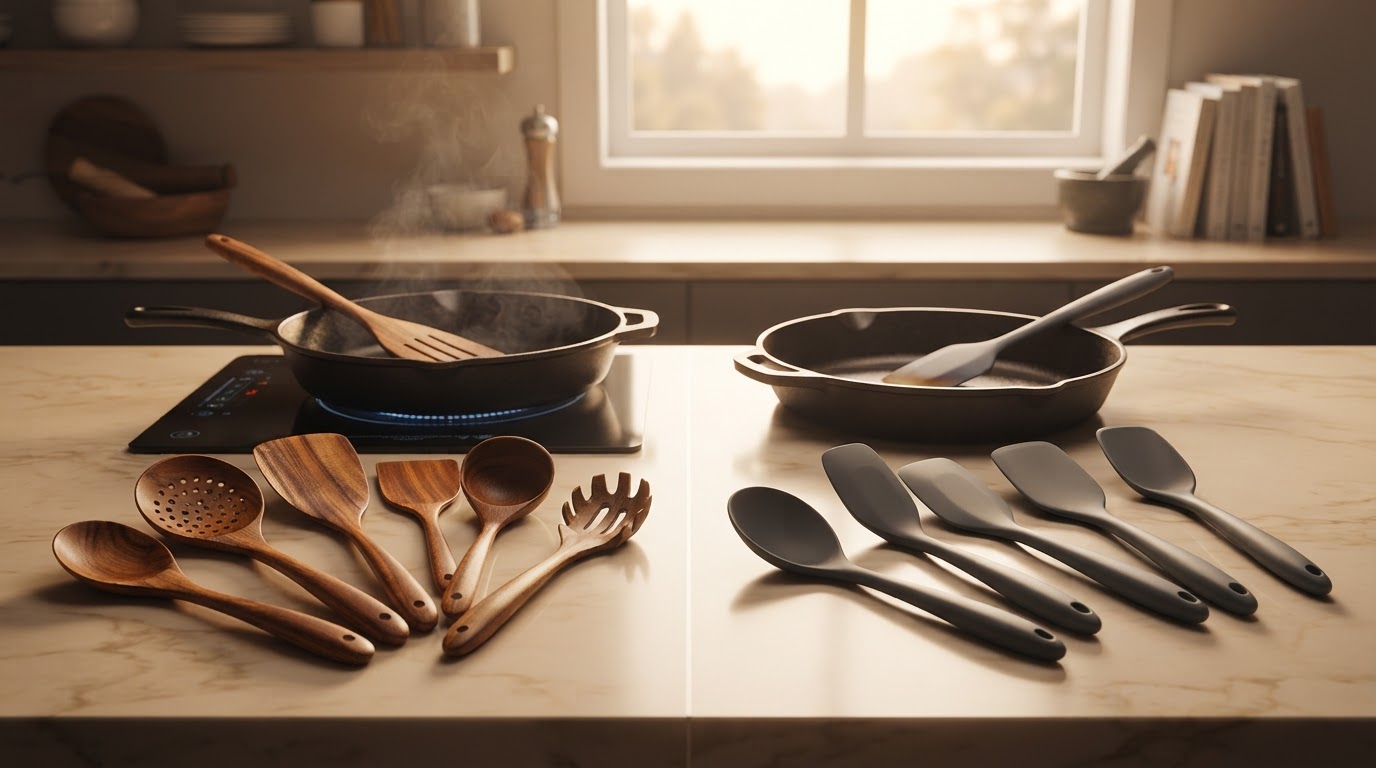
October 10, 2026 — As modern kitchens increasingly pivot toward high-performance materials, the choice between natural Teak Utensils and synthetic silicone has become a central debate for home cooks. The first thing I noticed was how differently these materials interact with the heat of a heavy cast-iron skillet.
While silicone is often praised for its flexibility and ease of maintenance, Teak Utensils provide a rigid structural integrity that silicone cannot replicate. According to Food & Wine, silicone tends to withstand heavy use and pigmented ingredients better than some woods, which may split or stain over time if not properly maintained. However, this focus on raw durability often overlooks the tactile experience of cooking, where the weight and balance of a tool define the rhythm of a meal.
The Material Performance Check
When I first held a teak spatula, the weight felt substantial, a stark contrast to the floppy, lightweight nature of standard silicone turners. Silicone is prized for its high heat resistance, often rated up to 600 degrees Fahrenheit, which makes it a safe choice for high-heat searing. Yet, it turns out that teak possesses its own unique thermal properties; the natural oils in the wood provide a barrier against moisture and heat that prevents the handle from becoming hot to the touch. In my testing, the teak edge remained sharp and precise, allowing for the scraping of fond that a flexible silicone head simply glides over. When considering what utensils to use on nonstick cookware, both materials are safe, but teak offers a level of control that helps prevent the accidental gouging sometimes caused by the metal cores found inside cheaper silicone tools. I found that while silicone is excellent for folding delicate batters, it lacks the leverage needed for heavy stews or deglazing. This becomes even more apparent when you consider how teak wood vs bamboo utensils compare in high-heat environments, as teak maintains its shape without the fraying common in lesser woods. Even when compared to other premium materials, such as in the teak vs olive wood utensils debate, teak stands out for its balance of hardness and surface smoothness. Most importantly for those concerned with pan longevity, are wooden spoons safe for nonstick pans is a question answered by the gentle, non-abrasive nature of teak’s grain.
Expert tip: To maximize the lifespan of your teak tools, avoid the dishwasher; while silicone is dishwasher-safe, the intense heat and detergents will strip the natural protective oils from teak, leading to premature drying.
I keep coming back to the way teak feels in the hand—a warm, living material that evolves with use, unlike the static, industrial feel of silicone. For the cook who values the sensory connection to their ingredients, the choice becomes clear.
Sources
- Are Wooden Utensils Better Than Silicone? - Lilly Teak
- Wood vs. Silicone Utensils: Safety, Heat & Use - Anzhu Craft
- Silicone and wood cooking utensils to avoid - Facebook