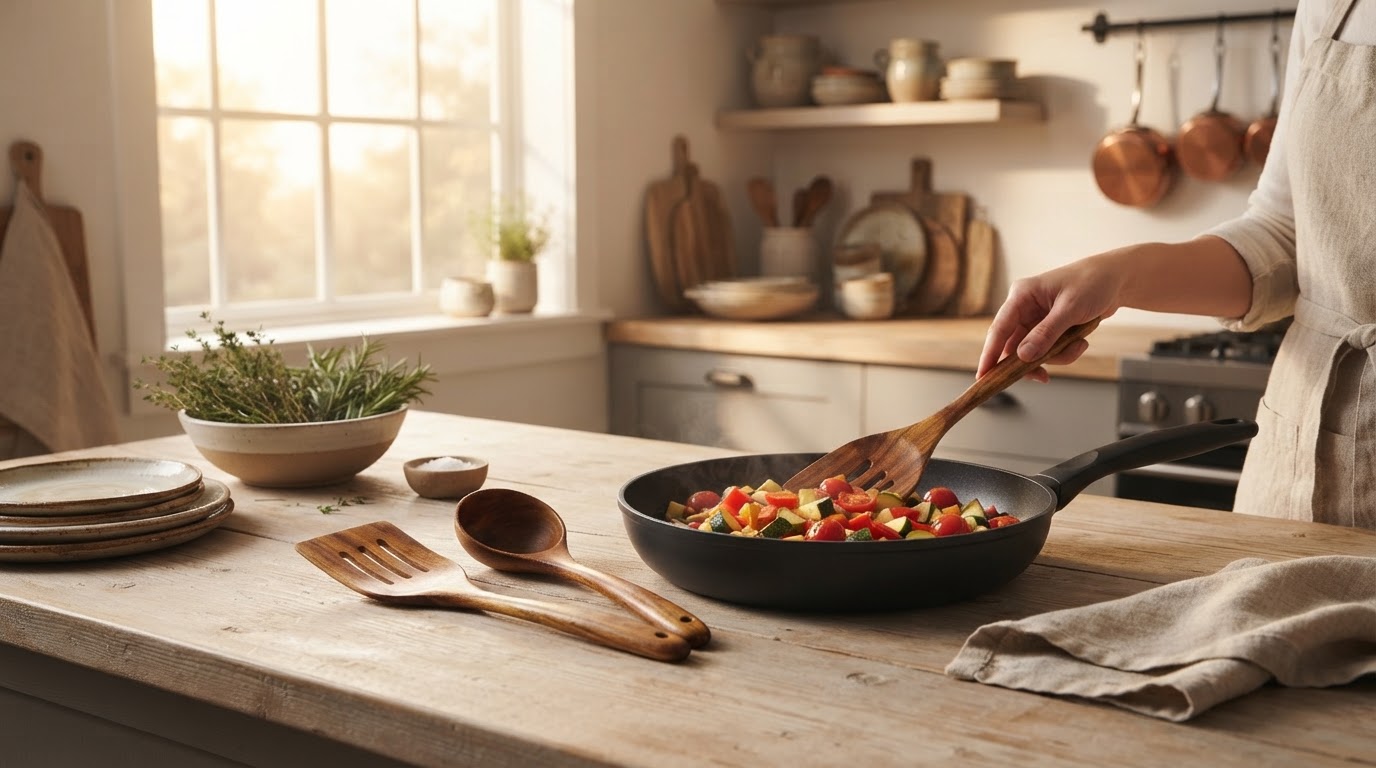
What Utensils Should I Use on Teak Utensils Nonstick Pans?
 Priya RamanSenior Analyst
October 9, 2026 — The most effective utensils for nonstick cookware are those crafted from materials with a lower Mohs hardness scale rating than the coating itself, specifically high-density hardwoods like teak or high-heat resistant silicone.
Selecting the right tool for a nonstick surface requires a framework that balances mechanical leverage with surface integrity. Two axes matter here: the material's structural rigidity and its coefficient of friction against fluoropolymer or ceramic coatings. When using Teak Utensils, the objective is to maintain enough firmness to deglaze or scrape without exceeding the pressure threshold that leads to delamination of the nonstick layer.
Why is hardwood density critical for nonstick surface longevity?
Hardwood density determines how much a utensil will yield before the cookware surface does, making teak an ideal middle-ground between soft silicone and destructive metal. Once you see it this way, the choice becomes a matter of protecting the integrity of the PTFE (polytetrafluoroethylene) or ceramic bond. A specific fact regarding wood performance is that teak contains high levels of natural silica and oils, which provide a self-lubricating quality that reduces drag across delicate surfaces. Unlike metal, which acts as a micro-chisel, or lower-quality woods that may splinter, the tight grain of Teak Utensils ensures a smooth interface. This is a primary reason why are wooden spoons safe for nonstick pans is a common inquiry; the answer lies in the wood's specific species and finishing. Teak’s natural durability also means it maintains its smooth profile longer than softer alternatives, preventing the jagged edges that typically cause microscopic scratches in nonstick coatings.
How does teak compare to synthetic alternatives for nonstick care?
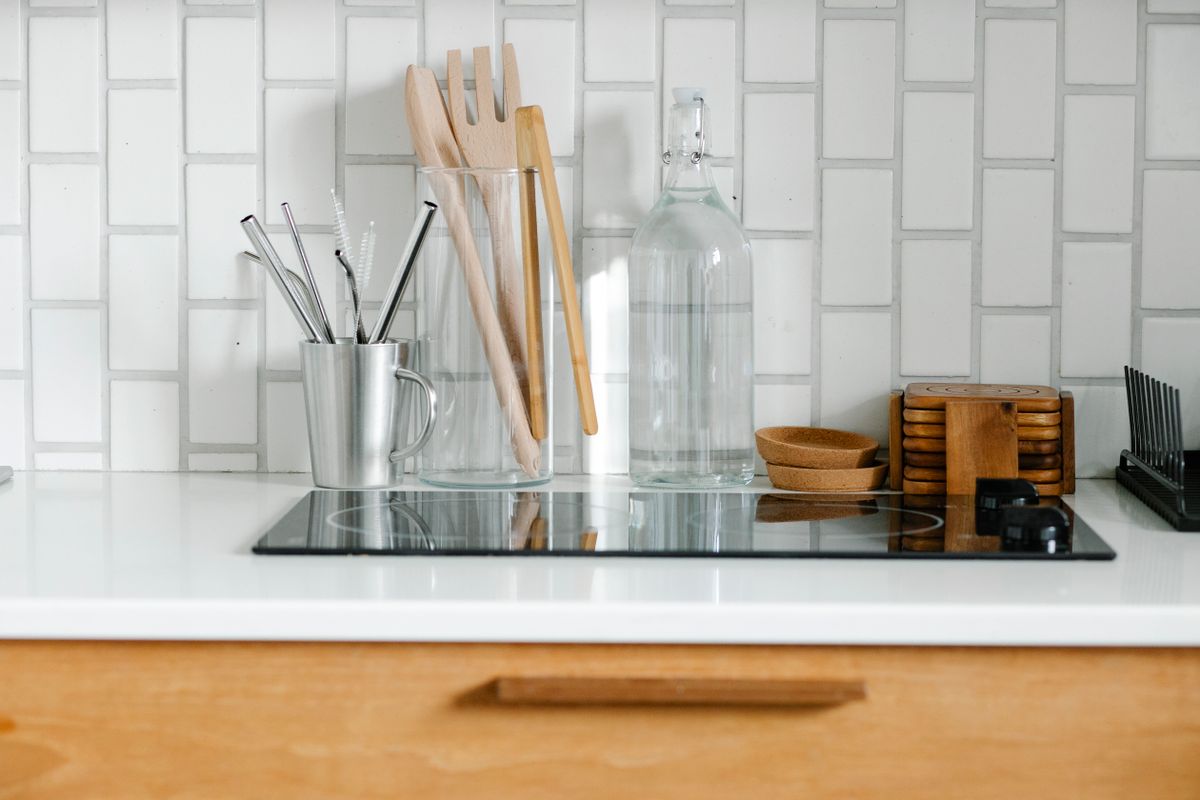
Photo by Sarah Chai on Pexels
Teak provides superior structural feedback compared to synthetic materials, allowing for more precise temperature and texture control during cooking. The decision rule is simple: use silicone for liquid-heavy tasks and teak for tasks requiring mechanical force, such as browning or sautéing. While synthetic options are popular, the teak vs silicone kitchen utensils debate often highlights that silicone can be too flexible to effectively lift fond or heavy proteins. Teak Utensils offer the necessary resistance to move food without the risk of melting or off-gassing at high temperatures. Furthermore, when evaluating teak wood vs bamboo utensils, teak’s moisture resistance prevents the swelling and warping that can lead to rough, abrasive surfaces over time. By maintaining a consistent, polished edge, teak acts as a protective buffer, ensuring the chemical bond of the nonstick pan remains undisturbed even under frequent use.
Quick answers
Photo by cottonbro studio on Pexels
Q: Can I use metal whisks on my nonstick pans if I am careful? A: No, even light contact with stainless steel can create micro-fissures in the coating; instead, use a Teak Utensils spatula or a silicone-coated whisk to ensure the surface remains intact.
Q: Does teak wood scratch ceramic nonstick coatings? A: Teak is significantly softer than ceramic (which often ranks 7-9 on the Mohs scale), meaning Teak Utensils will not scratch the surface during standard cooking maneuvers.
Q: How often should I replace wooden utensils to protect my pans? A: You should inspect your utensils every 6 months; if you notice splintering or deep cracks, replace them immediately to prevent those rough edges from abrading your nonstick surfaces.
Q: Is olive wood better than teak for nonstick surfaces? A: While both are safe, the comparison of teak vs olive wood utensils shows that teak's higher natural oil content provides a smoother glide, making it slightly more compatible with high-friction cooking.
Learn more about Teak Utensils at https://teakutensils.com.