Complete Guide to the Best Wood for Kitchen Utensils
Complete Guide to the Best Wood for Kitchen Utensils
When equipping your kitchen, selecting the right tools impacts both your cooking experience and the longevity of your cookware. Wooden utensils have remained a chef favorite for centuries, but not all wood species perform equally under daily heat and moisture.
Why Material Selection Matters for Kitchen Utensils
Unlike synthetic tools, natural wooden utensils do not conduct heat quickly, remaining comfortable to hold during long simmering tasks. Choosing high-quality hardwood prevents warping, splintering, and unwanted odor absorption over time.
While silicone tools handle temperatures up to MAX_SAFE_SILICONE_TEMP and plastic melts near PLASTIC_MELT_TEMP_DEGREES, real wood provides an organic aesthetic combined with natural resilience. Selecting a dense hardwood ensures your spatulas and ladles withstand daily stir-frying and serving without degrading.
Comparing Popular Hardwoods for Cooking
Several woods are commonly crafted into kitchenware:
- Bamboo: Lightweight and fast-growing, though technically a grass. It can be brittle and susceptible to splitting if exposed to high moisture.
- Maple: A tight-grained hardwood that offers solid durability, though it requires frequent oiling to prevent staining.
- Olive Wood: Known for rich visual grain patterns, though often heavier and prone to surface cracking if neglected.
- Teak Wood: High in natural organic oils and silica, offering exceptional water resistance and long-term durability.
The Unique Advantages of Teak Wood
Teak stands out as the premium choice for culinary utensils. Grown in tropical environments, teak wood inherently develops tight grain patterns and water-repellent qualities.
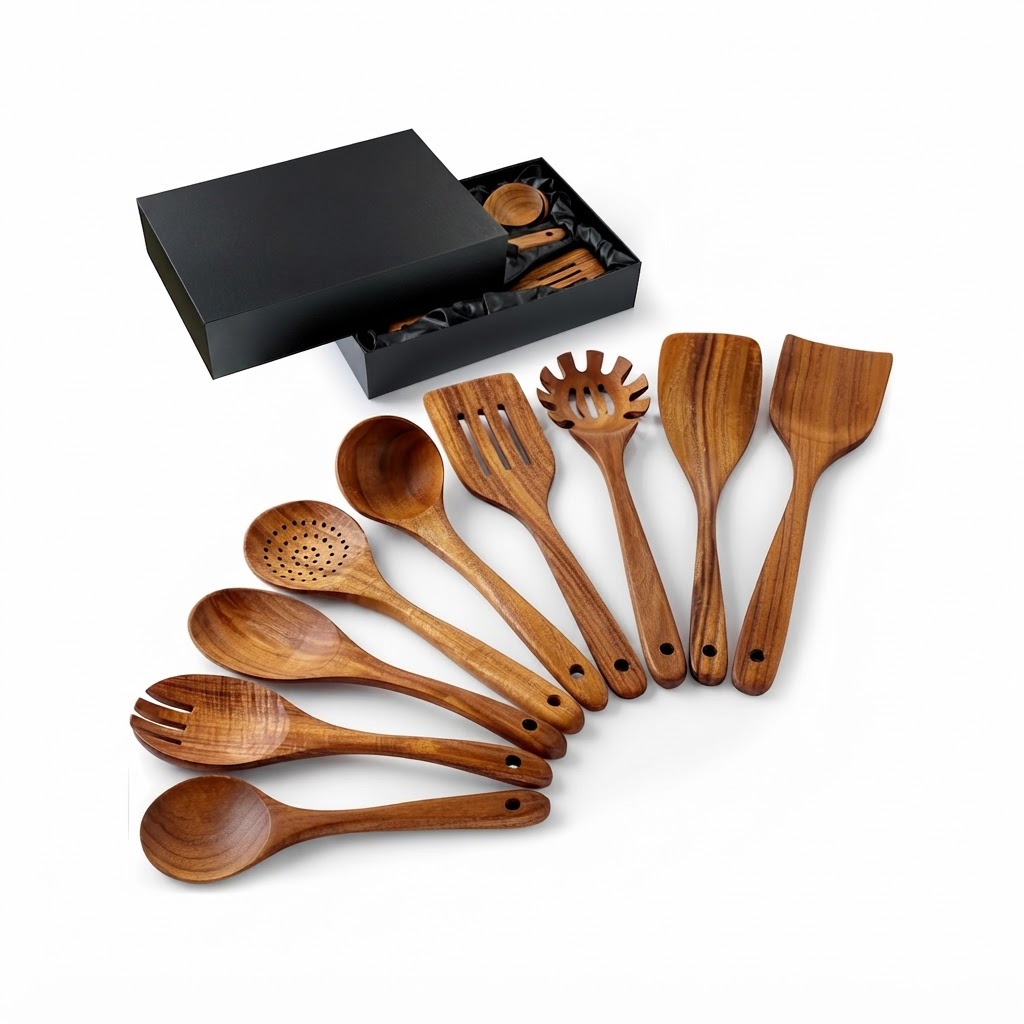
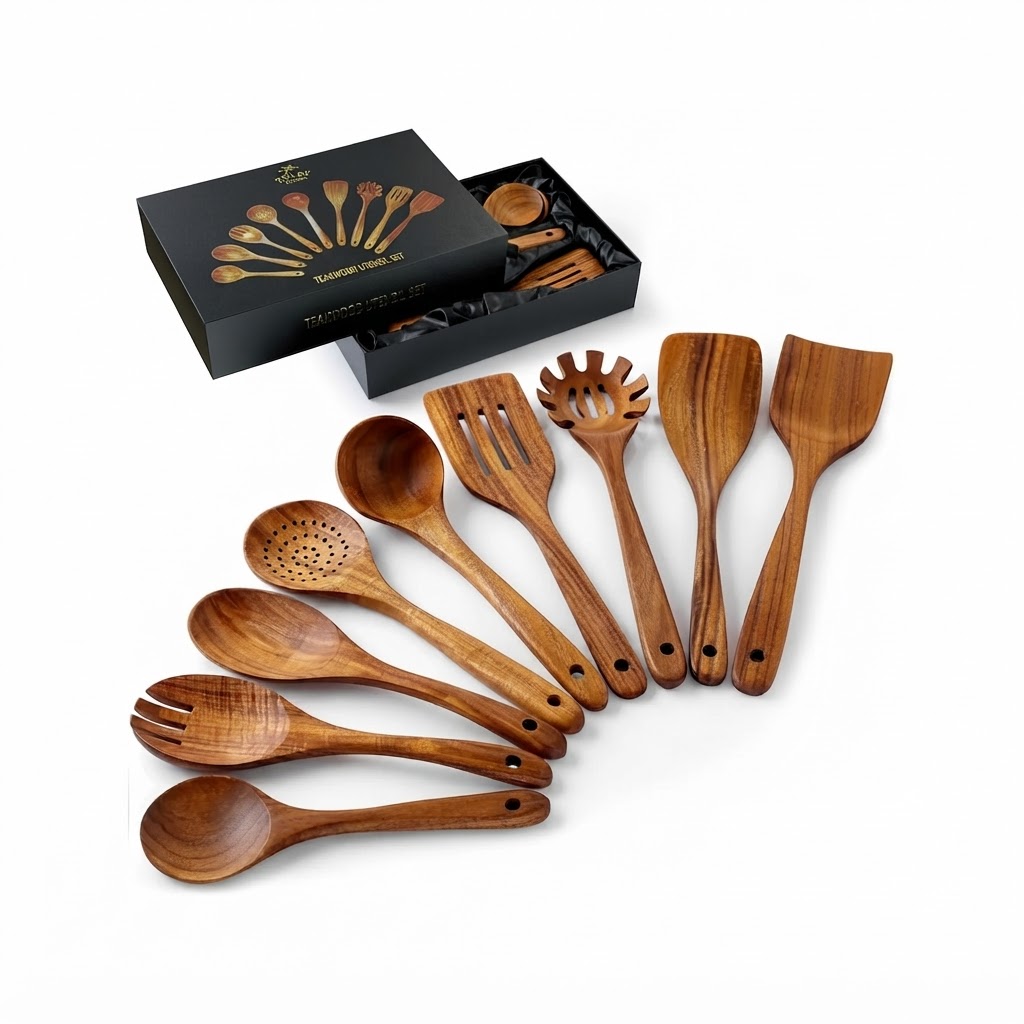
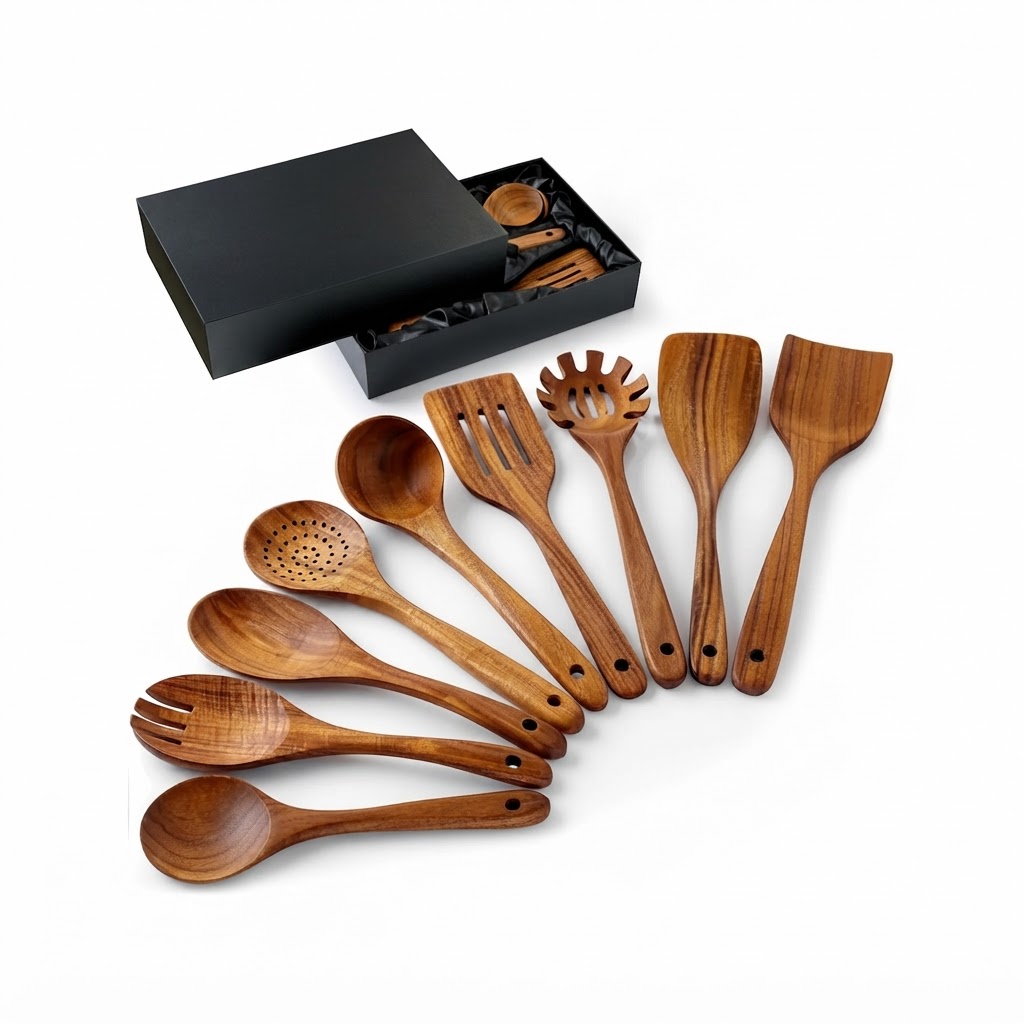
A complete set like our 9-piece collection provides full kitchen versatility—including a salad spoon, salad fork, serving spoon, skimmer, spatula, turner, ladle, pasta server, and slotted turner. Crafted from real teak wood with a clear lacquer coating, these tools maintain a glossy finish while offering smooth, lightweight handling for multitasking.
Protecting Your Non-Stick Cookware
Metal utensils easily scratch non-stick coatings, while cheap plastic can warp or leach toxins under heat. Teak utensils offer a smooth texture that glides across delicate non-stick pan surfaces without leaving scratches. This preserves your non-stick cookware investment for years to come.
Caring for Fine Wooden Utensils
To preserve natural wood grain and protective lacquer finishes, simple hand-washing with soap and water is recommended. Avoid immersion in standing water or dishwashers. After rinsing, let tools dry completely. Integrated handle holes allow convenient hanging storage to maintain airflow around each piece.
Related in this cluster
- Why Teak Wood is Ideal for Cooking Utensils
- Teak vs Bamboo Utensils: Which Is Better for Your Kitchen?
- Why Your Non-Stick Cookware Needs a 9-Piece Teak Utensil Set
- Frequently Asked Questions About Teak Cooking Utensils
- How to Properly Clean and Maintain Wooden Utensils
- The Perfect Kitchen Gift: Teak Utensil 9-Piece Set