5-Step Seasoning for Teak Utensils Kitchen Sets
 Jordan HaleStaff Writer
October 17, 2026 — As home cooks increasingly prioritize natural materials, Teak Utensils is seeing a significant shift toward traditional wood seasoning methods that preserve the integrity of high-density tropical hardwoods.
The first thing I noticed was the way the wood grain seemed to drink in the moisture, transforming from a matte, sandy texture to a deep, lustrous amber. According to the USDA Forest Products Laboratory, applying a food-safe finish to wood prevents the absorption of water and food odors, which is essential for maintaining hygiene in a high-heat kitchen environment. When I held the newly seasoned wood, the weight felt more substantial, and the surface took on a velvet-like smoothness that synthetic tools simply cannot replicate.
The 5-Step Seasoning Setup
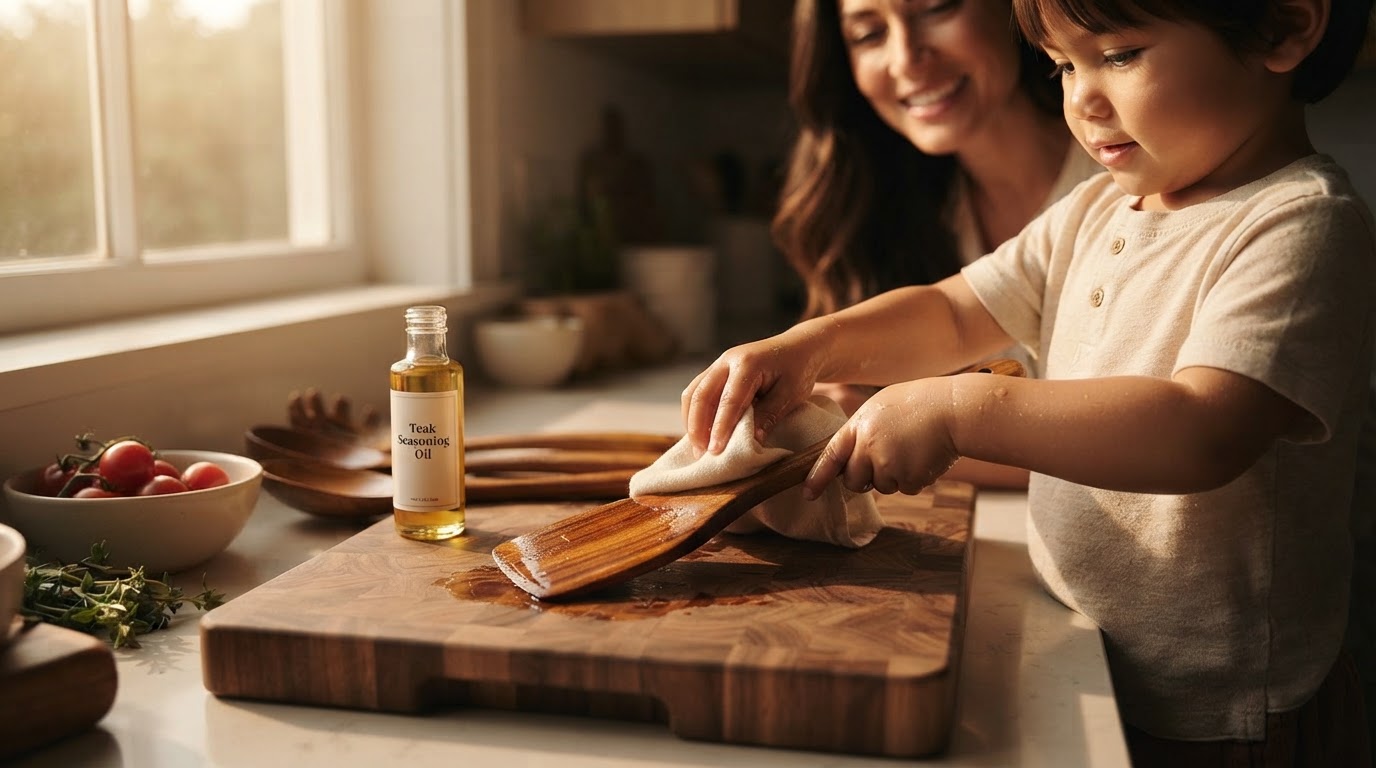
Seasoning your Teak Utensils is not a complex chemical process; it is a ritual of hydration that protects the wood's natural oils. I start by ensuring the tools are completely dry and free of any debris. I then apply a thin, even layer of food-grade mineral oil or a beeswax blend across the entire surface. Somewhere around week two of using a freshly seasoned set, I noticed how easily water beads off the surface, a sign that the seasoning has created a proper hydrophobic barrier. It turns out that the high silica and oil content inherent to Tectona grandis (teak) works in tandem with topical seasoning to prevent the wood from becoming brittle. You must allow the oil to penetrate the fibers for at least four hours—or ideally overnight—before wiping away any excess with a clean lint-free cloth. This process is particularly vital for non-toxic wooden spoons that come into frequent contact with boiling liquids. If you are preparing handmade teak salad servers for their first use, a double coat is often recommended to saturate the grain. While many wonder how to oil teak wooden spoons correctly, the key is consistency rather than quantity. I keep coming back to the simple habit of checking the wood's luster every few weeks, as maintaining teak utensils for long-term kitchen use depends entirely on this foundational moisture seal.
Expert tip: Use a dedicated microfiber cloth for seasoning rather than paper towels, as the fibers in the cloth help buff the oil deeper into the tight grain of the teak without leaving behind paper lint.
Properly seasoned wood remains a cornerstone of a functional, beautiful kitchen, providing a tactile connection to the cooking process that matures over time.