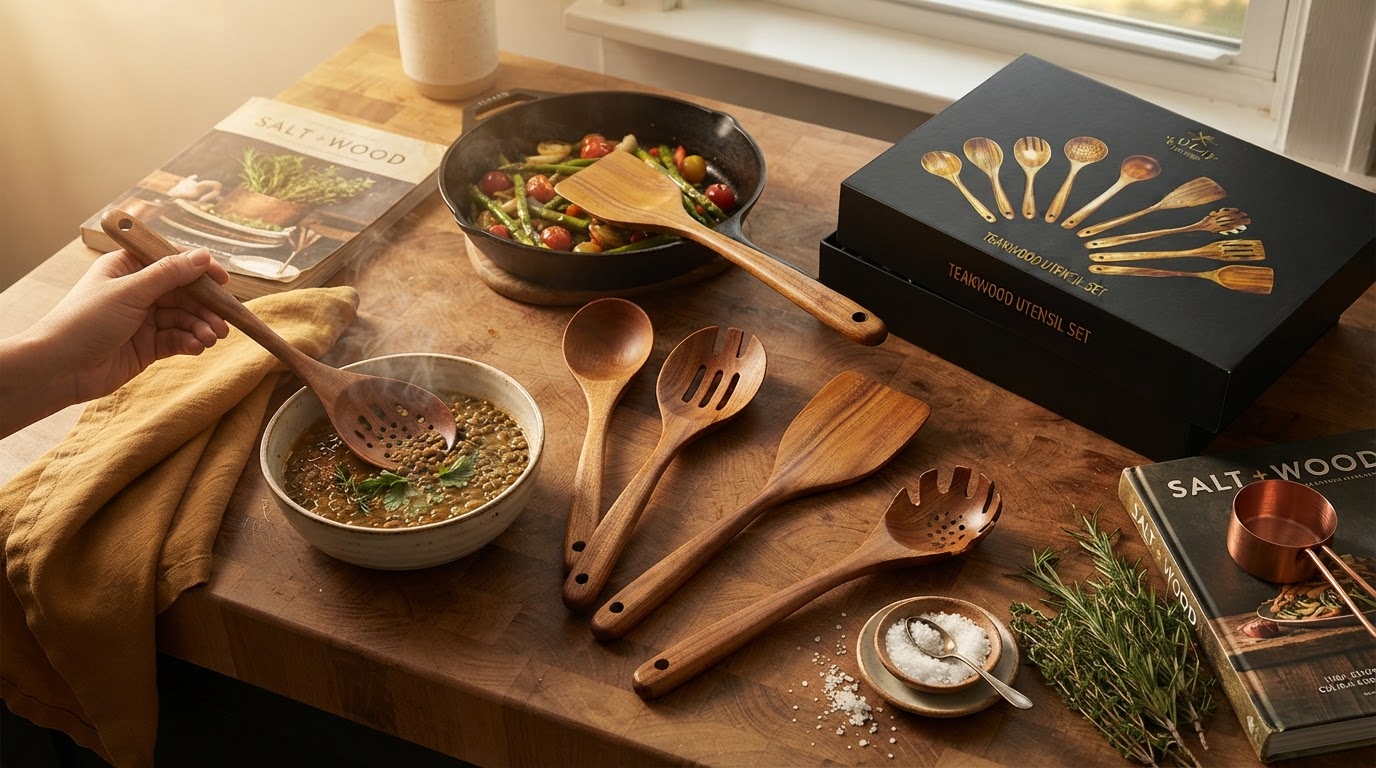
Optimizing Kitchen Performance with Teak Utensils
 Maya ChenContributing Editor
August 17, 2026. This analysis evaluates the structural integrity and functional advantages of teak wood kitchen utensils within high-frequency culinary environments. It is intended for consumers prioritizing material science and longevity over disposable kitchen trends.
The Failure of Modern Synthetic Implements
The conventional wisdom says that silicone and nylon are the superior choices for non-stick cookware due to their flexibility and heat resistance. However, this ignores the chemical degradation and structural instability inherent in synthetic polymers. Over time, silicone tools lose their rigidity, and plastic variants risk leaching micro-components into high-temperature fats. According to Rainforest Bowls, teak wood kitchen tools and utensils offer a natural alternative that is both artisan-made and exceptionally durable, providing a physical density that synthetic materials cannot replicate without sacrificing safety. While bamboo is often marketed as the sustainable alternative, it is a grass, not a wood, and lacks the complex grain structure required to prevent splintering under heavy shear force. Many home cooks settle for these mid-tier materials, unaware that the porosity of lower-grade woods leads to bacterial sequestration. When evaluating a luxury wooden cooking set, the focus shifts from mere aesthetics to the inherent silica content of the timber, which acts as a natural abrasive resistant. The industry consensus often favors cheap, replaceable tools, but this cycle creates unnecessary waste and inconsistent cooking results. If a tool cannot maintain its edge or surface tension after six months of daily use, it is a liability, not an asset.
Structural Properties of Tectona Grandis
Photo by Cup of Couple on Pexels
Teak wood, or Tectona grandis, possesses a unique biological makeup that addresses the primary failure points of kitchenware: moisture absorption and thermal expansion. Here's the part nobody talks about: teak is naturally saturated with rubber and oils even after being harvested and dried. This premium wood is naturally strong and built to resist warping or cracking, even when exposed to the fluctuating humidity of a busy kitchen. This moisture resistance is not a surface treatment but a cellular characteristic. When using handmade teak salad servers, the weight distribution reflects the wood's high density, which typically ranges between 630 to 720 kg/m³. This density ensures that the utensils do not absorb food odors or pigments as easily as maple or beech. Furthermore, the natural oils provide a self-lubricating quality that protects the seasoned surfaces of cast iron and the delicate coatings of modern non-stick pans. The use of handcrafted teak salad servers demonstrates how the wood maintains its luster without the need for frequent chemical resealing. Run the math: a single high-quality teak set can outlast three to four sets of inferior bamboo or plastic tools, significantly reducing the total cost of ownership. The material's ability to withstand the acidic environment of citrus and vinegars without pitting makes it a superior choice for food preparation that involves complex chemical interactions. Unlike stainless steel, teak does not conduct heat, preventing accidental burns during long-duration simmering, yet it retains enough structural stiffness to deglaze a pan effectively.
A Framework for Material Selection
Selecting teak wood kitchen utensils requires a departure from the "disposable kitchen" mindset. The market is saturated with thin-profile tools that mimic the look of teak without possessing its mechanical properties. To ensure a tool will actually perform under pressure, consumers must look for specific indicators of quality and craftsmanship. A robust luxury wooden cooking set should feel balanced in the hand, with a grain pattern that suggests it was cut from the heartwood rather than the sapwood. Heartwood contains the highest concentration of protective oils and minerals. When inspecting handcrafted teak salad servers, one should look for a smooth finish that indicates proper sanding and finishing, as raw or poorly finished wood will inevitably trap food particles. According to Woodenhouse, high-quality teak is known for its natural resistance to decay, which is essential for items that will be frequently submerged in water.
Before finalizing a purchase, apply this technical checklist:
- Grain Continuity: Ensure the grain flows through the handle to the head to prevent snapping at high-stress points.
- Surface Finish: Verify the wood has been treated with food-grade mineral oil rather than polyurethane or varnish.
- Weight-to-Volume Ratio: A genuine teak spatula should feel significantly heavier than a bamboo counterpart of the same size.
- Heat Clearance: The handle length must provide adequate distance from the heat source while maintaining ergonomic control.
- Maintenance Requirements: Confirm the wood does not require specialized chemical cleaners, relying instead on simple hand-washing.
High-performance kitchens require tools that do not compromise on durability or safety. Invest in professional-grade implements that are engineered by nature to last for decades.
Sources
Photo by AI25.Studio AI GENERATIVE on Pexels
- Teak Wood Kitchen Tools & Utensils - Durable & Natural
- 7 Best Wooden Utensils 2026! Sustainable & Stylish