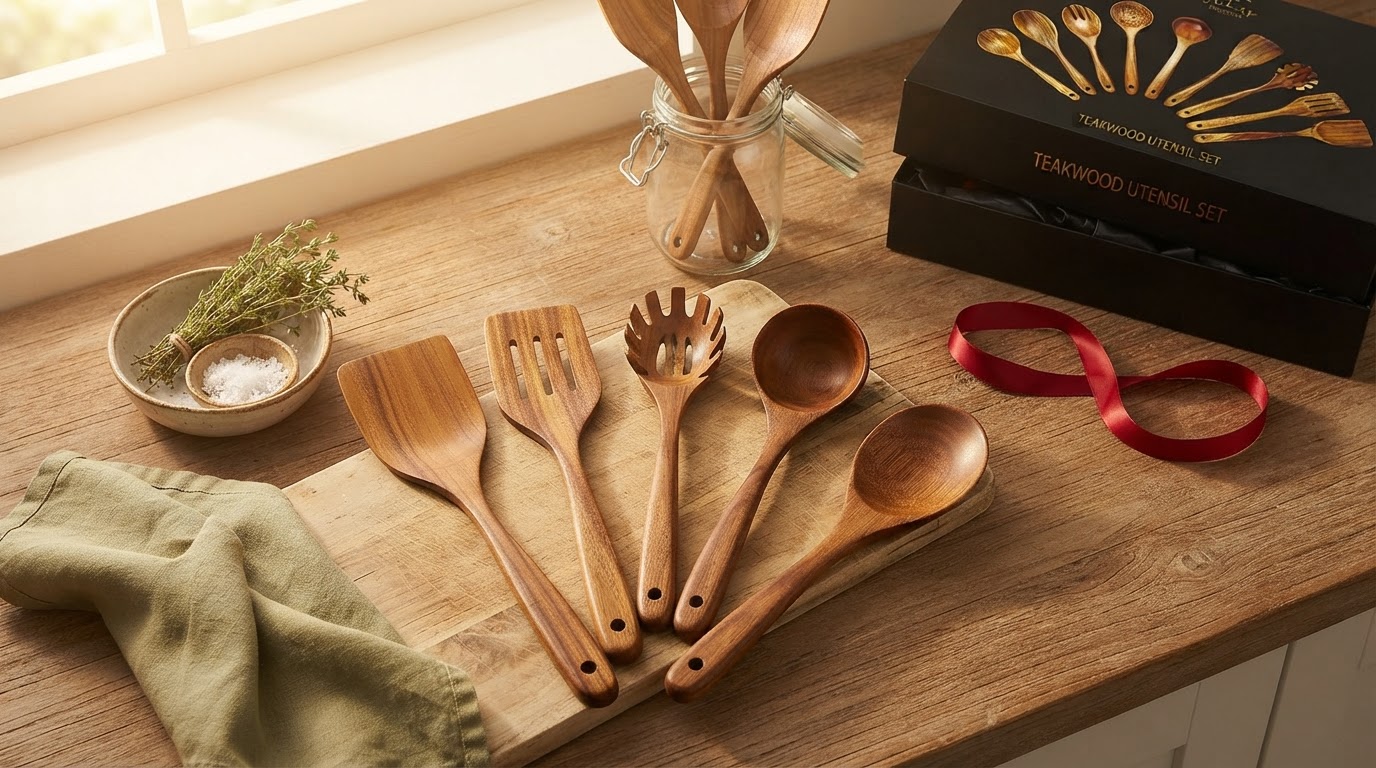
Selecting Sustainable Kitchenware with Teak Utensils
 Jordan HaleStaff Writer
August 13, 2026 — The shift toward conscious consumption is reshaping the modern pantry, and Teak Utensils is at the forefront of this movement toward long-lasting, renewable kitchen tools.
The first thing I noticed was the weight of a solid wood turner compared to the flimsy, heat-warped plastic spatulas I had grown accustomed to. Transitioning to a more intentional kitchen is rarely about a single purchase, but rather a series of informed swaps that prioritize health and longevity. According to the David Suzuki Foundation in their guide on how to choose eco-friendly kitchen tools, consumers are encouraged to avoid plastic utensils that can leach harmful chemicals like BPA, opting instead for natural materials like wood, bamboo, or stainless steel.
The Sustainable Material Framework
When evaluating the environmental impact of a kitchen set, I look at the intersection of resource renewal and product lifespan. It turns out that not all wood is created equal in the culinary environment. Teak is naturally saturated with high oil content and silica, which provides a built-in resistance to moisture and bacteria without the need for chemical sealants. This is a critical distinction when you consider that the best wood for cooking utensils must withstand daily immersion in boiling liquids and acidic sauces. While many shoppers initially look at bamboo for its rapid growth, I keep coming back to the density of teak. In the debate of teak vs bamboo utensils, teak often wins on durability because it does not splinter or fray at the edges over time. This longevity is the true measure of sustainability; a tool that lasts a decade is far better for the planet than a cheaper alternative that ends up in a landfill after twelve months of use. Understanding why teak utensils outperform traditional hardwoods involves looking at the grain structure, which is tight enough to prevent food particles from becoming trapped, a common issue with more porous woods. This inherent hygiene makes it one of the best wood for kitchen utensils currently available for those looking to eliminate synthetic materials from their food preparation.
Expert tip: To maintain the natural luster and water-resistant properties of your teak tools, rub them with a food-grade mineral oil once a month, which prevents the wood fibers from drying out and ensures the silica-rich surface remains smooth.
Choosing tools that align with a low-impact lifestyle means looking past the aesthetic and into the biological properties of the material. By investing in high-oil hardwoods, you reduce the need for frequent replacements and keep your cooking surface free from microplastics.
Sources
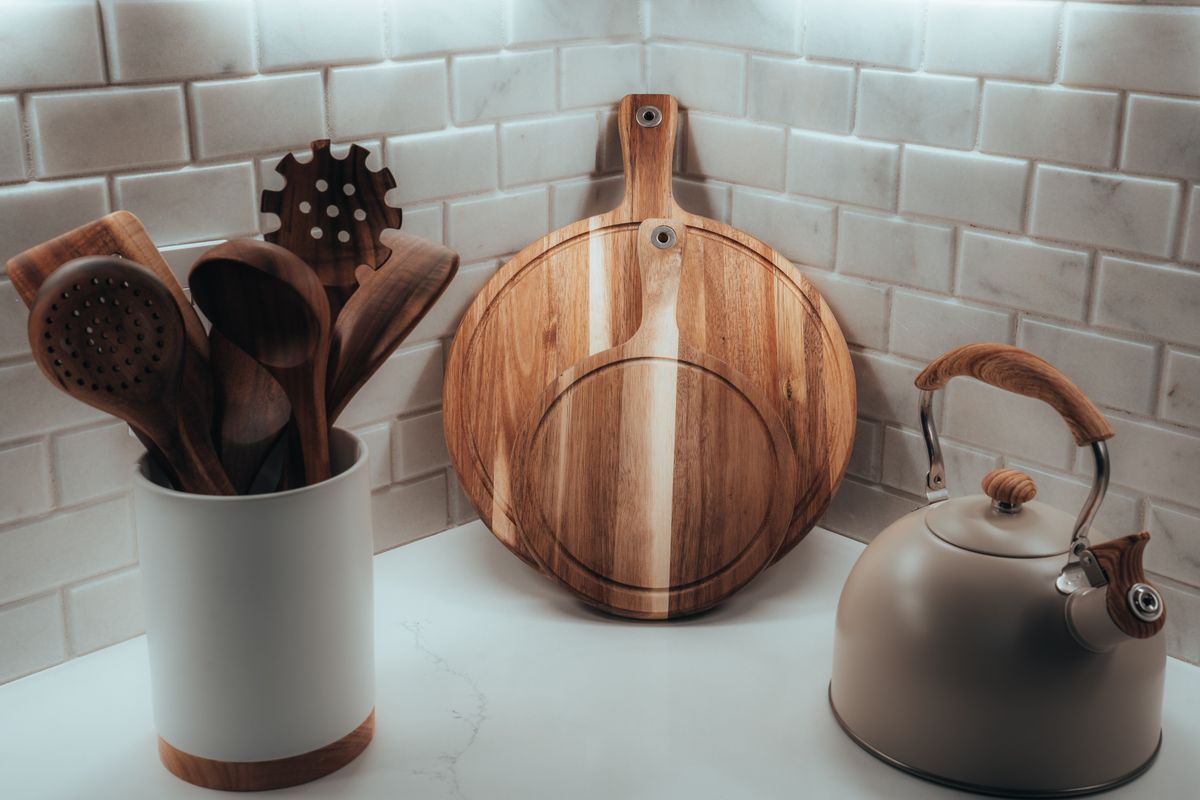
Photo by Osmany Mederos on Pexels
- Eco-Friendly Kitchen Products: Sustainable Kitchen Supplies & Tools
- Shop Zero Waste Kitchen Swaps
- How to choose eco-friendly kitchen tools