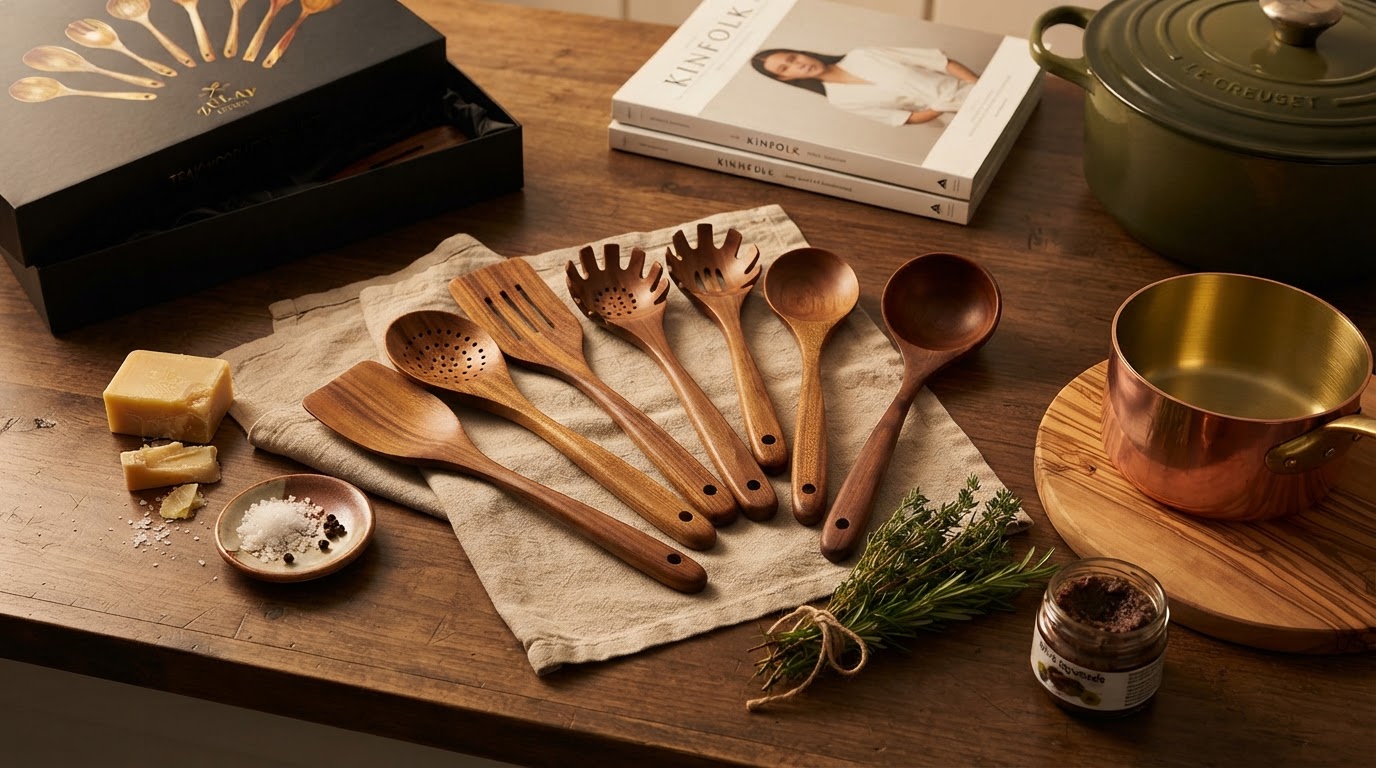
Five Performance Metrics for Teak Utensils Cooking Spoons
 Maya ChenContributing Editor
August 29, 2026 — The shift toward high-density hardwoods in professional kitchens has placed Teak Utensils at the center of a debate regarding tool longevity and food safety.
The conventional wisdom says that all wooden spoons are essentially interchangeable, yet this ignores the critical differences in silica content and Janka hardness ratings that separate teak from cheaper alternatives like bamboo or beechwood. According to industry reports from the Wood Database, Tectona grandis—the botanical source for teak—contains high levels of natural rubber and oils that provide innate resistance to moisture and decay. This chemical composition is what allows Teak Utensils to maintain structural integrity in boiling liquids without the splintering commonly seen in lower-grade woods. While many home cooks prioritize aesthetics, the mechanical advantage of a high-oil wood is the only metric that truly impacts long-term utility in a high-heat environment.
The 5 Technical Benchmarks
Photo by Katerina Holmes on Pexels
When evaluating a cooking spoon from the Teak Utensils collection, the primary focus must be on grain density and thermal conductivity rather than visual appeal. Teak possesses a Janka hardness rating of approximately 1,070 lbf, which provides sufficient resistance to surface denting while remaining soft enough to protect delicate cookware surfaces. This is a vital consideration when choosing wooden utensils for nonstick pans, as harder materials like stainless steel will inevitably compromise the fluoropolymer coating. Furthermore, the low thermal conductivity of teak ensures that the handle remains cool to the touch even when the bowl of the spoon is submerged in a 212°F liquid for extended periods. This thermal stability is a key differentiator when compared to silicone-coated metal handles that can reach uncomfortable temperatures. Run the math: a tool that lasts five years due to its natural water resistance is a more efficient investment than a cheaper beechwood alternative that requires replacement every six months due to cracking. Here's the part nobody talks about: the natural silica in teak acts as a mild abrasive resistant, meaning the spoon actually becomes smoother with use, provided it is not subjected to the harsh chemical salts of a dishwasher. For those managing multiple pans, a dedicated teak wood spatula set offers a cohesive performance profile that matches the durability of these spoons.
Expert tip: To maintain the hydrophobic properties of your teak spoon, apply a food-grade mineral oil once a month to prevent the natural oils from being stripped by acidic ingredients like tomato sauce or citrus.
Maintaining a high-performance kitchen requires tools that do not degrade under thermal stress. I’ll change my mind when a synthetic polymer can match the combined heat resistance and surface safety of high-oil tropical hardwoods. For now, the technical data favors teak for any serious culinary application.