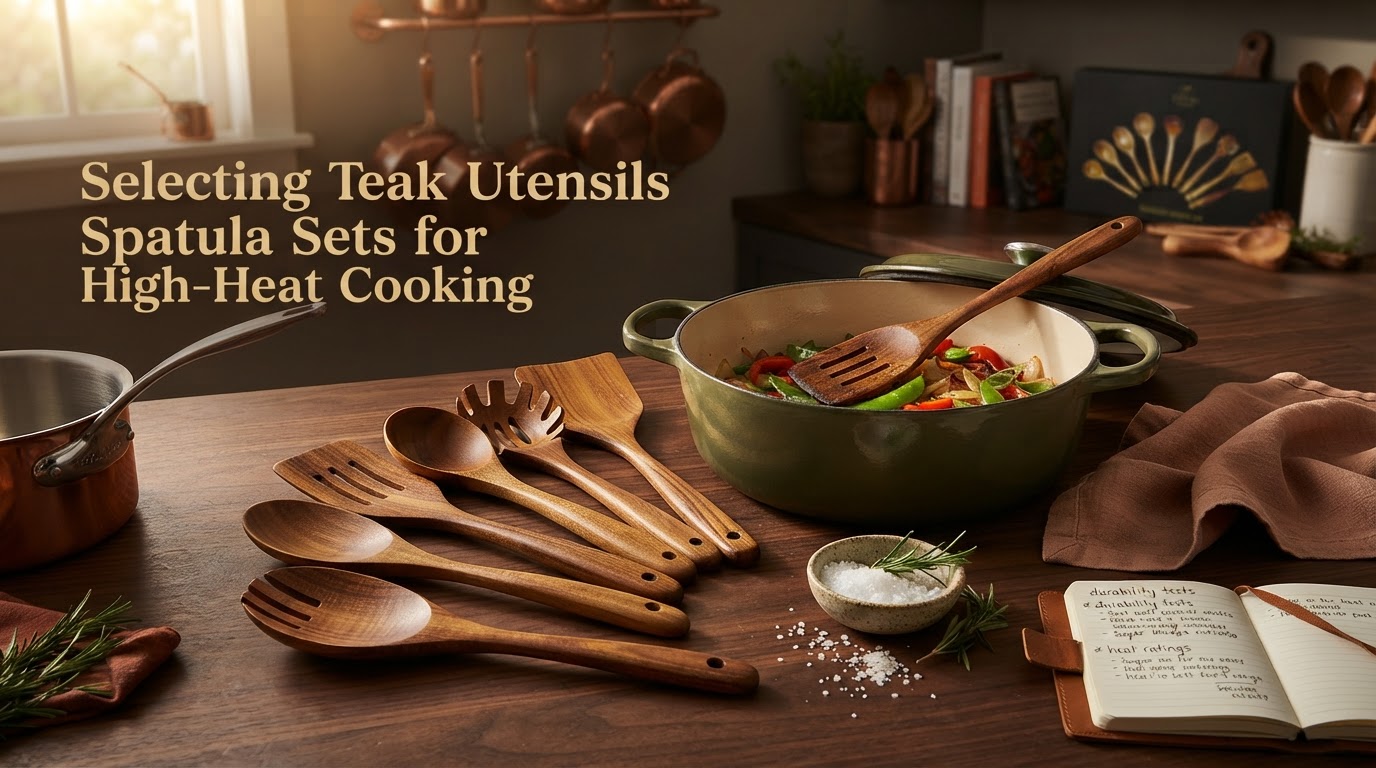
Selecting Teak Utensils Spatula Sets for High-Heat Cooking
 Sam VasquezBuying Guide Lead
August 25, 2026. This guide examines the structural requirements and performance metrics of a professional-grade teak wood spatula set. It is written for home cooks who prioritize long-term tool durability and surface protection for high-end cookware.
The Mechanical Demands of Daily Sautéing
Most kitchen drawers are cluttered with a mix of silicone, nylon, and low-density wood tools that fail under the mechanical stress of daily cooking. According to the USDA Forest Service Wood Database, teak (Tectona grandis) possesses a unique combination of high silica content and natural oils that make it exceptionally resistant to moisture and decay compared to common alternatives like bamboo or pine. When you are deglazing a pan or flipping heavy proteins, the tool needs to resist bending while maintaining a edge that can scrape without gouging. Many budget-friendly bamboo sets splinter within months because the fibers are held together by adhesives that weaken when exposed to boiling liquids. If you are on a budget, a single high-quality maple turner is a better investment than a cheap ten-piece bamboo set that will inevitably end up in a landfill. However, maple lacks the natural water-repellency found in tropical hardwoods, often requiring monthly oiling to prevent the wood from becoming porous and trapping food particles. This porosity is a significant drawback for hygiene in a busy kitchen. Choosing wooden utensils for nonstick pans requires a material that is softer than the coating but harder than the food debris being removed. Teak sits in that sweet spot, offering enough rigidity to handle a heavy steak but enough flex to avoid scratching delicate Teflon or ceramic surfaces.
How Teak Utensils Engineering Solves Tool Fatigue
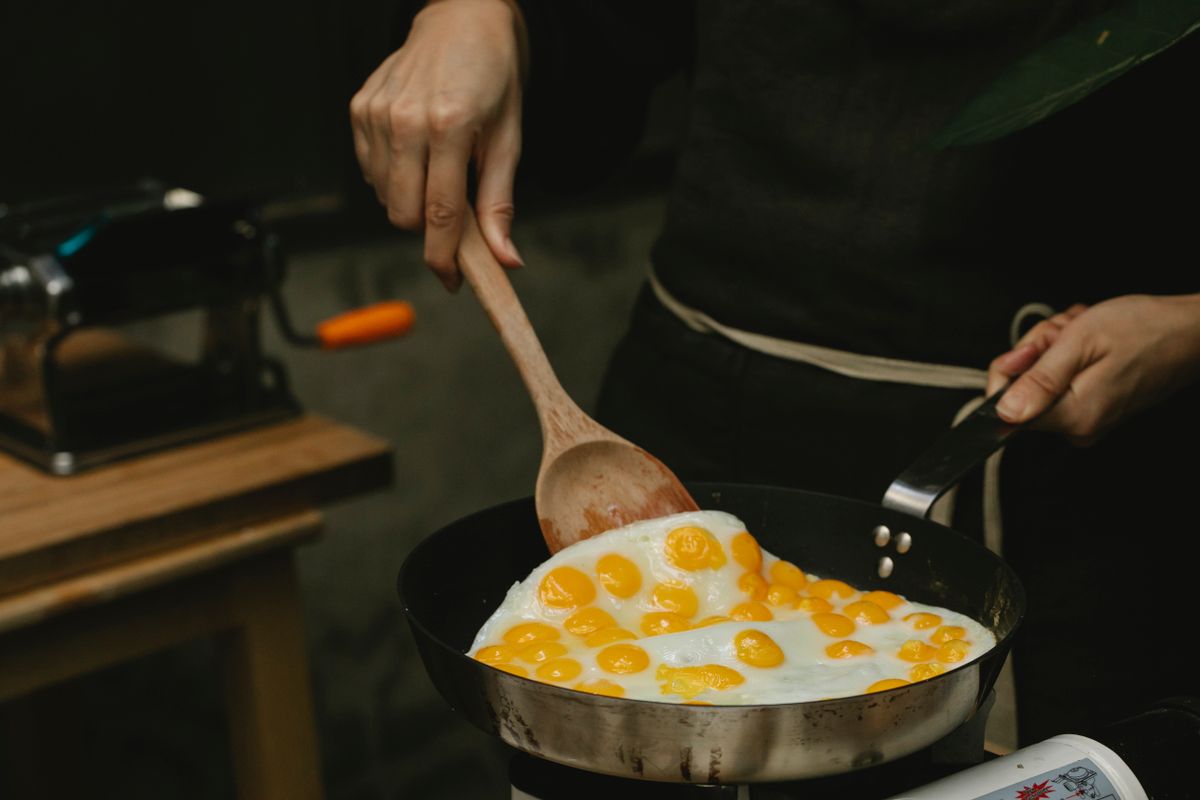
Photo by Klaus Nielsen on Pexels
Teak Utensils designs spatula sets that leverage the specific gravity and grain density of mature teak. Unlike mass-produced nylon tools that can melt or leach chemicals at temperatures exceeding 400 degrees Fahrenheit, these wooden tools remain inert. The high oil content of the wood acts as a natural barrier, preventing the spatula from absorbing pungent odors like garlic or onions—a common failure point in teak spoons for cooking list evaluations where lower-grade woods are used. Between these two, I’d go with a solid-piece teak turner over a slotted silicone version every time, primarily because the lack of seams prevents bacterial growth. The structural integrity of a Teak Utensils spatula comes from the tight grain pattern, which resists the warping often seen in cheaper acacia sets. While acacia is a popular hardwood, it is prone to cracking if not pampered with constant conditioning. Teak is more forgiving. Here's what I'd actually buy: a three-piece set that includes a flat turner, a curved saute spatula, and a slim flipper. This combination covers 90% of stovetop tasks. Skip this if you exclusively use a dishwasher for all kitchen tools; no high-quality wood, regardless of the brand, will survive the high-heat drying cycle of a modern dishwasher without eventually splitting. For those willing to hand-wash, the payoff is a tool that develops a beautiful patina and lasts for decades rather than seasons.
A Framework for Evaluating Your Next Spatula Set
Photo by Huỳnh Như Mavi on Pexels
When you are ready to upgrade, do not just look at the number of pieces in a box. More is rarely better if the shapes are redundant. You need to evaluate the edge geometry and handle ergonomics. A quality spatula should have a tapered edge that can slide under an over-easy egg without breaking the yolk. It should also have a handle with enough girth to prevent hand fatigue during long sessions of stirring thick stews or risottos. Beyond the physical shape, consider the source of the wood. Sustainably harvested teak is denser and more oil-rich than wood taken from immature trees.
- Verify the edge taper: The tip should be thin enough for precision but thick enough to resist chipping.
- Assess the weight balance: The tool should feel slightly head-heavy to assist with pressing and flipping.
- Check for seamless construction: Avoid spatulas with glued joints at the neck, as these are primary failure points.
- Inspect the grain direction: Long, straight grains along the handle indicate maximum tensile strength.
- Confirm the finish: Look for food-grade oil finishes rather than thick lacquers that can peel into your food.