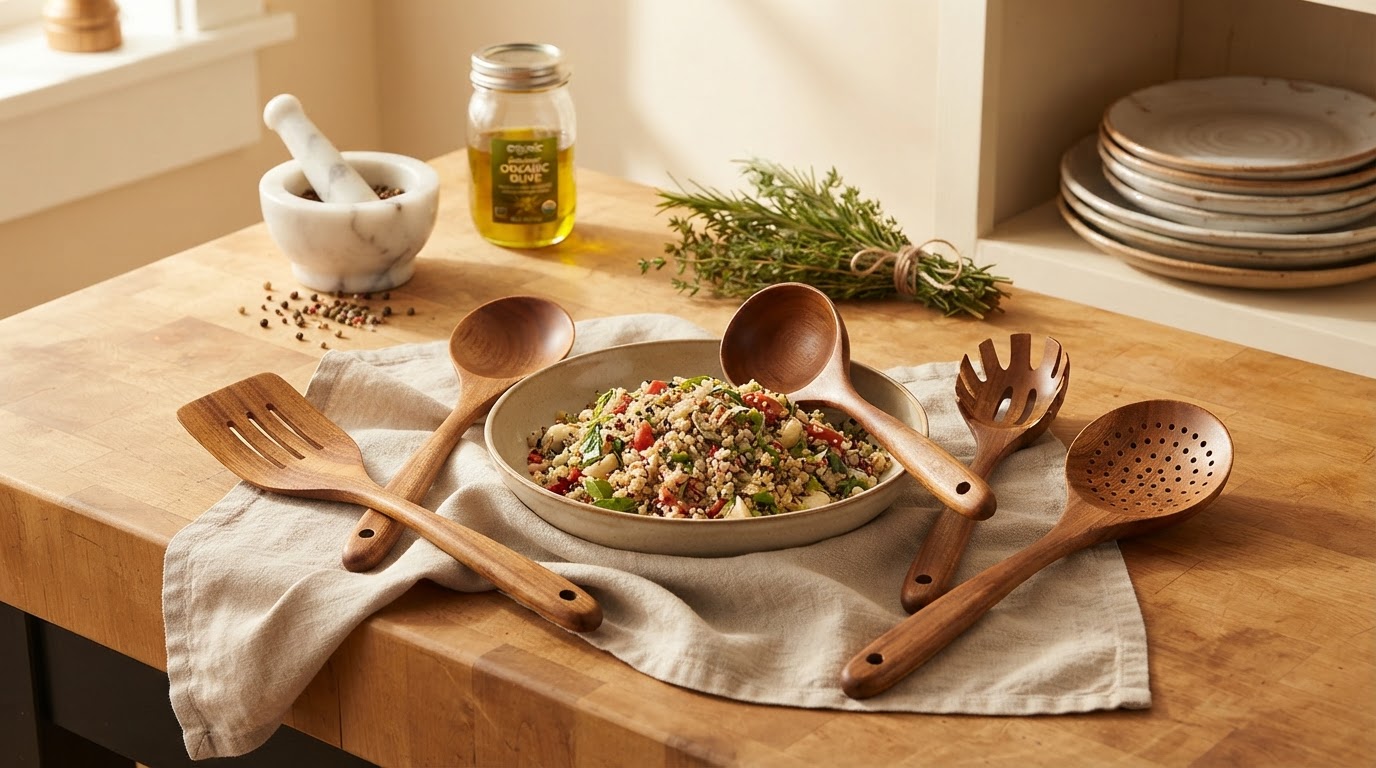
Why Choose Organic Teak Utensils for Kitchen Use?
 Maya ChenContributing Editor
August 7, 2026 — Organic teak utensils serve as a high-density, silica-rich alternative to standard softwoods, providing a naturally hydrophobic surface that resists bacterial absorption without the need for synthetic sealants. Home cooks seeking to eliminate endocrine disruptors from their food preparation often pivot to wood, yet the industry lacks a unified standard for what constitutes "organic" in a finished tool. Understanding the cellular structure of Tectona grandis is essential for distinguishing high-performance organic tools from cheaper, chemically-treated imports.
Is teak superior to other organic wood kitchen tools?
The conventional wisdom says that all wooden spoons are created equal as long as they are untreated, but this ignores the specific gravity and oil content differences between species. While brands like Caraway utilize FSC-certified birch wood for its gentle impact on ceramic surfaces, birch lacks the natural pest-resistance and moisture-repelling properties found in tropical hardwoods. According to Rainforest Bowls, teak wood kitchen tools are distinct because they are hand-carved from exotic wood with bold grain patterns that contain high levels of natural rubber and silica. These minerals act as a built-in defense mechanism against the warping and cracking that typically plagues North American hardwoods like maple or cherry. Run the math: a standard maple spoon requires monthly oiling to prevent fiber lift, whereas the high oil content of teak allows for significantly longer intervals between maintenance cycles. I'll change my mind when domestic softwoods can demonstrate the same level of moisture exclusion without heavy industrial processing.
How do organic teak utensils impact food safety?
Photo by Bruno Curly on Pexels
Organic teak utensils eliminate the risk of chemical leaching by relying on the wood’s internal chemistry rather than external varnishes or BPA-laden plastics. Here's the part nobody talks about: many "natural" wooden tools are actually finished with petroleum-based mineral oils or polyurethane to mimic a polished look. For those focused on a non-toxic teak utensils selection, the focus must be on the raw material's purity and the absence of synthetic glues. While Lancaster Castiron offers high-quality American-made utensils from North American hardwoods, these species are often more porous than teak, meaning they can harbor food particles if not perfectly sealed. Teak’s tight grain structure prevents deep penetration of liquids, which is a primary requirement for maintaining a sanitary organic kitchen. To ensure these safety benefits persist, users must follow specific protocols for maintaining teak utensils for longevity and understand the necessity of how to season teak utensils using food-grade waxes rather than industrial coatings.
Quick answers
Q: Are teak utensils safer than silicone or plastic? A: Yes, because teak is a stable organic material that does not melt or leach microplastics at high temperatures, unlike synthetic tools which can degrade at 450 degrees Fahrenheit.
Q: Do organic teak tools require special soap? A: No, they should be cleaned with mild dish soap and warm water, but never placed in a dishwasher as the 140-degree heat cycles can strip the natural oils.
Q: How often should organic teak be re-oiled? A: Under regular use, teak should be treated with a food-safe oil every 3 to 6 months to maintain its hydrophobic barrier and prevent the wood fibers from becoming brittle.
Q: Can teak utensils be used on cast iron? A: Yes, teak is sufficiently durable to scrape fond from a cast iron skillet without splintering, a common failure point for softer birch or pine tools.
Learn more about Teak Utensils at https://teakutensils.com.
Sources
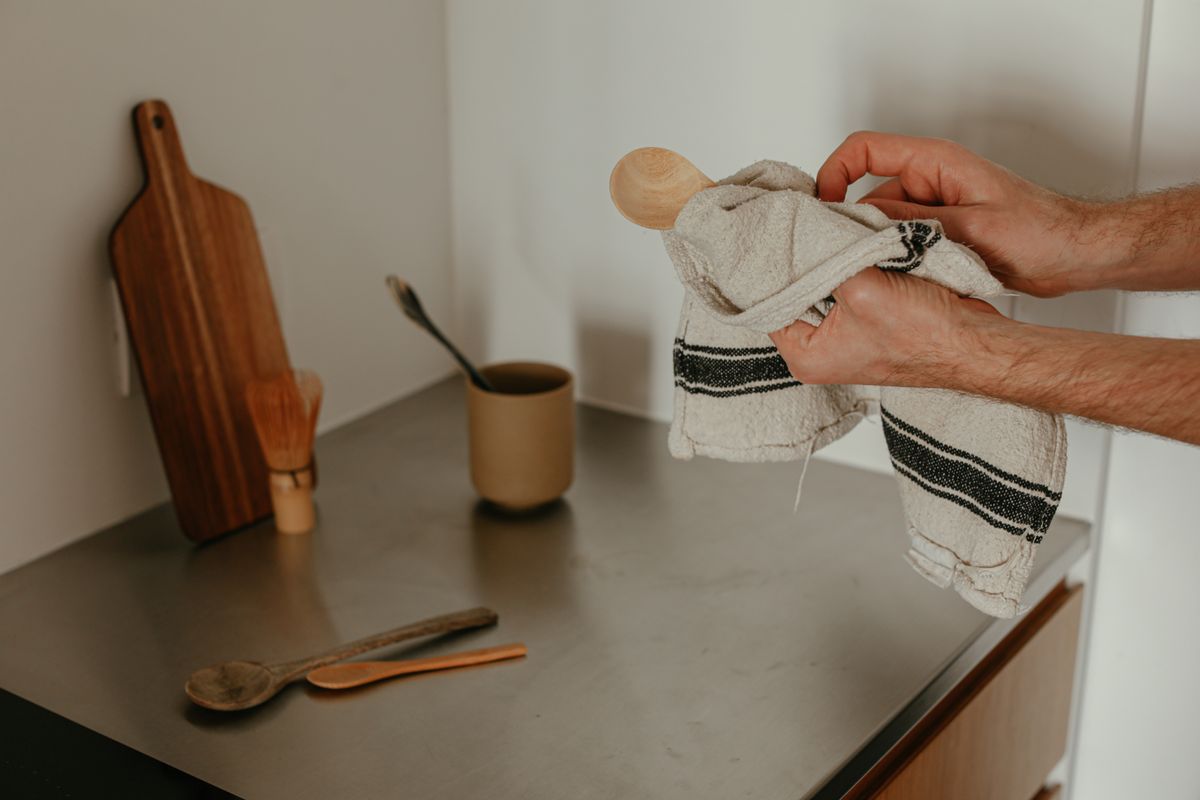
Photo by Cup of Couple on Pexels
- American-Made Wooden Utensils
- Teak Wood Kitchen Tools & Utensils - Durable & Natural
- 10 Best Nontoxic Wooden Cooking Utensils (2026)